
Shopify CEO Tobi Lütke has laid out three AI mental models in his second appearance on David Senra’s podcast, and each one changes how developers should work with coding agents. The same conversation covered Jensen Huang, the future of software engineering and why free markets benefit society.
The three AI mental models are: prompt with more ambition, treat verification as the main engineering job, and play an agent the way a musician plays an instrument. Here is what each one means in practice.
Prompt bigger than feels natural
Lütke’s first point targets people who feel AI-driven development isn’t paying off. His diagnosis is that the cause is usually “insufficiently ambitious prompting.”
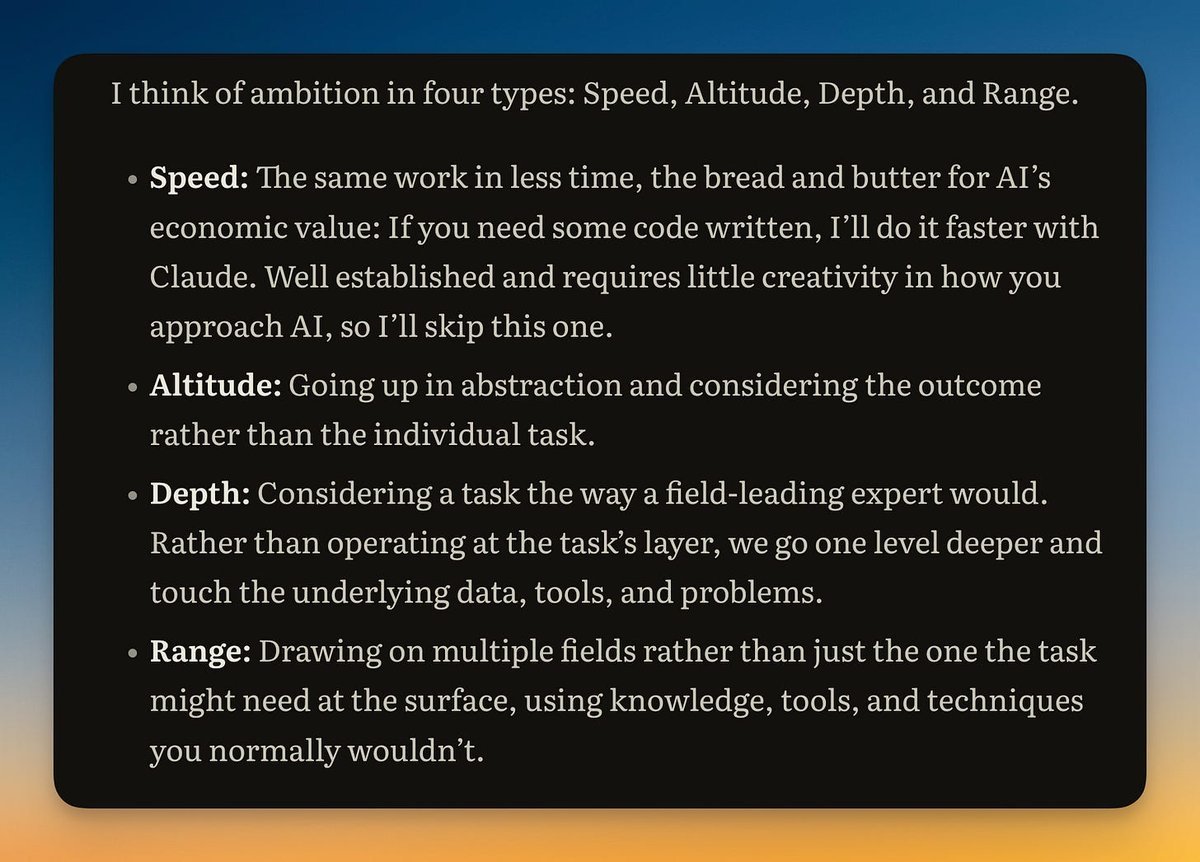
Anyone who has used AI since the GPT-3.5 days has probably carried over prompting habits that now hold the agent back. Those habits need to go. The better approach is to describe the problem you want solved, not the steps to solve it, and to leave the agent room to find its own route. Think wider and work at a higher level of abstraction.
Lütke also describes meta-analyzing your own prompts. Agent tools such as Claude Code and Codex keep transcripts of the messages you send while you work. You can ask the agent to review that history and flag where your requests were too small. One reference for the exercise is Felix Rieseberg’s tutorial “How to be more ambitious: A tutorial for humans with models.” Rieseberg is a member of technical staff at Anthropic.
A simple way to raise your own ambition is to step above the task and ask what problem you’re really solving, and what real-world value solving it creates. Give that problem to the agent and let it work out the tasks along the way.

Verification is the new engineering discipline
Lütke’s second model starts from history. Software already had unit tests and static typing, and static typing is a form of formal verification. His view is that formal verification is now “by far the most important field in engineering.”
The reasoning is about scarcity. For most of software’s history, writing code was the slow, expensive part, so humans could get by with manual code review. Agents reverse that. Code is now abundant, and the scarce resource is knowing it’s correct. The practical question becomes how you set up acceptance tests that let an agent confirm its own output. In that framing, a software engineer is a verification engineer.
There’s a link to how models are trained, though Lütke didn’t make it on the show. Reinforcement learning rewards agents for completing verifiable tasks. Give an agent a way to check its own work and you recreate the feedback loop it was trained to do well in.
Lütke shared a prompt to try on your own codebase:
Find me all the implicit, ad hoc state machines in my app.
Once the agent lists them, ask it to turn each one into a formal spec or a TLA+ model. The point of the exercise is to see how many edge cases that formalization catches.
Treat the agent as an instrument
The third model is the most abstract. Lütke compares AI to a guitar: anyone can pick one up, yet what Jimi Hendrix did with it was something else entirely. In the same way, he says, some people have learned to play AI at that level because they understand the tools deeply.
Most people use AI as a task accelerator. The instrument framing asks for something different. Nobody picks up a guitar to play ten notes as efficiently as possible. You learn the instrument well, make it part of how you work and how you express yourself, and the craft starts to resemble art.
Senra raised AlphaGo’s “Move 37” during the conversation, the creative move no human would have chosen. The lesson for agent users is to stay open to that kind of result. If you direct several agents like sections of an orchestra, the work can go well beyond finishing a to-do list.
What to try this week
None of the three AI mental models needs new software. Each one can be tested with the agent you already use:
- Rewrite your next request as a problem statement and leave the method open.
- Ask the agent to review your past prompts and point out where you aimed too low.
- Run the state machine prompt on a real project and see what the agent turns up.
The common thread is a change in what the human does. You spend less time dictating steps and more time defining goals, building checks and learning how your agent behaves. Lütke’s podcast conversation with Senra is where the full discussion of all three ideas lives.
Source: attentionheads.blog