
Skills over MCP is now in public beta in Claude and Claude Code. It lets Model Context Protocol servers publish skills next to their tools, so Claude gets instructions for multi-step work along with the list of things a server can do. Anthropic also made Tasks and Elicitation generally available and said File Uploads is coming soon.
MCP launched two years ago as a standard for connecting AI agents to the systems where data lives. Anthropic says the updates let Claude treat a server more like another agent: it can learn from it, delegate to it, and swap input and files along the way.
How Skills over MCP works
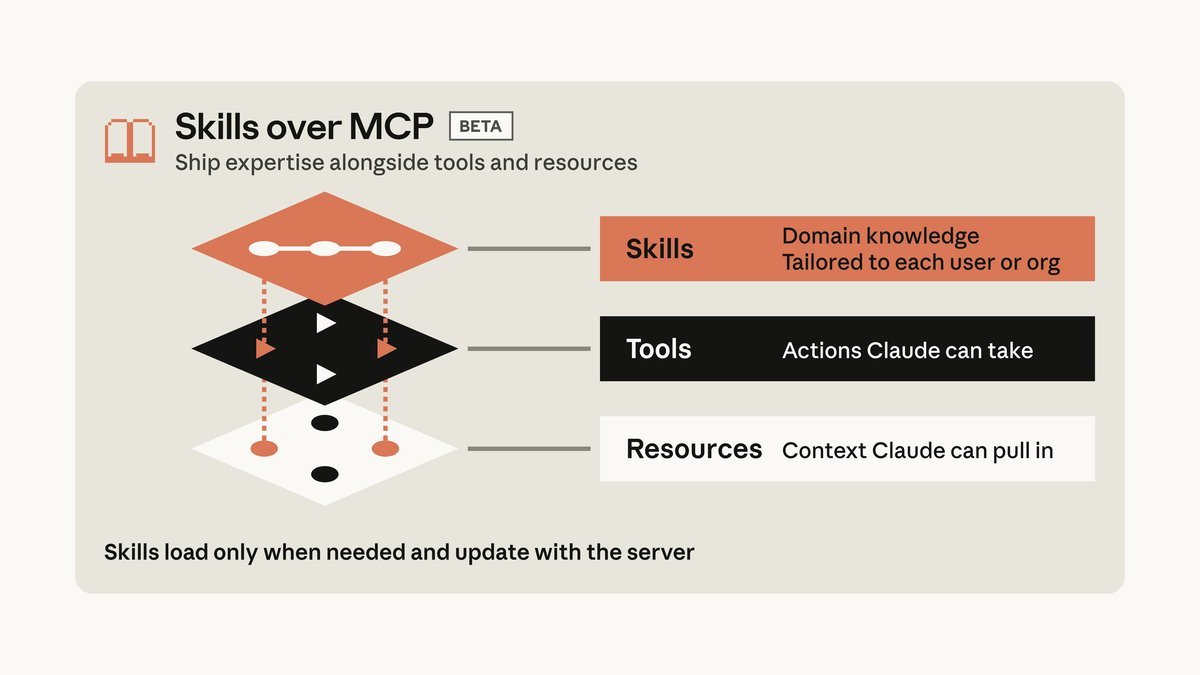
A tool listing says what a server offers but not how to use it well for a given job. A server with Skills over MCP can bundle guidance too: recommended practices, ordered workflows, or playbooks written for one customer’s account.
Claude pulls a skill in only when the task calls for it, so the context window stays lean. Because skills change whenever the server does, developers release tools and guidance as one package and users add nothing separately.
Shopify uses it so Claude can build and edit a merchant’s storefront from start to finish. HubSpot uses it for customer onboarding inside Claude. Atlassian gives Claude a route into organizational context for analysis. Carta’s version, which will draft and issue equity from an uploaded document, hasn’t launched yet.
The beta is on by default for Pro, Max and Ultra plans. Team plans get it once an admin turns it on, and Enterprise is next.
Tasks and Elicitation
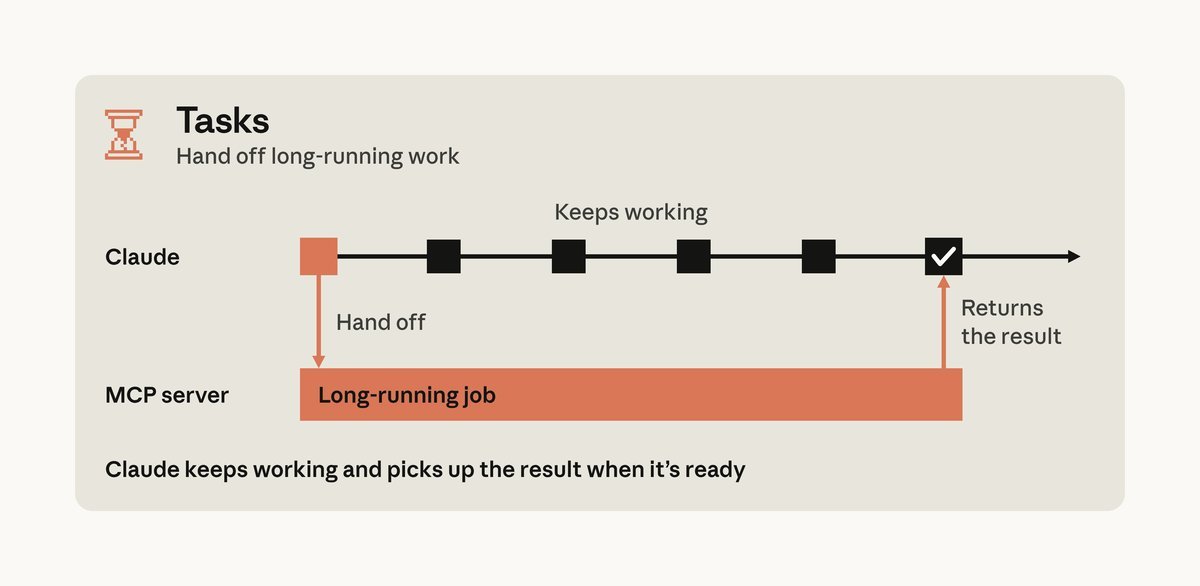
Until now Claude had to wait for each tool call to return. With Tasks, a server can take slow jobs, even whole agent loops, off Claude’s hands while it carries on, then deliver the outcome later. ZoomInfo applies this to account and contact research that used to need several prompts.
Elicitation handles steps that need a human decision, like spending money or erasing data. The server pauses, shows a form or link, and resumes once the user answers. Supabase asks before it creates a paid project or runs destructive SQL, Railway checks before a service is removed, and GitHub makes users type a repository’s name before an agent can delete it.
Both are generally available in Claude and Claude Code for Pro, Max and Ultra plans, and are rolling out to Team and Enterprise organizations.
File Uploads next
Soon Claude will hand files to MCP servers rather than just text. The File Uploads extension moves PDFs, spreadsheets and images straight to a server, bypassing the context window. Rollout covers Pro, Max, Ultra and eligible Team and Enterprise plans.
What it means for developers
All four belong to the open MCP spec and its extensions, so a supporting server should work with any compatible client. Anthropic has published documentation for each.
The company also gave figures on the protocol’s growth. MCP sees more than 700 million monthly SDK downloads, and Claude has over 10,000 MCP connectors. Four changes over the past year stand out:
- Tool search fetches tool definitions on demand, which Anthropic says can shrink their context footprint by more than 85% when several servers are connected.
- The newest spec is stateless and works across Claude products, so servers are simpler to build and run.
- With the Enterprise Managed Auth extension, an admin approves a server once and users are connected automatically.
- The MCP Apps extension puts full interfaces inside Claude, next to the chat or full screen.
Where MCP goes from here
Anthropic frames the changes as a step toward Claude treating servers as collaborators instead of passive tool lists. A server can teach, take on slow work, ask a person for approval, and accept documents.
MCP is an open standard hosted by the Agentic AI Foundation. Enterprise customers are still waiting on Skills over MCP, and File Uploads has no firm date. For now, server builders can start adding skills to existing servers and testing them in Claude and Claude Code.
Source: Claude