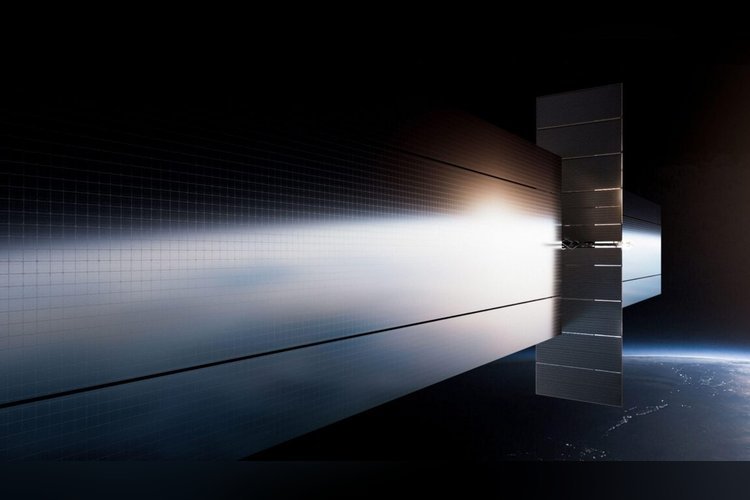
The Federal Communications Commission has given SpaceX conditional permission to launch up to 1 million Starmind satellites, a constellation designed to act as data centers in orbit. The SpaceX Starmind satellites would multiply the number of objects currently circling Earth by roughly 50 if the full fleet ever flies.
The decision landed on Wednesday, one day before the US Thanksgiving holiday. It is a big regulatory win for SpaceX and its founder Elon Musk, who has aligned himself with the Trump administration.
What the FCC said
FCC Chairman Brendan Carr framed the order as a push for American leadership. In his statement he said the US is “moving decisively” so the technology creates opportunity, drives investment and delivers lasting benefits for Americans. He called it a bold new frontier for computing infrastructure.
The approval clears a major hurdle, but it doesn’t show that orbital data centers work technically or pay for themselves. Nobody has demonstrated that running compute in space makes economic sense, and the order gives SpaceX room to find out.
A 14-year runway
The timeline is unusually generous. SpaceX has seven years to put a single operational Starmind satellite into orbit. It has until November 2035 to reach 100,000 operational satellites, and until November 2040 to complete the full 1 million.
That adds up to a 14-year window for what is described as the most ambitious industrial project ever approved for spaceflight. Long deadlines mean SpaceX can adjust its design, its launch cadence and its business case along the way without losing the license.
- Seven years to deploy one operational satellite
- November 2035 for 100,000 operational satellites
- November 2040 for the full constellation of up to 1 million
Orbits and disposal
SpaceX has proposed operating in six orbits, with altitudes from 550 km to about 1,000 km. Spreading the fleet across that range gives it flexibility, but it also puts satellites at heights where debris lingers far longer than in lower orbits.
That is why one request stands out. SpaceX asked the FCC for a waiver from rules on retiring satellites above 600 km. Instead of burning up in the atmosphere, spent satellites could be moved into “Earth disposal orbits or heliocentric orbits.” In plain terms, SpaceX wants the option of parking old hardware in a different orbit around Earth, or even sending it into orbit around the Sun.
Whether that waiver is granted in full, and under what conditions, is among the conditional parts of the approval that will draw the closest scrutiny.
Why astronomers and regulators will watch
A fleet 50 times larger than everything now in orbit raises obvious questions. Collision risk, radio interference and the brightness of satellites in the night sky all grow with numbers. Disposal rules exist to keep dead hardware from piling up, so any loosening of them will be read as a precedent for other operators.
For SpaceX’s rivals, the order shows how far a regulator is willing to go when a project is pitched as national infrastructure. For investors, it is a signal that the idea of putting AI compute in orbit now has a legal path, even if the engineering is unproven.
What this means for SpaceX
SpaceX already runs the largest satellite network in orbit, so a constellation of this kind builds on launch and manufacturing skills it has. The new approval points that capacity at a different product. Instead of beaming internet to the ground, Starmind satellites are meant to host computing itself.
The pitch rests on a simple idea: put the machines where power and space are plentiful. The catch is that nobody has shown the economics hold up, including the cost of launching hardware, keeping it cool and replacing it when it fails. The FCC order does not answer those questions. It only removes one barrier while they are worked out.
What comes next
The first real test is the seven-year clock for a single operational Starmind satellite. Before then, watch for how the FCC handles the disposal waiver for satellites above 600 km, and for any technical demonstrations that show whether orbital data centers can cool, power and connect themselves at scale.
Source: Ars Technica