
The software factory, a setup where many coding agents work in parallel and pull requests merge with almost no human review, has moved from idea to working practice in about three years. The teams running these systems report big gains. Almost all of those numbers, though, come from the teams themselves.
From one agent to many
Giving AI agents distinct roles dates to 2023, when the MetaGPT paper called the approach an “assembly line paradigm”. Progress was slow at first. On SWE-bench, the best model that year solved 1.96% of real GitHub issues. Cognition announced Devin in March 2024 and reported 13.86% on a random quarter of the dataset.
Anthropic released Claude Code as a research preview in February 2025. Then came a crowded week in May 2025: Cursor’s background agent, OpenAI’s Codex, GitHub Copilot’s coding agent and the public beta of Google’s Jules all launched. Each takes a task, works in a remote environment and returns a pull request or diff. One person could now run many agents at once.
The simplest version appeared two months later. Geoffrey Huntley’s Ralph is a one-line shell loop that feeds the same prompt to an agent again and again, with test and build failures fed back for fixing. OpenAI and Anthropic later compared their own loops to it.
A caution: a METR experiment found experienced open source developers took 19% longer with AI while believing they were 20% faster.
What the factory builders published
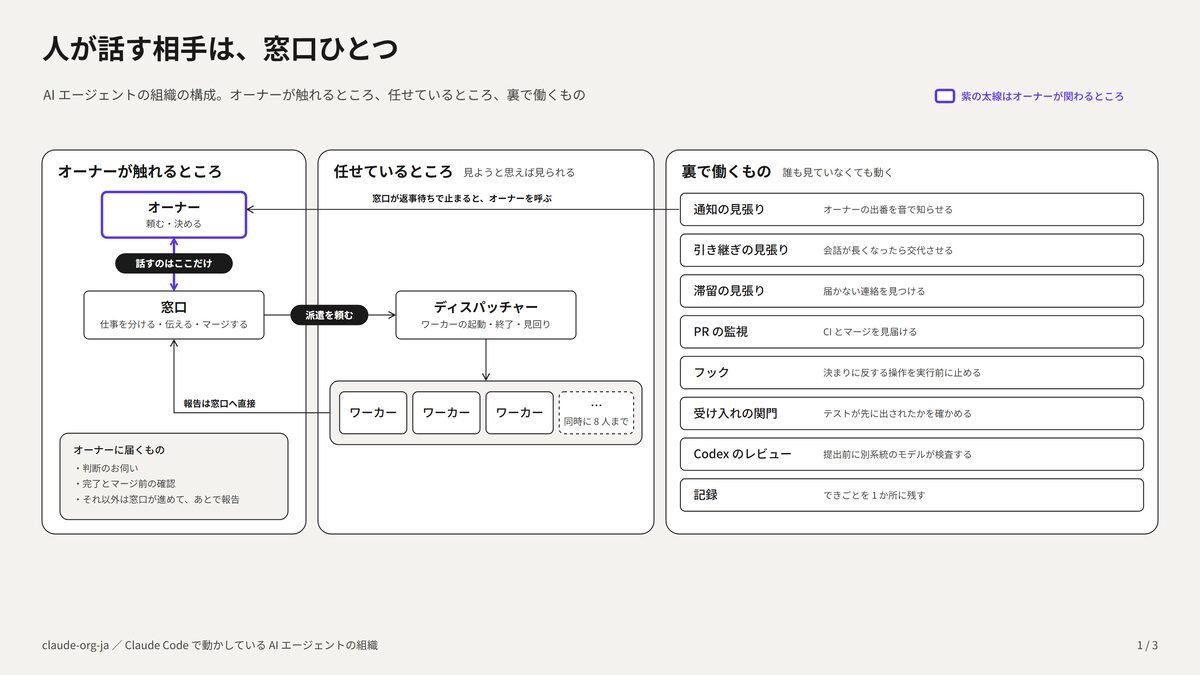
In January 2026 Steve Yegge released Gas Town, where a mayor coordinates the work, a watcher checks the workers and a merger lands changes in order. Dan Shapiro ranked AI use from level 0 to 5 and called the top level the “Dark Factory”, a black box that turns a specification into software.
In February StrongDM said it operates at that level. Its Software Factory page bars people from both writing and reviewing code. Engineers write test scenarios the agents never see and check behavior against stand-in copies of services such as Okta and Slack. StrongDM’s rule of thumb: an engineer spending under $1,000 a day on tokens has room to improve.
Other teams reported results without using the word factory:
- Cursor found that 20 equal agents fighting over locks moved no faster than 2 or 3. It switched to planners, workers and a judge, and had that crew build a browser from scratch.
- Anthropic let 16 Claude agents share tasks through lock files in a git repository. Around 2,000 sessions and $20,000 in API spend yielded a 100,000-line compiler able to build the Linux kernel.
- OpenAI said three engineers merged about 1,500 pull requests with Codex alone, and that human QA couldn’t keep pace with the code volume.
The bottleneck is human attention
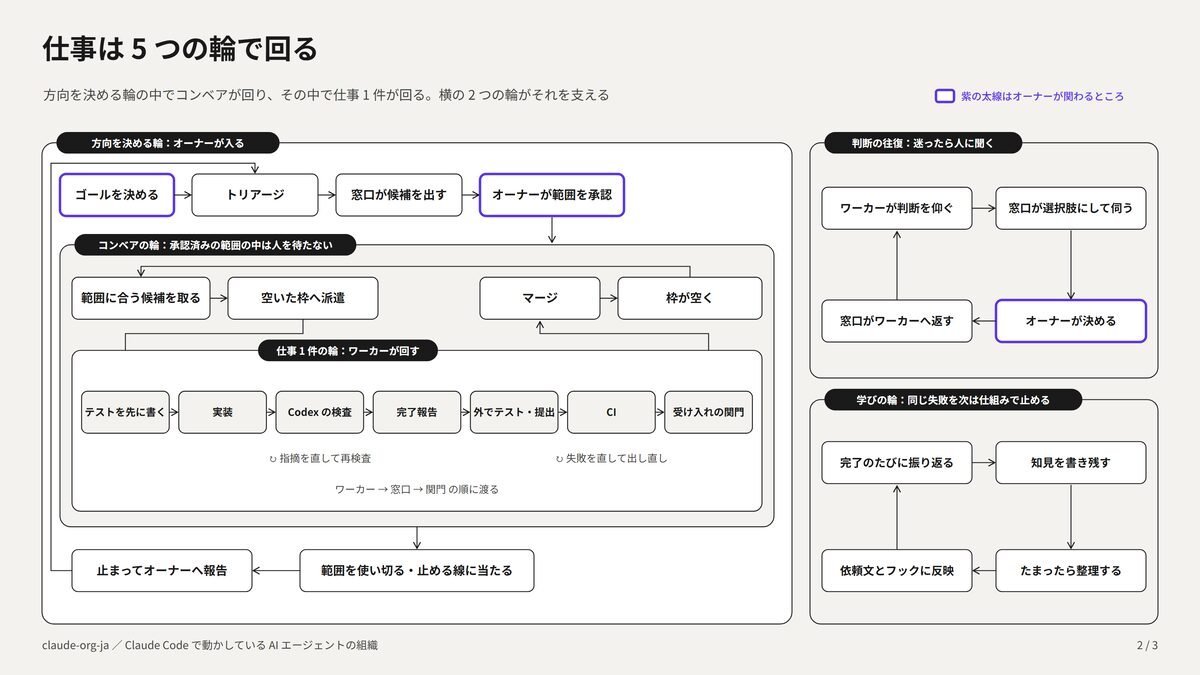
By April 2026 OpenAI saw a new limit with Symphony: how many sessions one person can supervise. Three to five was manageable. Past that, context switching cut productivity.
Tools have split into two camps. Some decide where work queues up. Vibe Kanban (June 2025) plans work as issues on a kanban board, and Beads (October 2025) records what agents do. Symphony, opened by OpenAI in March 2026, watches issues in Linear and keeps an agent running in its own workspace for each open task.
Others decide where humans talk, such as OpenClaw, a personal assistant reached through chat apps like Discord and Slack. Vercel’s Board, released in November 2026, tries to combine both: a shared message board where each thread is both a conversation and a task, lent to one agent at a time with a time limit.
How much of it is proven
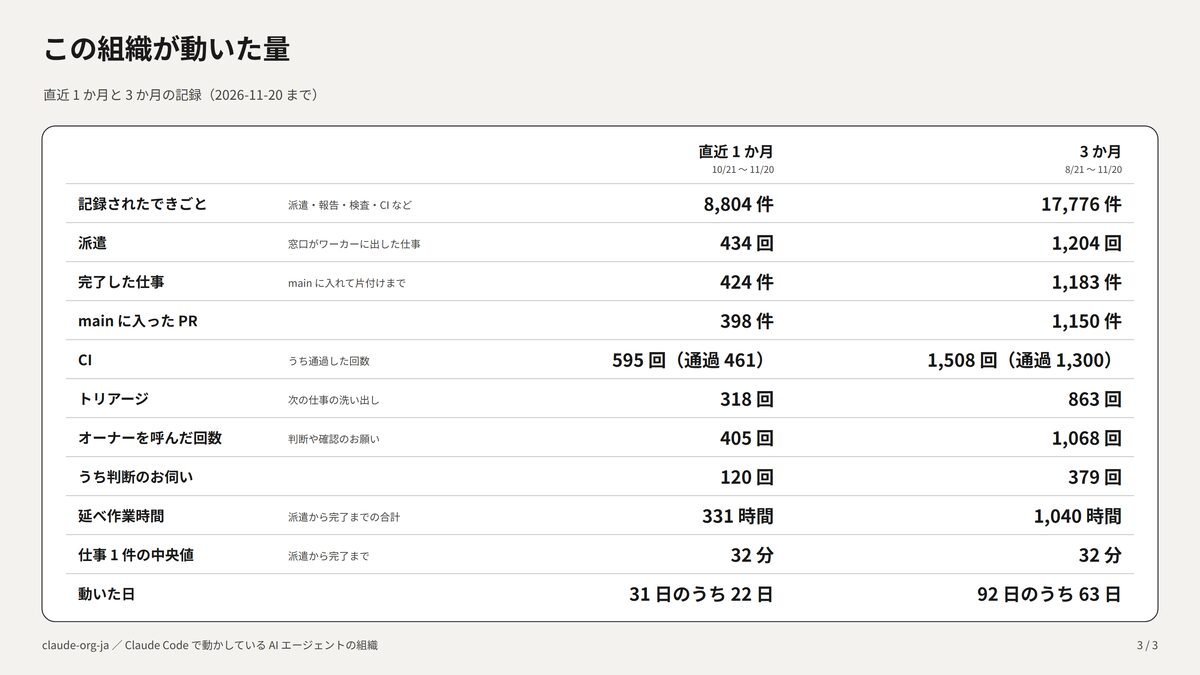
The common pattern is consistent. The setup queues the work, gives each item to a single agent in its own workspace, and checks results by machine. Humans prepare specifications, checks and environments. Lauren Tan’s advice is to stop a repeated agent mistake with types, lints or tests, not more warnings in the prompt. Her team reports about 11,000 pull requests a month, with roughly 0.5% sent back.
Independent verification is thin. Vercel says the v0 factory it rebuilt on Board merges more than 50% of its pull requests, but gives no denominator, no time period and no rate of pull requests sent back. A software factory’s headline numbers are only as good as the people reporting them.
The term is older than the agents
“Software factory” dates to 1968. At that year’s NATO Software Engineering Conference, Bob Bemer of General Electric proposed a machine-controlled environment in which programs are built, tested and run, ideally with no way to produce them elsewhere.
Hitachi gave its software department its own site in 1969, and Toshiba, NEC and Fujitsu followed in the 1970s. At Toshiba’s Fuchu Works, the share of delivered lines reusing existing code rose from 13% in 1979 to 48% in 1985, and Toshiba credited reuse for its gains.
Fred Brooks argued in 1986 that no single advance would multiply productivity tenfold, since the hard part of software is specification, design and testing.
No evidence ties today’s agent factories to those earlier ones. Still, the parallels are hard to miss. Per-task workspaces echo Bemer’s closed environment, and both Toshiba and OpenAI put effort into writing less code and checking it better. Even with agents writing the code, people still own the specifications and checks Brooks called difficult.
What to watch next
Teams that publish denominators, time periods and rework rates will be easier to believe than those quoting merge counts alone. Developers who want to try a software factory at home are starting with the checks: prepare the specification and the way to verify results first, then cut the work into tasks. Open-ended planning, where the direction shifts every few minutes, still goes faster with one agent in direct conversation.
Source: Conao3 Notes