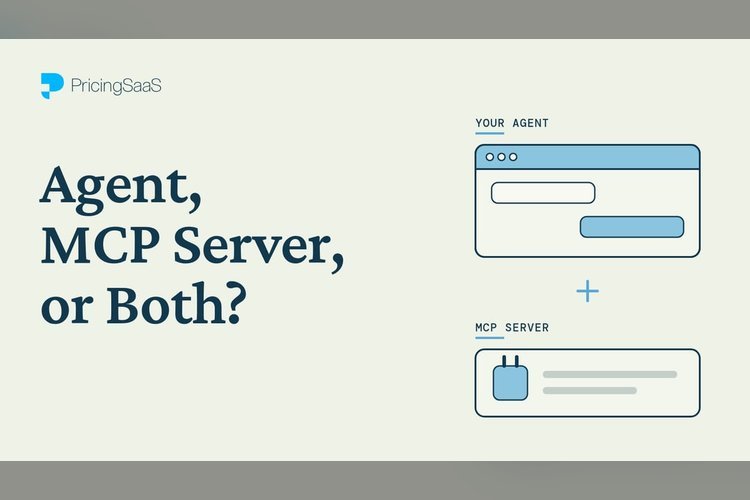
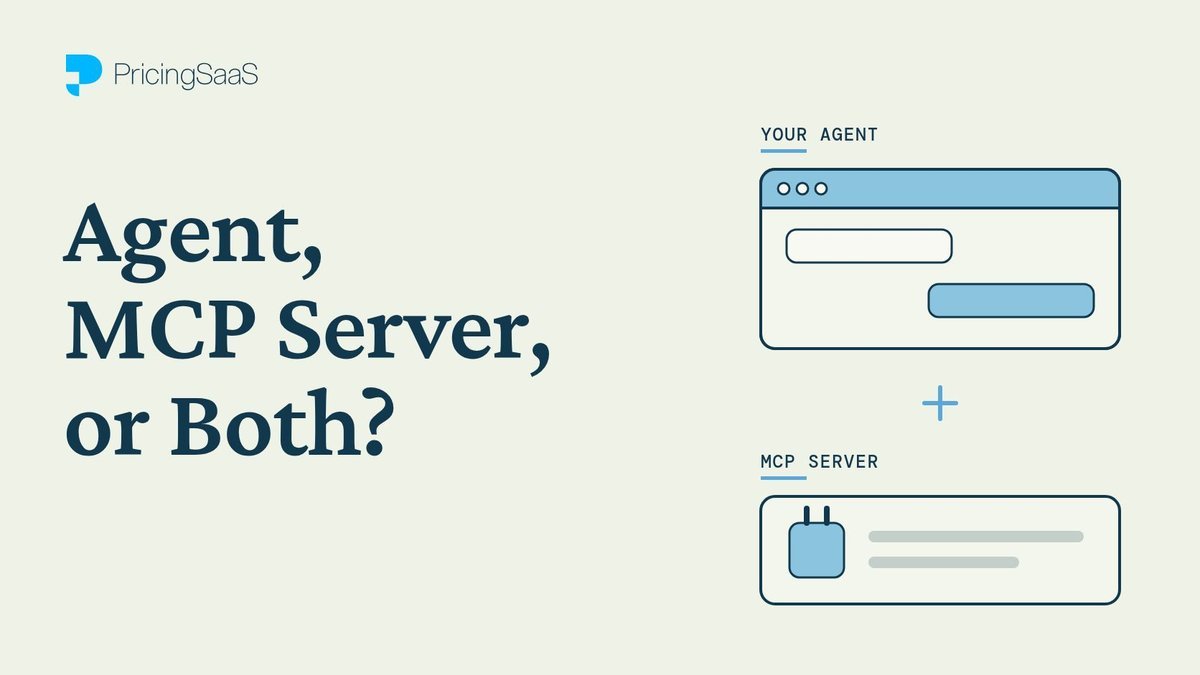
Software companies are split on whether to build their own SaaS AI agent or to focus on an MCP server and a headless product that outside agents like Claude and ChatGPT can drive. The question drew 125 comments on LinkedIn, with strong views on both sides. The practical answer emerging from recent pricing moves is to do both, and to let customers pay for the model.
The case for MCP only
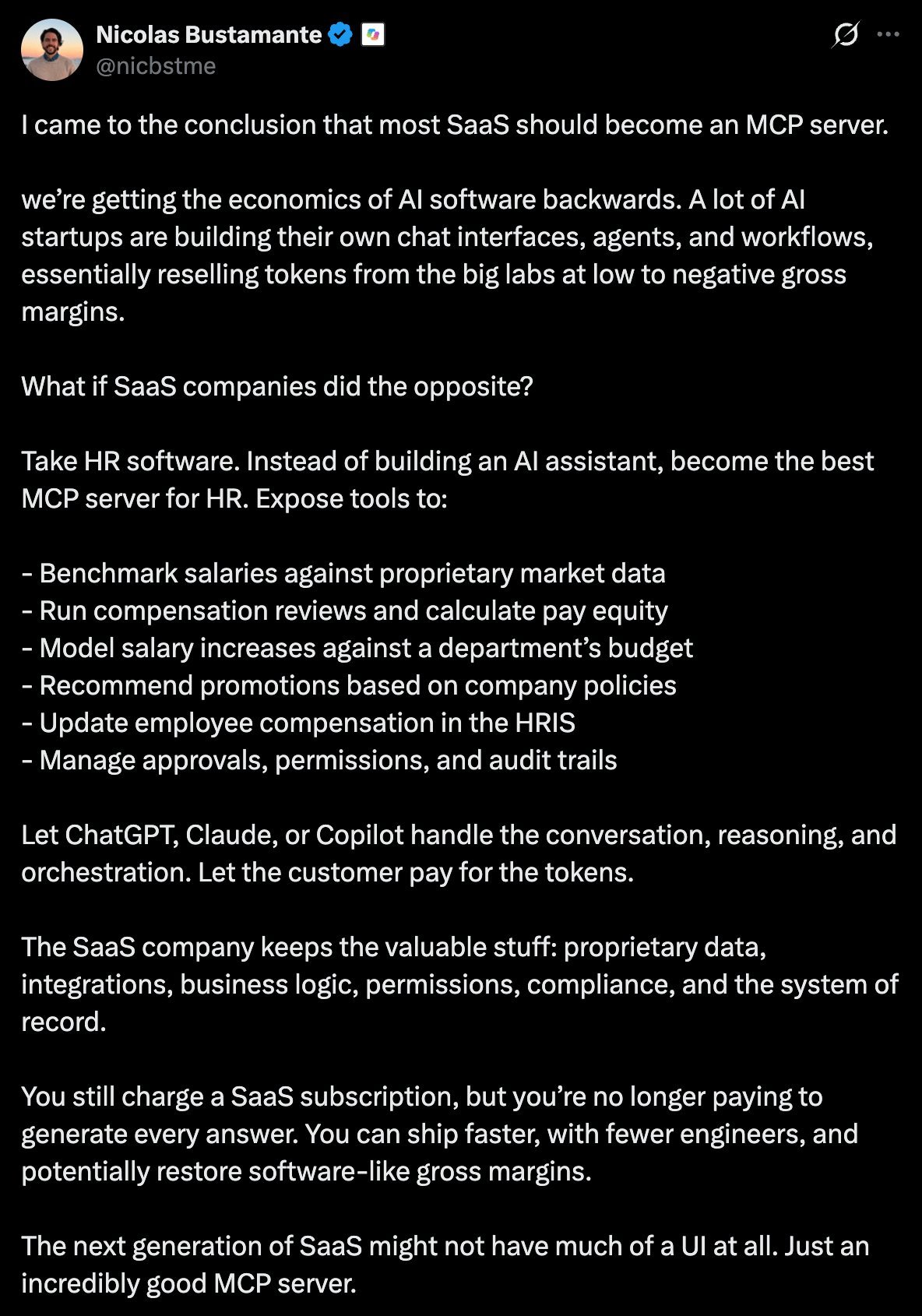
The strongest argument for skipping a native agent came from a commenter named Nicolas. Startups that build their own agents resell tokens from the big AI labs, often at thin or negative margins. If ChatGPT or Claude handles the conversation, the customer pays for those tokens instead. The software company keeps what is valuable: the data, the business rules, the permissions and the system of record. It still charges a subscription and gets software margins back.
Being the best MCP server will probably pay off over the long term, and it may be how most people use software someday.
Why timing favors a native agent today
The disagreement is about when. Most customers aren’t ready to do all their work in a chat app with no product screens. Many would still rather open the app and see their data on screen. In the short term, an agent that is an expert at using your product inside your own UI makes sense.
That runs into the token problem for any SaaS AI agent. If the vendor covers every agent run inside a flat subscription, the heaviest users can end up costing more than they pay.
Bring your own key
One fix, alongside usage-based pricing, is bring your own key (BYOK). The customer links an AI account of their own, typically by entering an OpenAI or Anthropic API key or by logging in with a ChatGPT plan. Model usage is then billed by the AI provider, while the SaaS vendor bills for the product itself.
Three companies have shipped versions of this in the last six weeks:
- On every current plan, Linear admins can attach an OpenAI, Anthropic, AWS Bedrock or Azure key to the company’s cloud coding agent. The provider charges for the model. Linear’s own AI credits still cover the cloud machine where the agent executes code. Roughly half of the work created in Linear now comes from agents.
- On Business and Enterprise, individual users can link a ChatGPT Plus, Pro, Business or Go subscription to Notion Agent. It applies once a GPT model is chosen, and Notion credits cover everything else. A real API-key route is in private alpha for Enterprise customers. Notion also rebuilt its agents and reworked its MCP server in that release.
- Devin allows Pro, Max and Teams customers to log in with ChatGPT, so their plan covers the OpenAI portion of each session. Its documentation rules out third-party LLM API keys for now, which makes this a bring-your-own-subscription setup.
The pattern is consistent. Customers pay the AI provider for the model, and they pay the SaaS vendor for the product, the workflow and the machine time. All three are still building out MCP.
Where pricing stands this week
A tracker of pricing changes logged 424 changes across 405 companies in the past week. Hugging Face lifted its Enterprise plan tenfold, to $500 a user. Zapier made MCP tool calls free through 5 January 2027. Devin Teams replaced a $40 per-seat fee with a flat $80 a month. v0 cut model token prices by up to 58%, and Atlassian announced usage-based billing for Confluence. Several vendors also added MCP access: CodeRabbit put API and MCP access on all plans, and Raycast shipped an MCP that gives Claude Code control of the app.
What a SaaS company should do next
- Build an agent inside your own UI, starting with jobs customers already do on your screens rather than a general chatbot.
- Offer bring-your-own-AI, starting with a key field for OpenAI and Anthropic, plus a default the company pays for so newcomers can try the agent with no setup.
- Charge for what only you provide: seats, your data and rules, and the compute your agent runs on.
- Release an MCP server at the pace your customers want. If they aren’t close to headless use, a basic server is enough, so it exists when they are ready.
The takeaway for a SaaS AI agent strategy is that the choice isn’t either-or. Serve today’s customers with an agent, have them cover their own AI costs, and keep an MCP server ready for the ones who ask.
Source: Good Better Best