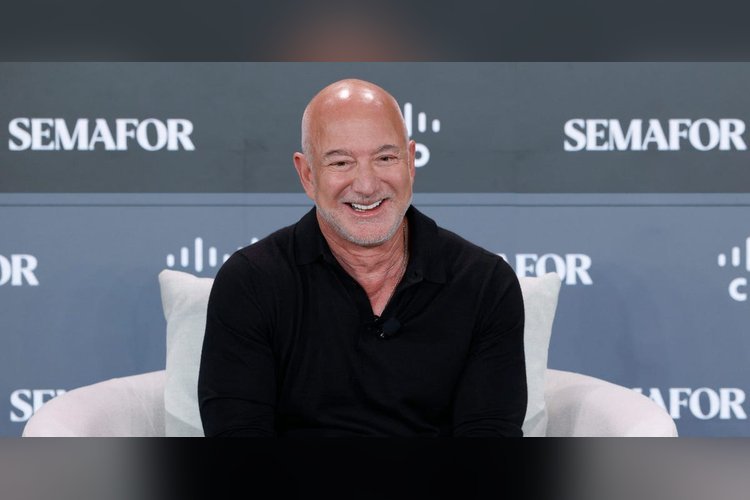
Robotics funding has more than doubled this year. So far this year, physical AI and robotics firms have pulled in $97.3 billion over 1,200-plus deals. All of 2025 totaled $47.4 billion, per funding data. Waymo and Jeff Bezos’s Prometheus top the list of the ten biggest raisers.
Money has flowed to robotaxis, military drones and early bets on humanoid robots. Defense firms, especially drone builders like Anduril, Shield AI, Helsing and Saronic, took several of the biggest checks. Gené Teare, a Crunchbase research lead, said drone technology is further along than other experimental robotics, which draws money.
Why the money is moving
Sanjay Aggarwal, a partner at investor F-Prime, sees four forces: self-driving and defense, efforts to bring manufacturing home, backing for exceptional founders such as Bezos and Travis Kalanick, and speculative areas like humanoids. He expects the first three to keep drawing large rounds in 2027, while the fourth gets more scrutiny. Promises of future revenue only carry a company so far, he said.
The top four
Waymo, $16 billion. Its Series D, announced in February, valued the company at $126 billion. Dragoneer, DST Global and Sequoia Capital led, with backing from majority investor Alphabet. Waymo runs Jaguar robotaxis and new Ojai vehicles in 15 US cities, including San Francisco, Los Angeles and Phoenix, with more planned for 2027.
Prometheus, $12 billion. Bezos co-leads the company with former Google X executive Vik Bajaj, the first chief executive job he has held since he left Amazon in 2021. Prometheus is building an “artificial general engineer,” AI meant to help engineers design and simulate everything from phones to jet engines before manufacturing starts. Its Series B in June valued it at roughly $41 billion. Investors included Bezos, JPMorgan, BlackRock and Goldman Sachs.
Anduril, $5 billion. Palmer Luckey’s company, founded nearly a decade ago, has surveillance towers along the US-Mexico border and reports supplying Ukraine with hundreds of Altius drones. Revenue reached $2.2 billion last year, over twice the 2024 figure. A May Series H, led by Andreessen Horowitz and Thrive Capital, lifted its valuation to $61 billion.
Shield AI, $4 billion. Founded by ex-Navy SEAL Brandon Tseng, the company makes the V-BAT drone and Hivemind, an AI pilot. It raised two $2 billion packages this year. A Series G in March was led by Advent International and JPMorgan Chase. November brought word of another $2 billion to help fund the purchase of radar maker Echodyne: a $1 billion Series H at a $28.8 billion valuation, plus $1 billion from Blackstone-managed funds.
Places five through ten
- Zipline, $2.3 billion: a $1.5 billion Series I this month valued the drone-delivery company at $21.5 billion, after an $800 million Series H in March. It says it made over a million deliveries in Dallas-Fort Worth this year and is adding 300 Walmart delivery sites.
- Helsing, $1.8 billion: the Munich defense company’s Series E in July valued it at $18 billion. Its HX-2 drone navigates and identifies targets even when GPS is jammed, and thousands went to Ukraine in the first half of 2026.
- Saronic, $1.75 billion: the Austin maker of uncrewed boats raised a Series D in March at a $9.25 billion valuation, led by Kleiner Perkins. In June, a Navy-operated Saronic boat took part in rescuing two US soldiers whose helicopter Iran downed near Oman.
- Atoms, $1.7 billion: Kalanick’s Los Angeles company came out of stealth this year, has said it will build robots for food, mining and transport, and absorbed CloudKitchens. Andreessen Horowitz led its July 22 round.
- Skild AI, $1.4 billion: the Pittsburgh startup builds a model to control machines from robotic arms to humanoids. SoftBank led a January 14 Series C at over $14 billion. In September Skild said it had hit $100 million in yearly recurring revenue, with over 60 customers.
- Neura Robotics, $1.4 billion: the German company’s June Series C, led by Tether Investments with Amazon, Nvidia and Bosch, funds robotic arms, mobile carts and humanoid work. Customers can rent “robot gyms” to teach machines specific jobs.
What 2027 may bring
Defense and autonomous driving look set to stay on top. Waymo’s city count, Anduril’s revenue and Shield AI’s Echodyne deal all show buyers paying today, not in some distant future.
Humanoids face the harder test. Aggarwal’s warning suggests investors will want revenue from them. Skild’s $100 million recurring revenue is one early marker. Next year’s list will show whether the humanoid bets can turn into customers as fast as drone makers have.
Source: Business Insider