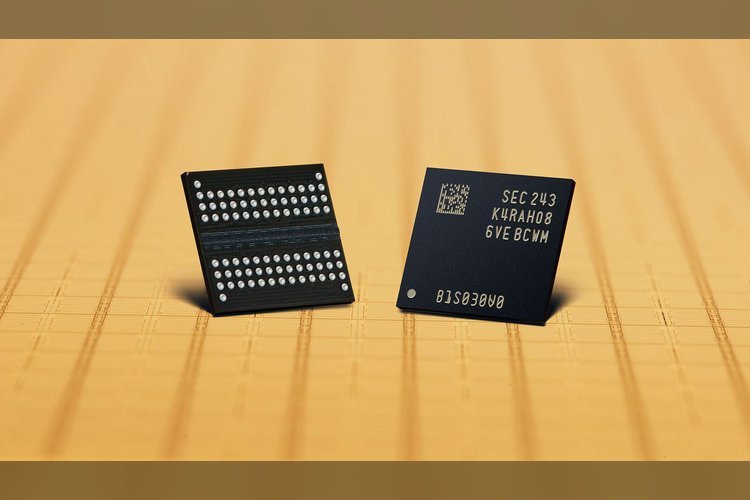
The memory shortage has gotten bad enough that electronics makers are staffing “procurement war rooms” whose only job is to find DRAM. Employees check eBay listings, call hundreds of brokers and buy lots as small as five to twelve units, just to keep production lines moving.
Memory prices have climbed roughly 500%. PC builders and enthusiasts were hit first, but the pain has spread to makers of all kinds of electronics.
Smaller firms are scrambling
Amazon, Apple and Microsoft can pay more and lock in huge volumes through long-term agreements. Smaller companies can’t. They depend on brokers and whatever happens to be available, which is why some are now hunting through online listings or turning to the gray market.
The gray market has its own traps. Some sellers mix batches of used memory chips into orders of new ones, so buyers have to inspect deliveries carefully.
Taiwanese module and storage maker Apacer went as far as taking out loans so it would have cash ready if a supply of chips surfaced. “If chips show up, we take it,” company president Gibson Chen said. “This is crazy, but there is no other way.”
The squeeze is hitting product pricing. Some manufacturers have raised prices to cover the higher cost of memory. Others have trimmed product specifications and taken a smaller price increase instead.
Even the biggest names are struggling
Money alone doesn’t guarantee supply. One portfolio manager claimed that Elon Musk offered Samsung a long-term agreement and even a financial guarantee for new chip factories. Samsung executive chairman Lee Jae-yong reportedly replied that everybody else was already offering the same. The account is unconfirmed.
OpenAI CEO Sam Altman also traveled to South Korea recently to meet Samsung’s leadership, reportedly to secure more RAM for data centers.
Why supply is so tight
The root cause is AI. The scramble for compute pushed the three largest memory makers, Micron, Samsung and SK hynix, toward high-bandwidth memory, which is more profitable than standard DRAM. That left less capacity for everything else.
The makers aren’t expecting quick relief. SK hynix says 2027 will be the “worst year” for shortages. TeamGroup’s CEO has warned that it could reach a point where “even money can’t buy goods.”
New factories from the big three are under construction, but they won’t produce chips until 2028.
Why nobody else can step in
Starting a memory company is brutally hard. A newcomer needs money for a fab and a supply chain, a large patent portfolio to license, its own technology, and the manufacturing know-how to produce at scale.
China’s CXMT is the only new entrant to have produced mainstream consumer DDR5 RAM. It faces multiple allegations that it stole the necessary technology from Samsung. Its chips also trail competitors on performance and follow market prices, so they haven’t become the cheap alternative many enthusiasts hoped for.
The industry’s boom-and-bust history explains why producers were slow to add capacity. Even if they had started building at the first sign of trouble, new plants would take years to ease the memory shortage.
A price-fixing lawsuit hangs over the market
The big three are also defending a price-fixing lawsuit. It alleges they coordinated their shift to HBM in order to cut DDR3 and DDR4 production. The judge handling the case has said it is plausible they colluded while prices surged. None of the allegations has been proven.
What to expect through 2028
For buyers, the outlook is a long wait. Large customers with long-term agreements will keep first call on supply, while smaller manufacturers keep paying broker premiums or redesigning products around less memory.
Consumers should expect higher prices on devices that use DRAM, or devices that ship with less of it. The relief point is 2028, when the new fabs are scheduled to start output, and the lawsuit may shape how the market behaves before then.
Until then the war rooms are likely to stay.
Source: Tom's Hardware