
A new proposal for measuring recursive self-improvement in AI takes aim at what current metrics miss: whether AI systems are actually getting better at improving themselves. The author, an AI researcher, builds on policy writer Dean W. Ball’s call for transparency from frontier labs and adds two measurements, sample complexity and a counterfactual test.
Weak and strong recursion
Ball argued that the debate over recursive self-improvement (RSI) has become unfocused and oversimplified. Using a technology to build a better version of itself is old, like humans making better iron tools with iron tools. He calls that weak recursion.
Strong recursion is the new risk: AI autonomously developing its own successor. Ball suggested labs disclose how compute allocation decisions are made and the share of merged code changes with no substantive human review. He said those could form the basis for a statutory definition that gives policymakers a footing for corporate liability.
The new proposal accepts both metrics but calls them necessary and not sufficient. Less human intervention doesn’t prove a stronger model, and code changes don’t prove code improvement. Neither metric can warn of strong recursion before the next, more capable model is trained.
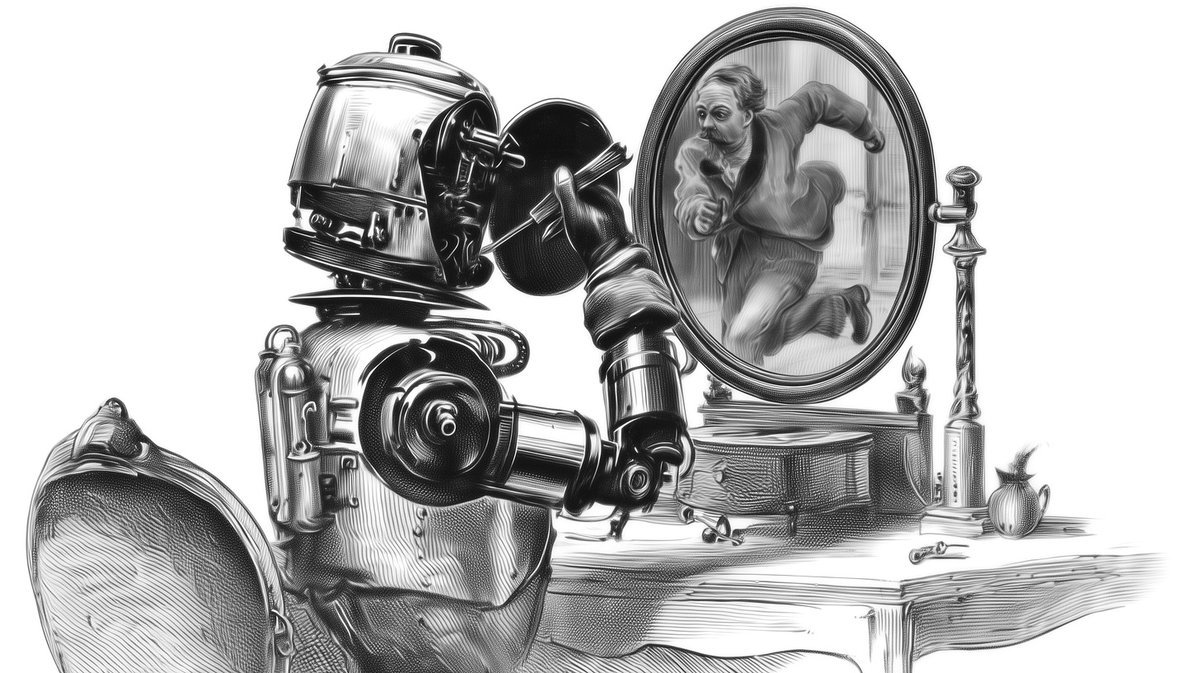
Where recursive self-improvement can be measured
The proposal restates Ball’s argument as five steps. AI models do AI research on their own (R1), so algorithms improve faster (R2), models get smarter faster (R3), they get better at AI research (R4), and because the gains need only software updates, the loop can run quickly (R5).
Steps R4 and R3 can be checked with existing evaluations, by testing whether a model beats its predecessor at AI research and whether its capabilities grew faster than the last generation’s. Steps R2 and R1 need new techniques.

Sample complexity as the first metric
Benchmark gains are only circumstantial evidence of better algorithms, because a model can improve through better data or more compute. An algorithm can even get worse while the model it trains gets smarter. The proposal points to the Transformer replacing LSTMs: simpler, more data-hungry methods that scale better on more GPUs.
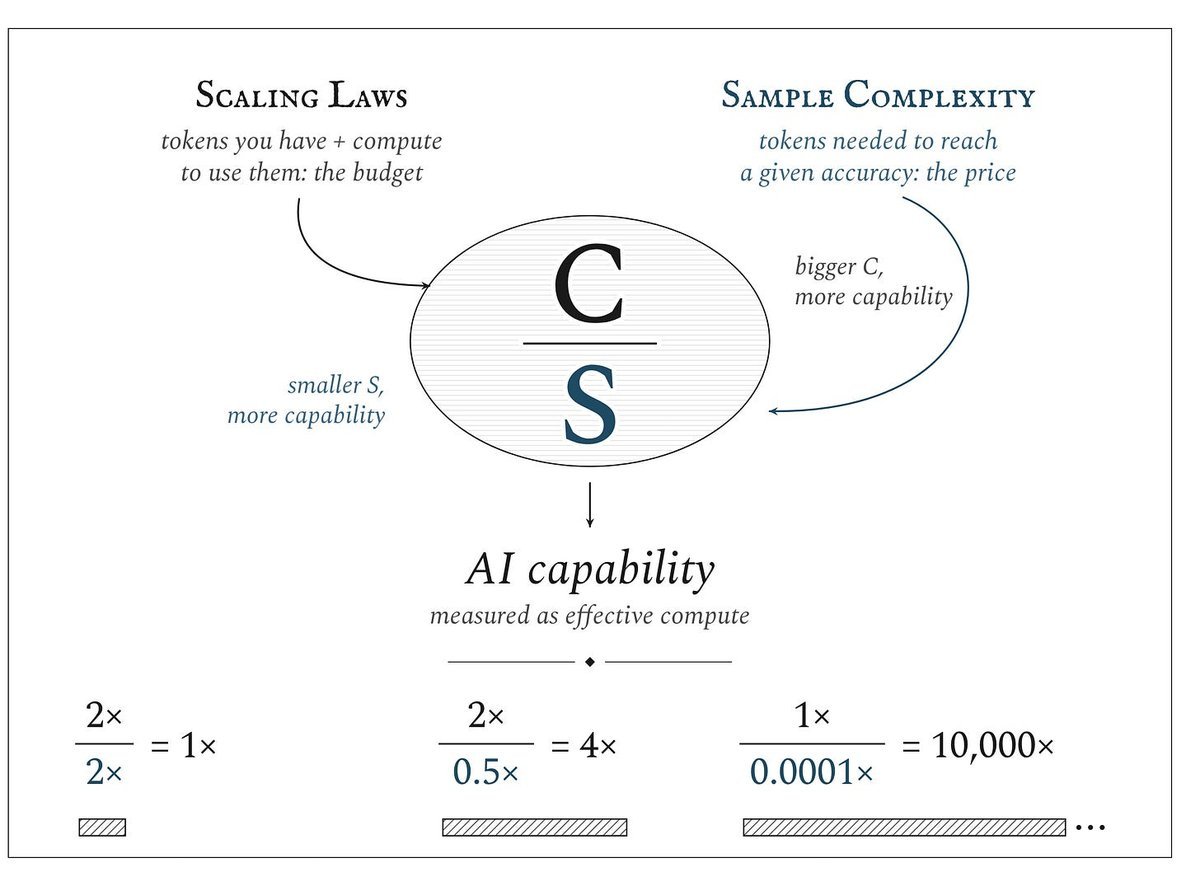
The author’s answer is sample complexity, the number of pre- and post-training tokens needed to reach a set accuracy on a benchmark. Fewer tokens means a better learning algorithm. Treated as a divisor on the scaling laws, the arithmetic is simple. Twice the compute at twice the sample complexity gives the same capability. Twice the compute at half the sample complexity acts like 4x the compute. At 0.0001x sample complexity, it acts like 10,000x.
The governance advantage is that measuring this doesn’t require building a stronger model. Labs would pick a fixed capability threshold below the frontier, train to it with each new generation of methods, and record the tokens and compute used, inference included. If the cost starts falling much faster than its historical trend, the engine of strong recursion is turning. The proposal calls this verification without escalation.
A counterfactual test for who is driving
A fast-falling curve could come from brilliant human researchers as easily as from AI. The second metric separates the two by measuring how much improvement would have happened without AI help.
The proposal describes eight research steps, from observing a past training run to launching a parameter sweep. AI tools help most at two: iterating on a theory with agents (R3) and editing the training script to test it (R5). The R5 effect can be measured even after the fact. A second engineer reimplements the idea without AI tools, and the time ratio gives the speedup.
R3 is harder, because creative work is nonlinear. The only method the author sees is to have a random 1% to 10% of a lab’s algorithm researchers work without AI for two weeks at a time.
The cheaper route and the one-month experiment
Weak recursion, meaning the scaling laws, is cheap to measure: rerun today’s algorithms on older data checkpoints. If total accuracy gains are known and the data-and-scale share is subtracted, what remains is strong recursion. Dedicated engineering teams re-implementing changes without AI could then narrow down how much AI helps with ideation.
To test whether that indirect method is accurate, the proposal recommends a one-time experiment. Frontier labs would set aside 10% of research staff to work without AI assistance for one month, then use the results to calibrate the indirect measure.
The author concedes the full approach would be expensive and that researchers may not welcome working the old way.
What would need to happen next
The proposal also calls for AI research benchmarks that test whether a model can take a training script and improve its sample complexity, and it says Karpathy’s autoresearch already has the makings of one. If labs ran the one-month experiment and the indirect method held up, they could report metrics for both kinds of recursion, giving regulators the grounded numbers a liability regime like Ball’s would need.
Source: andrewtrask.substack.com