Looped transformers reuse the same blocks several times to add depth without adding parameters, and new results suggest that can beat a standard model at roughly the same compute. Researcher Shiwei Liu reached the idea by an unusual route. After years of pruning networks, he started asking why the deeper layers of large language models were so easy to remove.
From pruning to a nagging question
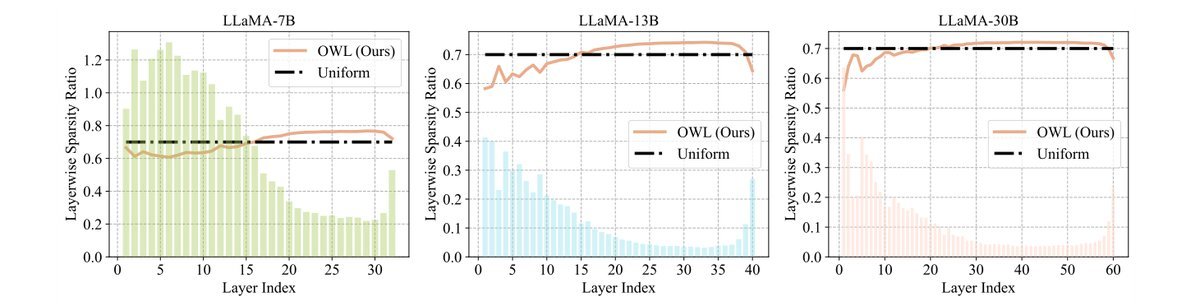
His early work on Outlier Weighed Layerwise Sparsity, or OWL, allocated different pruning ratios to different layers according to how many outliers each held. Layers with more outliers were pruned more gently. The finding that deeper layers tolerated heavier pruning was useful for compression, but it raised a puzzle: if so much depth can go, what was it doing there?
Compressibility alone doesn’t prove a layer is useless, and removing weights isn’t the same as removing a whole block. It was still enough reason to investigate.

The Curse of Depth
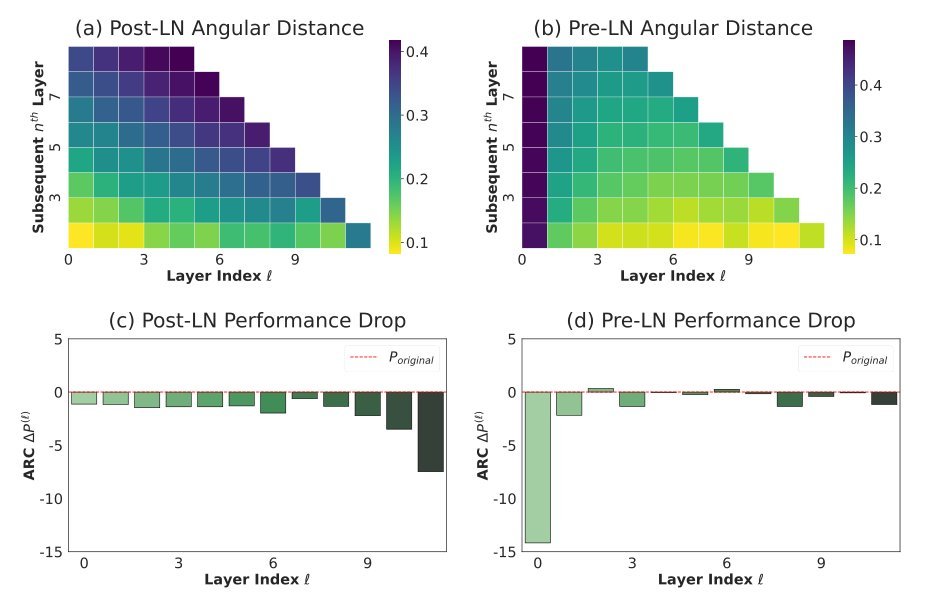
The investigation centered on where normalization sits relative to the residual connection. Comparing Pre-LN and Post-LN designs, deeper Post-LN layers became more distinct and consequential, while deeper Pre-LN layers changed the representation less. The cause is growing variance in the residual stream, which shrinks the normalized branch’s influence until a block’s Jacobian approaches the identity.
The team called this the Curse of Depth. Their first fix, LayerNorm Scaling, scales the normalized branch input by 1/√ℓ, controlling variance while keeping the Pre-LN structure.
Then came Kimi’s Attention Residuals, which let a layer combine earlier representations with learned, input-dependent weights instead of fixed unit weights. In a benchmark called DepthBench, with fixed parameter budgets and a shared training recipe, standard Pre-LN and many normalization variants gained little or got worse as models became deeper and narrower. Full Attention Residuals and Hyper-Connections benefited more consistently. The results apply to the tested settings only.
Why looping, and where it fails
A looped model applies shared blocks repeatedly. For a compression researcher the appeal is clear: instead of asking how much to remove, ask how much computation a smaller set of weights can deliver.
It isn’t automatic. In the team’s experiments, uncontrolled residual accumulation amplified variance growth and representation drift when weights were shared. In mixture-of-experts models, shared routers kept choosing similar experts, which limited diversity across loops.
The LOOM result
Keeping every earlier output gets expensive as loops pile up. LOOM instead uses a normalized exponential moving average with a fixed decay of 0.5, plus a global memory across layers and loops and a local memory reset each loop. It trades flexible retrieval of single past states for a compact summary that doesn’t grow with the number of loops.
In a 700M-parameter comparison, all models trained on 10B tokens, the team held backbone dimensions fixed and cut the activated experts per pass as loops increased, so per-token compute stayed about constant. At five loops LOOM lowered validation perplexity from 18.36 to 16.54 and raised average zero-shot accuracy from 38.84% to 39.53%. The four-loop version also reached 39.53% with perplexity of 16.58, at an exactly matched FLOP proxy. The five-loop model used about 7% more under that proxy.
The gains come from the full recipe, which also includes residual scaling, embedding re-injection and loop-specific routers, not the moving average alone. The result holds against this MoE baseline and compute accounting, not every non-looped design.
Latent overthinking
A second paper, on a design called InfiLoop, describes latent overthinking. A looped model can reach a correct intermediate deduction, or even a full solution, and then overwrite it in later iterations. The usual rule of carrying the latest output forward makes this likely, since a noisy update can wipe out earlier progress.
InfiLoop’s loop-native attention residual learns what to keep and how strongly to accept each new update. It combines content scores with a learned decay in a running summary, so later passes build on useful history without storing every state.
What comes next
The open work is learned forgetting. A fixed decay is a starting point, and the team wants the model to pick its own memory timescale, possibly depending on the current state. Whether looping holds up at larger scales and against stronger non-looped baselines remains to be shown.
Source: shiweiliuiiiiiii.github.io