
The KelpDAO hack drained about $290 million from the liquid restaking token rsETH on April 18, the largest DeFi exploit of 2026. An attacker forged a LayerZero cross-chain message and pulled 116,500 rsETH out of the Ethereum mainnet escrow in one transaction. LayerZero preliminarily attributes the attack to North Korea’s Lazarus Group.
The stolen tokens went straight into lending markets as collateral. The attacker borrowed an estimated $236 million in WETH and wstETH from Aave, Compound and Euler, mainly on Ethereum and Arbitrum.
How the bridge was fooled
KelpDAO used LayerZero’s omnichain token adapter to offer rsETH on roughly 20 layer-2 networks. Tokens sent out of Ethereum are locked in escrow, and incoming messages unlock them. Each application decides how many Decentralized Verifier Networks must approve a message. KelpDAO ran a 1-of-1 setup with LayerZero Labs as the only verifier.
At 17:35 UTC the attacker delivered a forged packet claiming to come from Unichain. LayerZero’s post-mortem calls it RPC poisoning, not key theft or a bug. The verifier’s keys were never stolen. Attackers corrupted two downstream RPC nodes the verifier relied on, then used a DDoS attack on the healthy ones to force a failover. The bad nodes lied to the verifier and told everyone else the truth, hiding the attack from monitoring. KelpDAO paused contracts 46 minutes later, blocking two more attempts.
The attribution points to the TraderTraitor unit. It’s also preliminarily linked to the $285 million Drift exploit on April 1. That adds up to about $575 million in 18 days through two different methods, neither a smart-contract bug. LayerZero now says it won’t sign messages for any app using a 1-of-1 verifier setup.
How the KelpDAO hack spread across DeFi
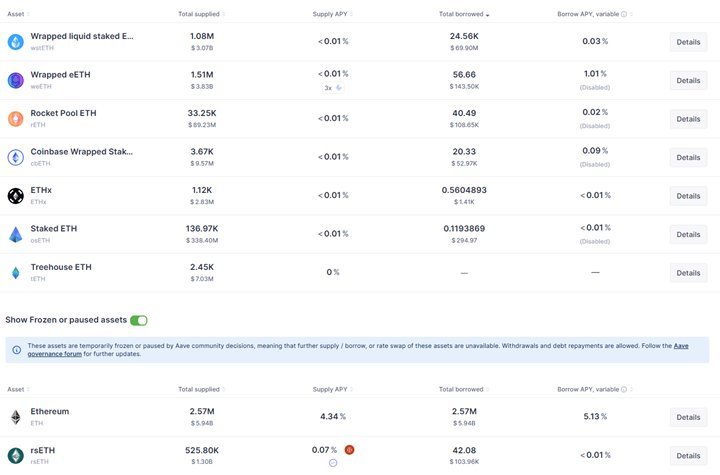
Rather than dump rsETH and crash its price, the attacker borrowed against it. Aave’s 5-of-9 guardian froze rsETH markets 77 minutes after the drain. A January decision to let rsETH back WETH loans in E-Mode, raising the maximum loan-to-value to 93% from 72%, left Aave most exposed. SparkLend caps rsETH borrowing at 72% and Fluid at about 75%.
Within 48 hours, total value locked in DeFi fell from about $99.5 billion to $86.3 billion. Aave lost roughly $8.45 billion, dropping from $26.4 billion to $17.9 billion and losing its place as DeFi’s largest protocol by deposits. WETH utilization hit 100% within hours, which blocks withdrawals because no idle liquidity remains. About $5.1 billion in stablecoin deposits faced the same limits.
Other protocols reacted quickly:
- SparkLend, Fluid and Upshift froze rsETH markets, and Pendle paused rsETH trading.
- Lido paused deposits into earnETH, and Ethena paused LayerZero bridges.
- Morpho reported only $1 million of exposure because its isolated markets contain losses.
Arbitrum takes back the funds
On April 21, the Arbitrum Security Council voted 9-of-12 to recover 30,766 ETH the attacker had moved to Arbitrum. It briefly upgraded the bridge’s delayed inbox, added a function to send messages on behalf of any address, forged one in the attacker’s name sending the ETH to a protocol-controlled address, and then restored the original contract. Only an Arbitrum governance vote can move the funds.
The recovery covers about a quarter of the attacker’s consolidated ETH. It also shows that the council can upgrade core bridge contracts with no delay. L2Beat rates Arbitrum Stage 1, and no major rollup has reached Stage 2, which would remove that power.
Who pays for the KelpDAO hack’s bad debt
112,204 rsETH, roughly 15% of post-exploit supply, is unbacked on the bridge adapter. The adapter holds 40,373 rsETH against 152,577 rsETH owed to layer-2 holders, a maximum backing ratio of 26.46%. Mainnet rsETH is backed by Kelp’s staking deposits, not the bridge.
LlamaRisk, Aave’s risk manager, modeled two outcomes:
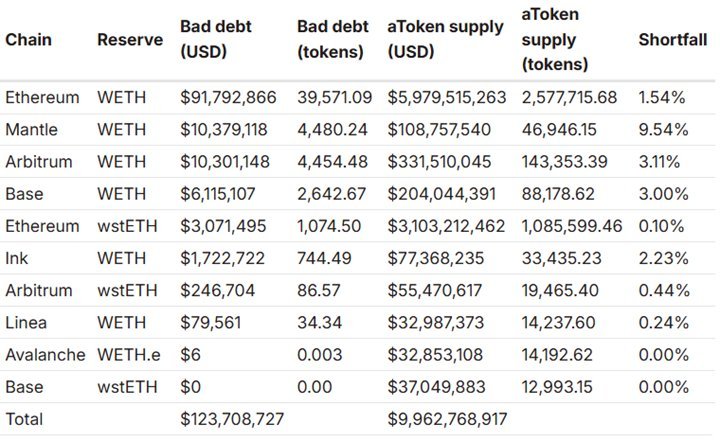
- Spread losses across all rsETH, a 15.12% haircut, giving about $123.7 million in Aave bad debt, $91.8 million of it on Ethereum.
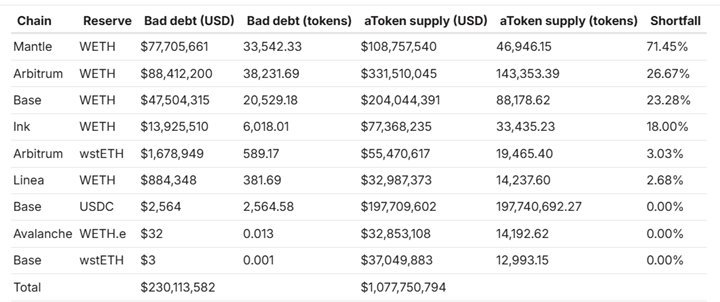
- Isolate losses on layer-2 rsETH, a 73.54% haircut there, giving about $230.1 million in bad debt, all on layer-2s, with Mantle’s WETH reserve short by 71.45%.
Aave’s DAO treasury holds $181 million, and its Umbrella safety module has about $54 million, only on Ethereum. The frozen Arbitrum funds could cover roughly 30% of the layer-2 shortfall if governance allocates them.
What to watch next
Aave had 27 rsETH-backed positions on Ethereum Core with about $1.16 billion in WETH debt as of April 20. Seventeen of them, with $818 million, sat below a 1.05 health factor, so a markdown could trigger simultaneous liquidations. Mainnet-heavy lenders favor isolating losses on layer-2s, and layer-2 users favor spreading them. KelpDAO, LayerZero and Aave hadn’t published a recovery plan at the time of the analysis.
Source: Galaxy