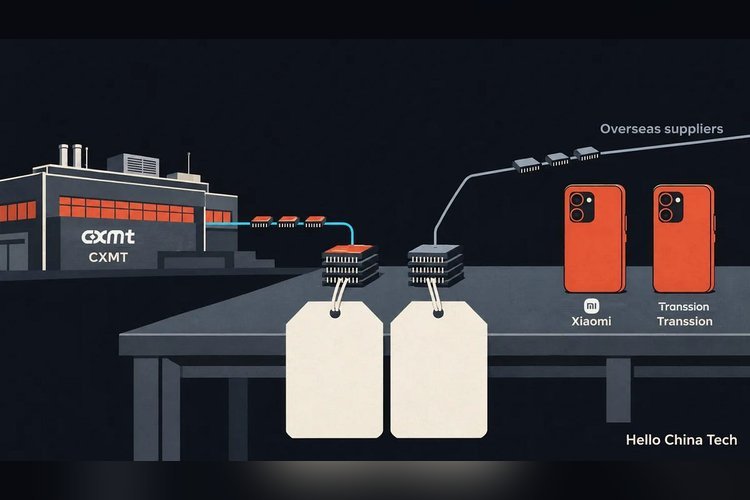
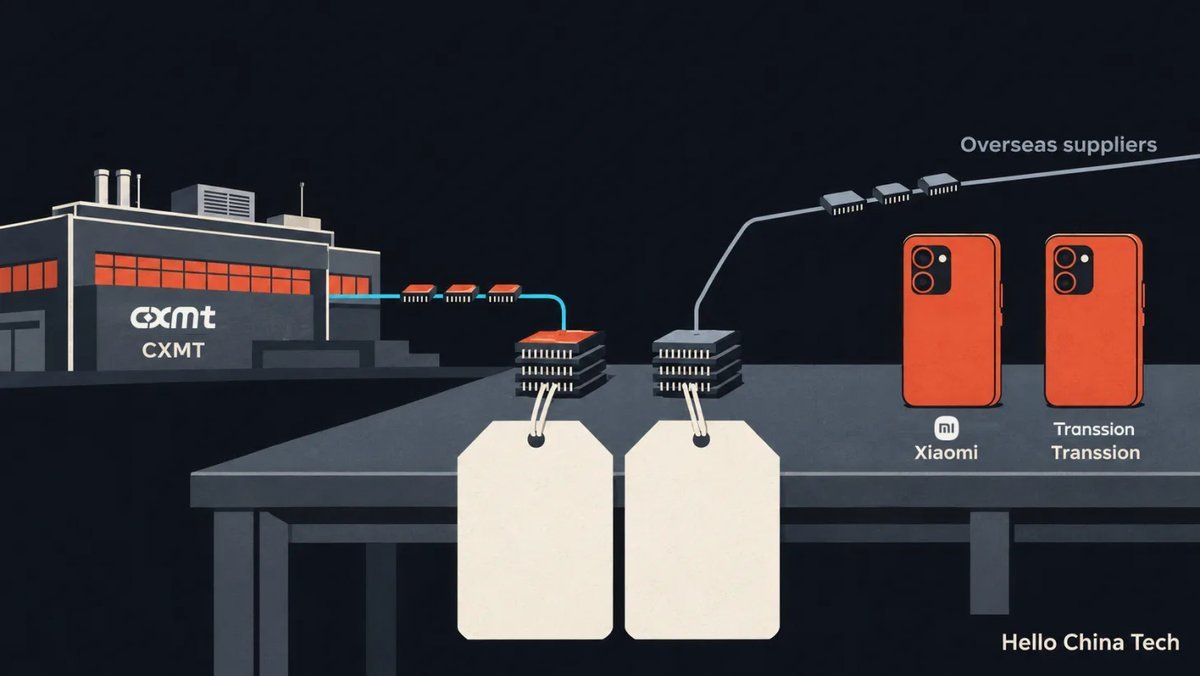
Owning a stake in a Chinese memory maker does not buy cheap chips. CXMT memory prices are tracking overseas suppliers, and the third-quarter accounts of two of its strategic investors, Xiaomi and Transsion, show how much that costs when phone demand is weak.
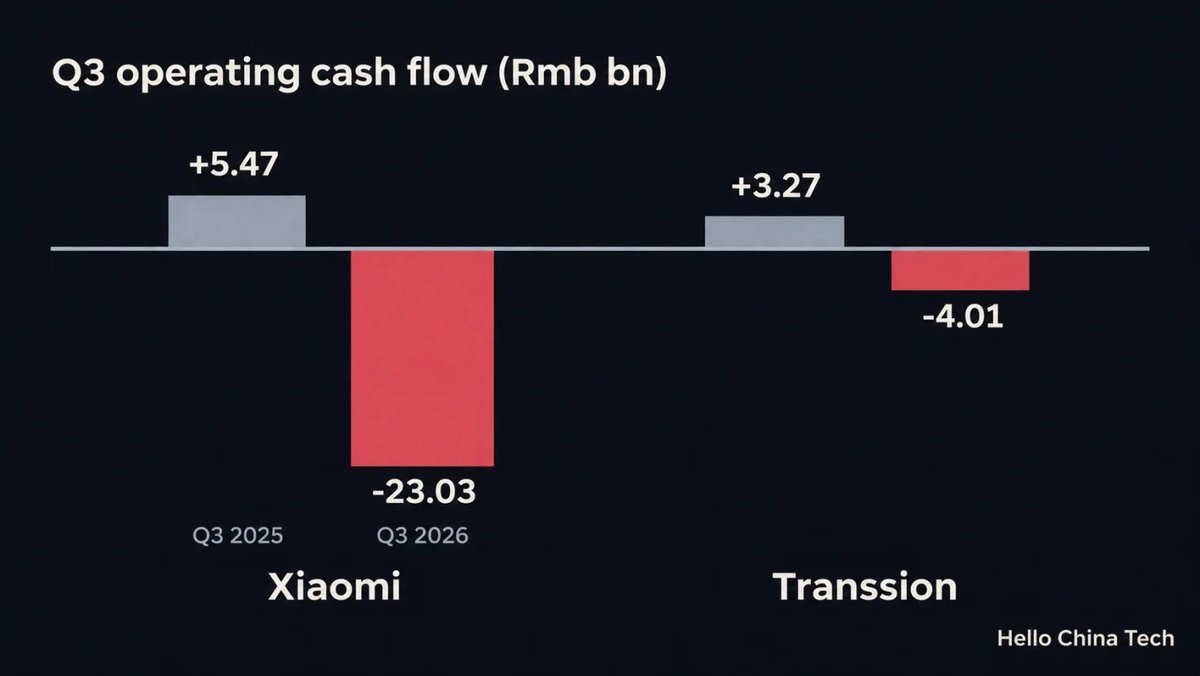
Xiaomi’s Q3 2026 report, released November 24, shows Rmb 23.03bn of operating cash flowing out. In the same quarter of 2025 it had taken in Rmb 5.47bn. Transsion, a handset maker in Shenzhen with a strong hold on Africa, swung from a Rmb 3.27bn inflow to a Rmb 4.01bn outflow.
A quarter of falling volume and rising costs
Sales volume can’t account for it. Preliminary IDC data shows 255.3m phones shipped worldwide, 22.0% fewer than a year before, the sharpest quarterly fall IDC has recorded. IDC’s Nabila Popal put the rise in memory costs since 2025 at roughly 350%, though the step from Q2 to Q3 was only in the low double digits.
Xiaomi’s second quarter shows how it coped earlier. Rmb 16.2bn of extra trade payables outweighed a Rmb 9.5bn inventory build, so suppliers were effectively financing its stockpile. That cushion did not repeat in the third quarter.
What CXMT’s own numbers show
CXMT, the DRAM maker formally called ChangXin Memory Technologies, went public in July. Documents for its share placement list affiliates of Xiaomi and Transsion among the strategic investors, each holding long-term supply agreements. Eighteen of the 30 investor groups were big companies with current or planned long-term ties.
Those agreements span DRAM supply over several years and joint product work. CXMT’s mid-year report says its LPDDR4X and LPDDR5/5X parts, low-power memory for phones, were already in both customers’ supply chains.
Profit tells the rest. CXMT’s third-quarter gross margin was 89.53%, which it put down to bigger volumes, higher prices and cheaper production per unit. Customer prepayments, booked as contract liabilities, grew from Rmb 447m at year-end to Rmb 7.04bn in September, a 15.7-fold jump.
Briefing investors on October 30, CXMT said its pricing sits near that of foreign suppliers. It also said server memory got dearer faster than phone and PC memory, and that DDR took a bigger share of nine-month revenue than of first-half revenue as DDR5 sales grew.
Samsung and SK Hynix lock in buyers
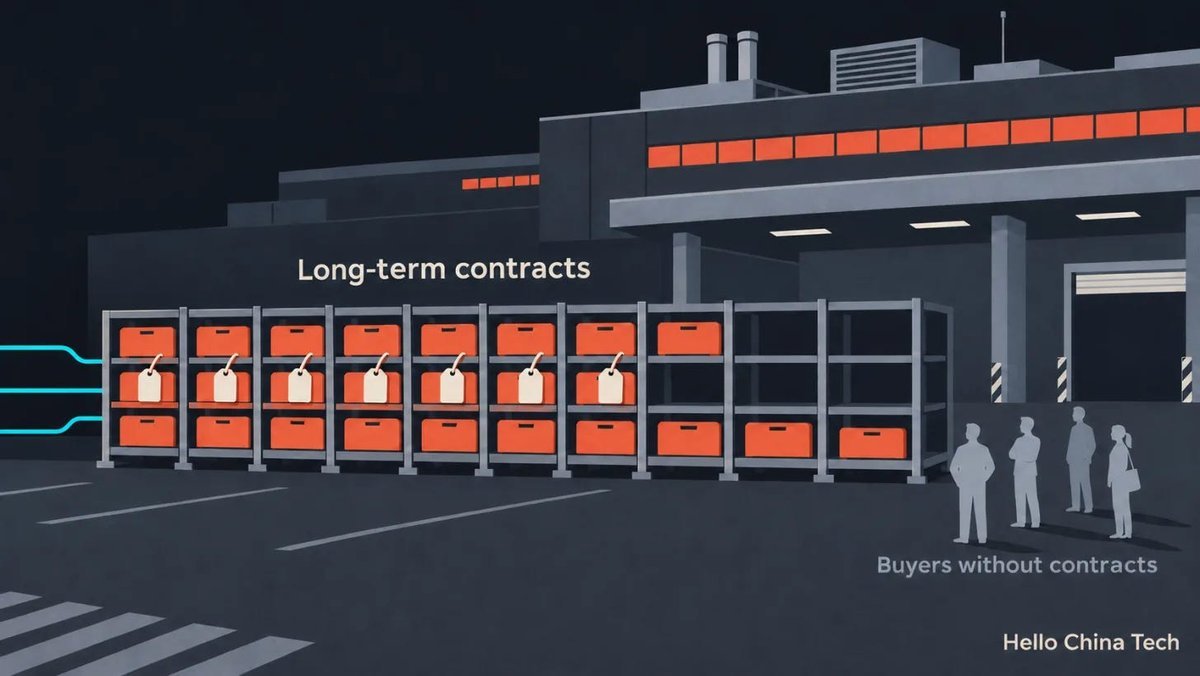
Korean suppliers are doing the same. Samsung Electronics told analysts it has multi-year contracts with 10 large customers and is negotiating with 10 others, aiming to put 60% to 70% of medium- to long-term capacity under such terms.
SK Hynix has signed 14 customers, cloud providers among them, to deals that usually last five years and carry protections like deposits. They already account for over half of 2027 and 2028 capacity. Adding talks still under way, its DRAM marketing head said output of DRAM and high-bandwidth memory (HBM, used in AI systems) through 2029 is effectively sold out.
The catch for phone makers is plain. Less future capacity will reach buyers who have no long-term agreement in hand.
The wider chip picture
Phones are losing ground inside chipmaking too. At SMIC, China’s largest contract chipmaker, smartphones fell to 14.3% of wafer revenue.
The quarter separated two things that are easy to confuse: access to domestic memory and the price paid for it. Xiaomi and Transsion appear to have secured supply through their stakes in CXMT, but CXMT memory prices did not come with a discount large enough to protect their cash flow.
What to watch in the next reports
Three questions will decide how long the squeeze lasts. First, whether memory prices keep rising at a low double-digit pace each quarter. Second, whether Xiaomi and Transsion can keep funding stock through supplier credit, as Xiaomi did in the second quarter. Third, whether CXMT’s growing pile of customer advances turns into shipments without a price cut.
The fourth-quarter filings should show whether cash burn at the two handset makers eases or deepens. They will also show whether CXMT’s margin holds near 90% while it sells at prices close to its overseas rivals.
Source: hellochinatech.com