Code-driven AI illustrations are turning out to be more practical than pictures from dedicated image models. Frontier LLMs released in the second half of 2026 are much better at visual reasoning and design than their predecessors, and because the output is code, anyone can keep editing it without the oddities that come from re-prompting an image generator.
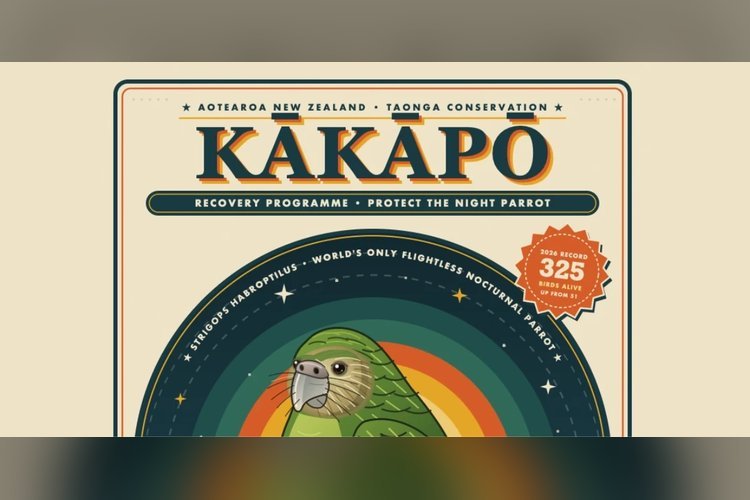
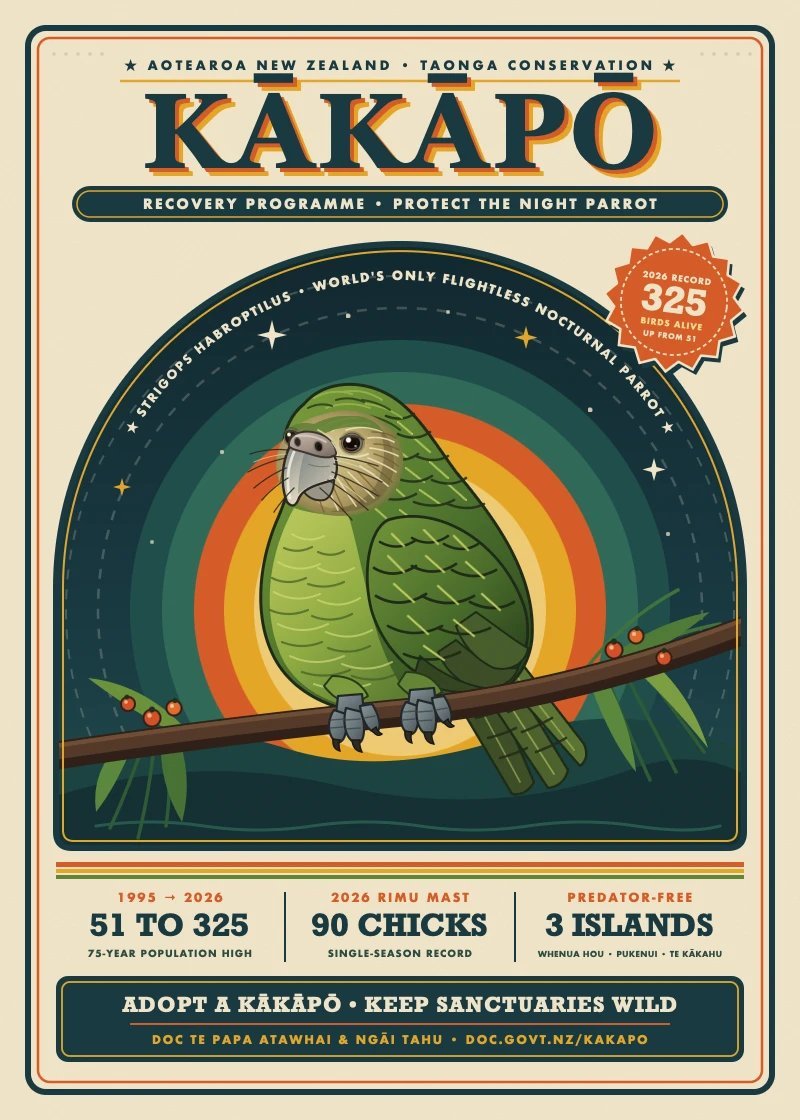
A kakapo poster from Gemini 4 Neon
Gemini 4 Neon has drawn attention for its 2D design skills, so it was tested in Google’s AI Studio with a single prompt: an SVG poster promoting the Kakapo recovery project, with research done first and a 1970s graphic design look.
It took several rounds. AI Studio does not render SVGs, which means the model could not see its own visual mistakes. The fixes came from follow-up requests: make the kakapo more realistic, especially the face, using image search for references, and repair text that overflowed a pill-shaped label, with screenshots attached.
The final poster was solid. AI Studio ran Google searches to find the figures on it, and they were checked and found correct. The poster also includes red rimu tree fruit on a branch, which matters because it is essential for the kakapo breeding season.
Code-driven AI illustrations stay editable
Whether or not the style appeals, the result is a file you can open. You can change the text directly in the SVG, or load it into Inkscape, Adobe Illustrator or Boxy SVG and adjust it visually.
SVG is only one route. A model connected to a coding agent can run code that produces image files, HTML and CSS, 2D canvas elements, Blender scripts, WebGPU shaders or PDFs. Any format that exists as a file on disk or as a script’s output is a target.
That is one reason vibe game development has taken off. Claude Opus 5.5, GPT-6 Astra and Gemini 4 Neon can produce good-enough game assets such as 3D models, textures and sprites purely by writing code, and tweaking or remixing them means asking for more code.
How bitmap image models compare
Most image tools output bitmaps. Stable Diffusion, DALL-E and Midjourney led early on. Over the past 15 months or so, LLM-driven versions such as Google’s Nano Banana and OpenAI’s ChatGPT Images arrived. They are competent at editing existing images and keeping details, so a design can go through several conversation turns without falling apart.
They still have limits. Zooming in can reveal glitches, and text is drawn as shapes by the model, so it lacks the guaranteed consistency of real font-based typography. The images are also flat. You can describe or annotate a change, but you cannot grab a single element or layer and move it.
Generated code avoids all three problems. Dedicated image models keep their place for photorealistic work, but for explanatory diagrams, editable posters, UI components, visualizations and game assets, code looks like the better bet.
A gap that closed
After Nano Banana and ChatGPT Images arrived, it looked as though Anthropic had a serious product gap. OpenAI and Google both offered excellent image models, and generative video too. Google still has Veo and now Omni, while OpenAI sunset Sora. For enterprise sales, where business still runs on PowerPoint, an image model seemed like an expected feature.
Now Claude produces visually compelling presentations and website designs, and Claude Design offers a full design system platform, all built on code-driven images. Text-output models simply kept improving until they could handle visual design by writing code, a pattern that echoes the bitter lesson in AI research.
The practical difference shows up on the second day of a project. A bitmap has to be regenerated to change one word, while an SVG needs a one-line edit.
Where code-driven AI illustrations go next
The next test is whether image models and code-writing models converge, with one product choosing the right approach per request. For now, anyone who needs an asset they can revise tomorrow has a strong argument for asking a model to write it as code.
Source: Simon Willison’s Weblog