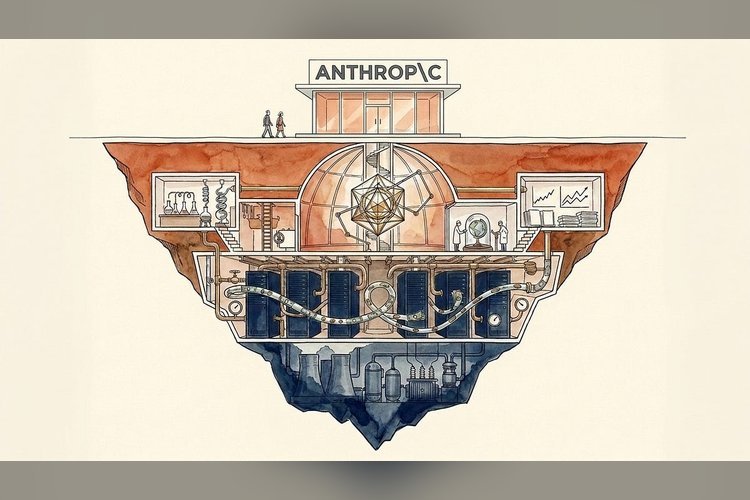
The Anthropic business model comes down to a single test, according to a new investor analysis: can the company keep finding new uses for frontier tokens faster than existing intelligence gets cheap? The answer decides whether Anthropic looks like a high-margin software company or a capital-hungry utility.
The basic machine
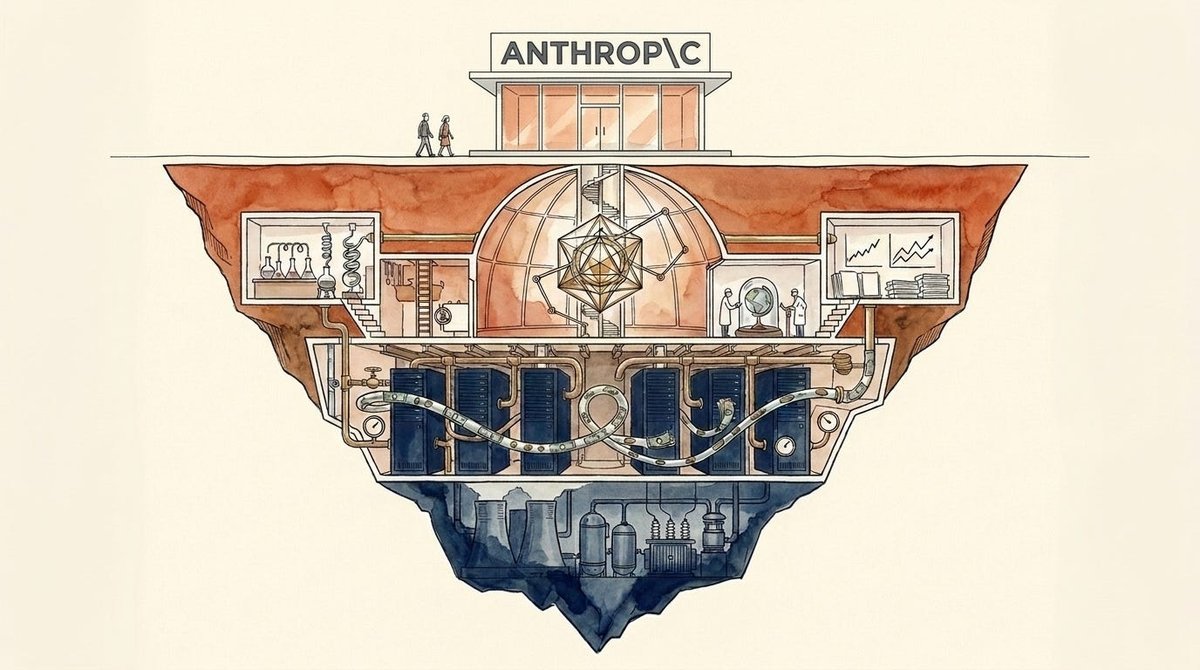
In this view, a frontier lab collects money as equity, debt or compute commitments, spends it on GPU capacity and resells the output as API intelligence. Some add flat-rate subscriptions and their own software, and some run their own data centers.
The analysis picks Anthropic as the cleanest example of a company that only sells intelligence. It carries none of the consumer baggage attached to OpenAI, and has none of the side businesses Alphabet or Meta can lean on.
The spread that pays for research
A B200 GPU-hour rents for $2-$9. Anthropic sells the output at a blended $20-$50 per hour, and $100 or more at the frontier. The gap pays for research and for the remaining fleet. Serving an open-weight model such as DeepSeek brings in roughly $5-$9 per hour, close to plain GPU rental, so little is left over for R&D.
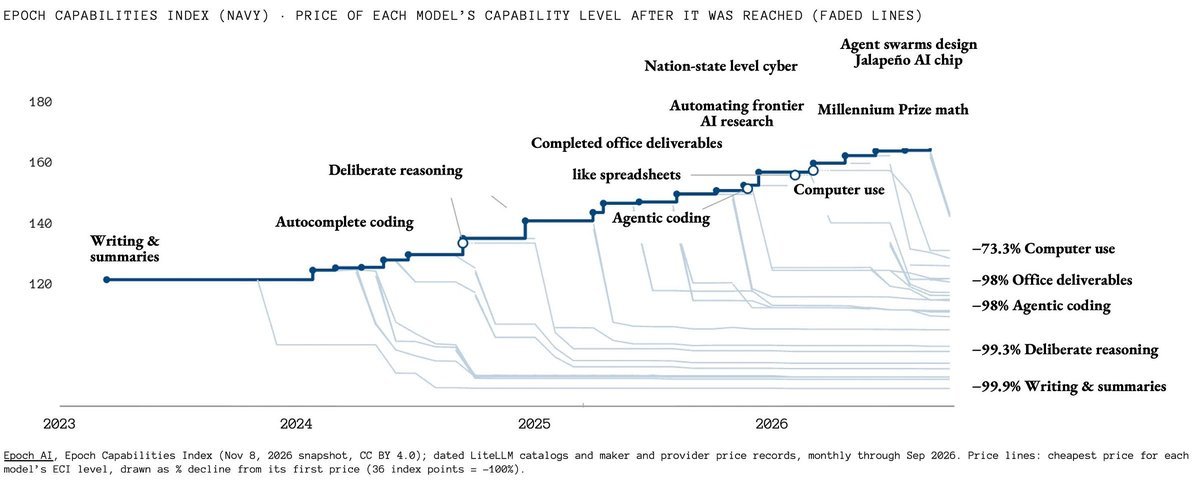
The pressure comes from price. As models grow more efficient and rivals close in, tokens at today’s frontier get cheaper toward zero. Total token spending is climbing, yet more of it lands on near-frontier and open-weight models, which the analysis says arrive about 4 to 12 months behind.
Where frontier tokens still earn a premium
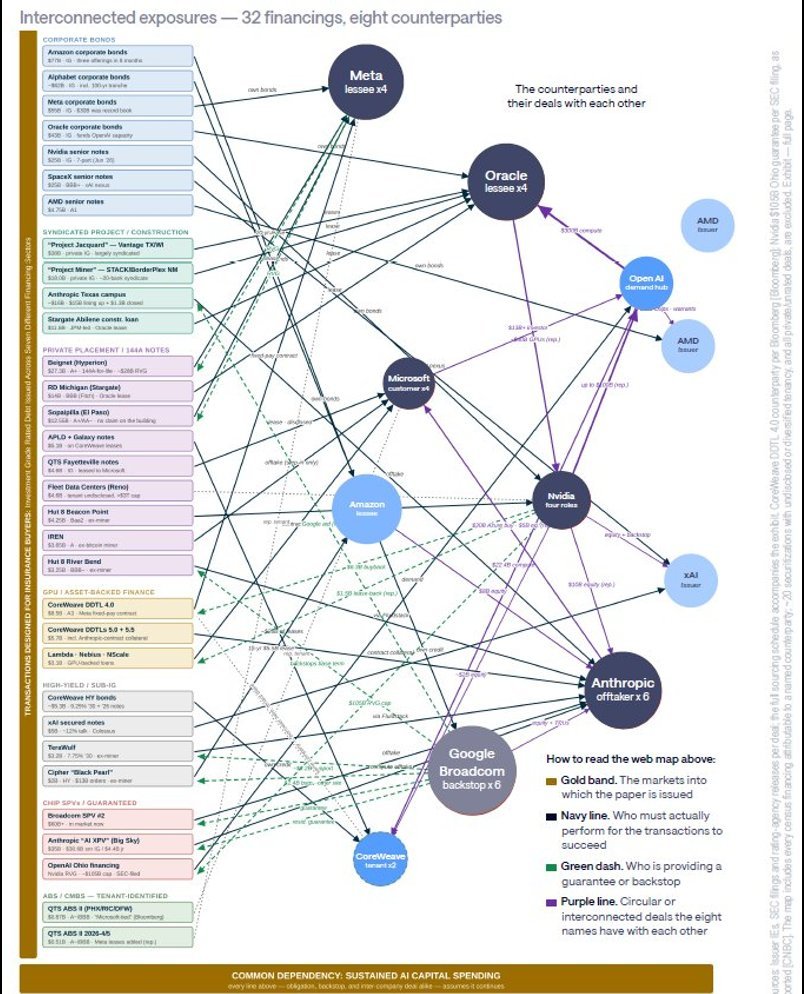
The premium survives in places where being 5% smarter first beats being 95% cheaper later. The analysis lists finance, cybersecurity, defense and government, biology and materials science, with semiconductor design a frequent example. The open question is whether the economy can absorb superhuman thinking in these fields fast enough to justify the spend.
A bear case and a bull case
The compute split is read two ways. Compute for paying customers fell to 26% of the total even as it more than doubled in dollars, while R&D and internal compute grew more than fourfold. Bears say staying at the frontier forces research and free-tier compute to grow twice as fast as revenue-bearing use. Bulls see about $18.5 billion a year going into R&D and internal use and assume the company has good reasons to expect it to pay off.
Returns per research dollar are falling. The analysis cites 6.58 ECI points per $1 billion of R&D in 2024, down to 0.76 in the third quarter of 2026. The bull reply is that points aren’t linear in value: moving from 120 to 130 unlocked summaries, 150 to 165 unlocked agentic coding and computer use, and 170 and above might open up alpha in finance or drug discovery.
There’s a catch the analysis admits. Data-labeling firms such as Scale and Mercor can cut contractor spend if the goalposts stop moving for a year. Anthropic is pointing large fixed compute commitments at those goalposts, so a pause hurts far more.
If margins erode
The analysis sees two escape routes, both with costs.
- Downward, into inference, chips, construction and energy. This protects margins but makes the lab a capital-heavy utility and sends it back to the financing problem.
- Upward, into fine-tuning, vertical apps and rollups. This captures more of the workflow but pits Anthropic against its best API customers, who then have more reason to switch to open-weight models.
Even if open-weight progress stalls, whether from a harsher GPU climate in China, labs cutting off distillation or a lack of US funding, Google or Meta can price near-frontier intelligence close to cost because they earn money elsewhere.
Two ways to read Anthropic
The analysis ends with two possible end states. Either Anthropic ends up as a debt-heavy utility with a research arm attached, or as a company whose frontier intelligence wipes out its own best customers. Which one it becomes depends on whether new frontier use cases keep arriving ahead of the open-weight catch-up. The piece carries a standard disclaimer that it isn’t financial advice.
Source: mhdempsey.substack.com