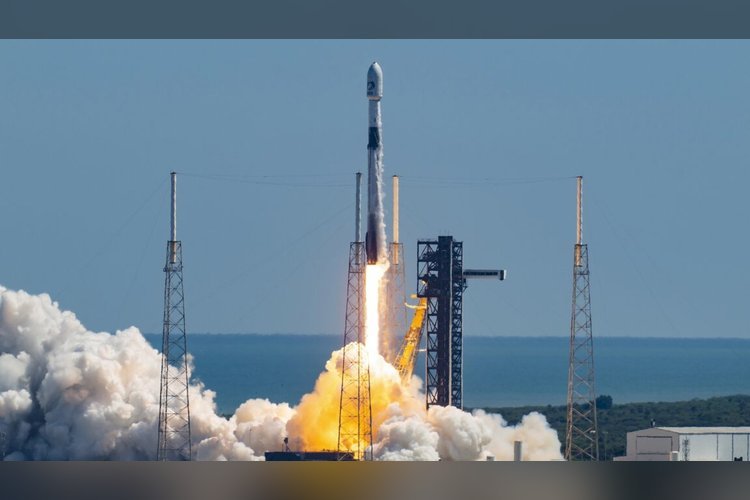
An Ariane 6 rocket put 36 more Amazon Leo satellites into orbit on Tuesday, giving the broadband constellation a lift just weeks after a launch failure cost it 40 satellites. The Amazon Leo satellites now in orbit number 432, and the company is turning to its biggest rival for help to keep building the network.
Amazon told reporters it is speeding up several Falcon 9 launches it bought from SpaceX. SpaceX also owns Starlink, the satellite internet service Amazon wants to challenge.
What went wrong with Vulcan
United Launch Alliance’s Vulcan rocket was Amazon’s main launch provider. On November 15, it misfired during a mission carrying Amazon satellites, and the 40 satellites on board were lost. Vulcan will now sit out for months.
That left a hole in the launch schedule at an awkward moment, with the network still far from complete. Amazon had planned its deployment around a handful of new rockets, and one of its biggest suppliers is suddenly unavailable.
Falcon 9 moves up the schedule
The next Falcon 9 flight for Amazon Leo is now planned for December. It was originally set for next year, so the move pulls it forward by several months. Amazon says more Falcon 9 launches will follow in quick succession after that December flight.
The Falcon 9 rides were already paid for. Amazon bought them as part of its broader launch deals, so the change is about timing, not new spending on rockets. Still, it is a notable sight: a company racing SpaceX in orbit is also relying on SpaceX to get its own satellites up.
A launch plan built on unfinished rockets
Amazon started signing launch contracts five years ago and cast a wide net. It reserved rides on 108 flights, using nearly every medium- and heavy-lift rocket available in the West, to place 3,232 satellites in low-Earth orbit.
The early buying went to three providers:
- United Launch Alliance in the US, with its Vulcan rocket
- Arianespace in Europe, with Ariane 6
- Blue Origin in the US, with New Glenn
Nearly all of those contracts depended on rockets that were still in development when Amazon signed. New rockets run late, and these were no exception. Each of the three faced delays before it could fly.
Where the build-out stands
As of Tuesday, Amazon and its launch partners have completed 17 of the 108 planned flights, and one of those ended in failure. By the numbers, the fleet of 432 satellites is roughly 13 percent of the 3,232 planned.
The setbacks are piling up on more than one front. New Glenn has been grounded since May, after an explosion on Blue Origin’s launch pad in Florida. Vulcan is out after the November 15 misfire. That leaves Ariane 6, which delivered Tuesday’s batch, and now Falcon 9 as the rockets carrying the load in the near term.
Why the Starlink gap matters
Amazon is the challenger here. Starlink, owned by SpaceX, is the network Amazon hopes to dethrone, and every month Amazon spends waiting for rockets is a month Starlink keeps its head start. Moving Falcon 9 launches forward is a way to claw back some of that time.
The Ariane 6 launch also shows the benefit of spreading orders across several providers. When two of the three planned heavy rockets were out of action, a third was still able to deliver 36 satellites.
What to watch in December
The December Falcon 9 launch is the next test. If Amazon can follow it with the quick string of flights it has described, the constellation could grow much faster than the first 17 missions allowed. If Vulcan’s grounding runs longer than expected, or if New Glenn stays on the ground, the company will lean even harder on Falcon 9 and Ariane 6.
Vulcan is out for months, and New Glenn has been down since May. Until both are back, the plan to reach 3,232 satellites depends heavily on a competitor’s rockets.
Source: Ars Technica