
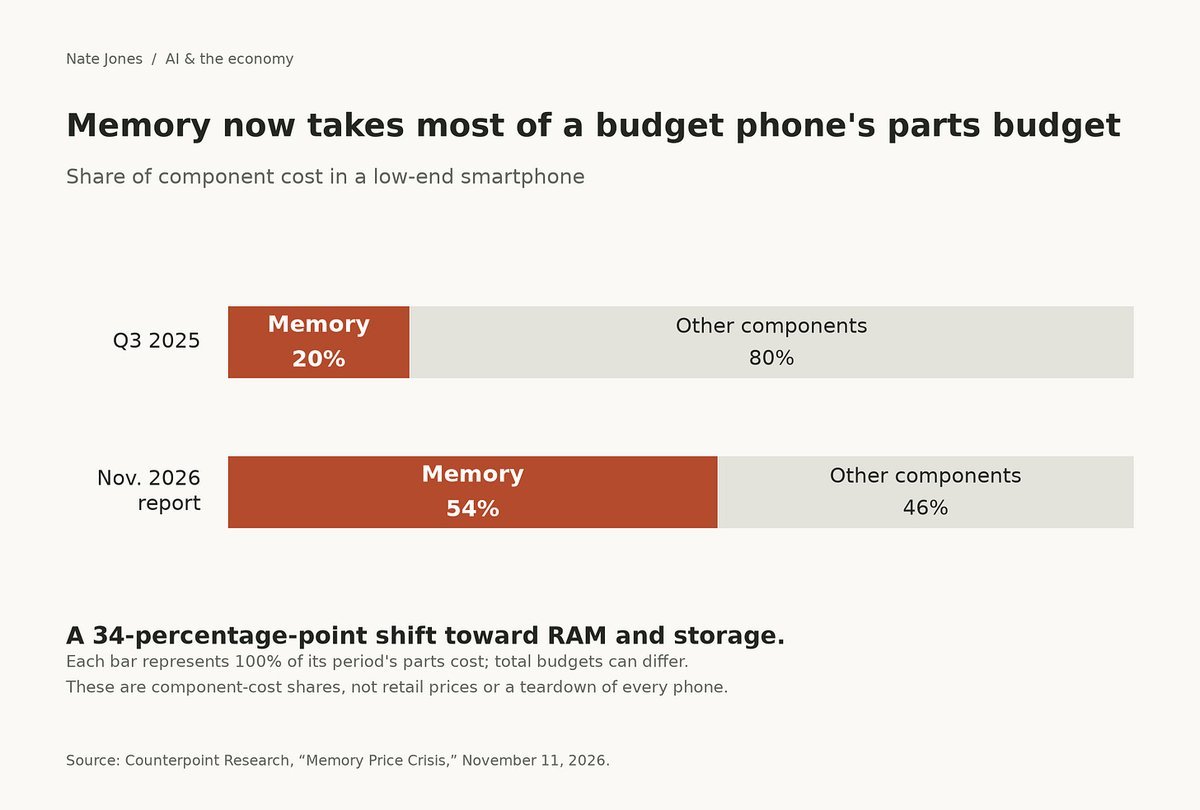
Laptop and phone prices are climbing because AI data centers and consumer device makers are bidding for the same memory. Counterpoint Research figures show memory at 54% of a low-end smartphone’s component cost today, against roughly 20% a year ago. Its report also puts the global average retail price of a smartphone up 20% this year, with individual models varying either way.
You don’t have to use a chatbot to pay for it. You pay when you replace your laptop or phone.
Why agents reach into consumer memory
Consider what a coding agent does with a bug report. The model plans, then the agent opens files, executes code, reads results, runs tests and retries. Sometimes it loads a browser to check its work. Every step needs compute, working memory and room for the tools involved.
Scale that to agents working for hours at thousands of firms, and the load on plain servers dwarfs what the GPUs alone suggest. Counterpoint’s memory analysis lists agentic AI among the biggest drivers of demand for conventional memory, including DDR and LPDDR, the types found in PCs and phones.
Server and laptop chips aren’t interchangeable parts, but they come off partly shared production lines. As cloud providers reserve more of that output, phone and PC makers have less bargaining power. New memory capacity takes years to build, and power is slow too. Berkeley Lab found that generation projects which started operating in 2025 waited a median of over five years from requesting a grid connection, in regions where data exists.
The price pressure on AI providers
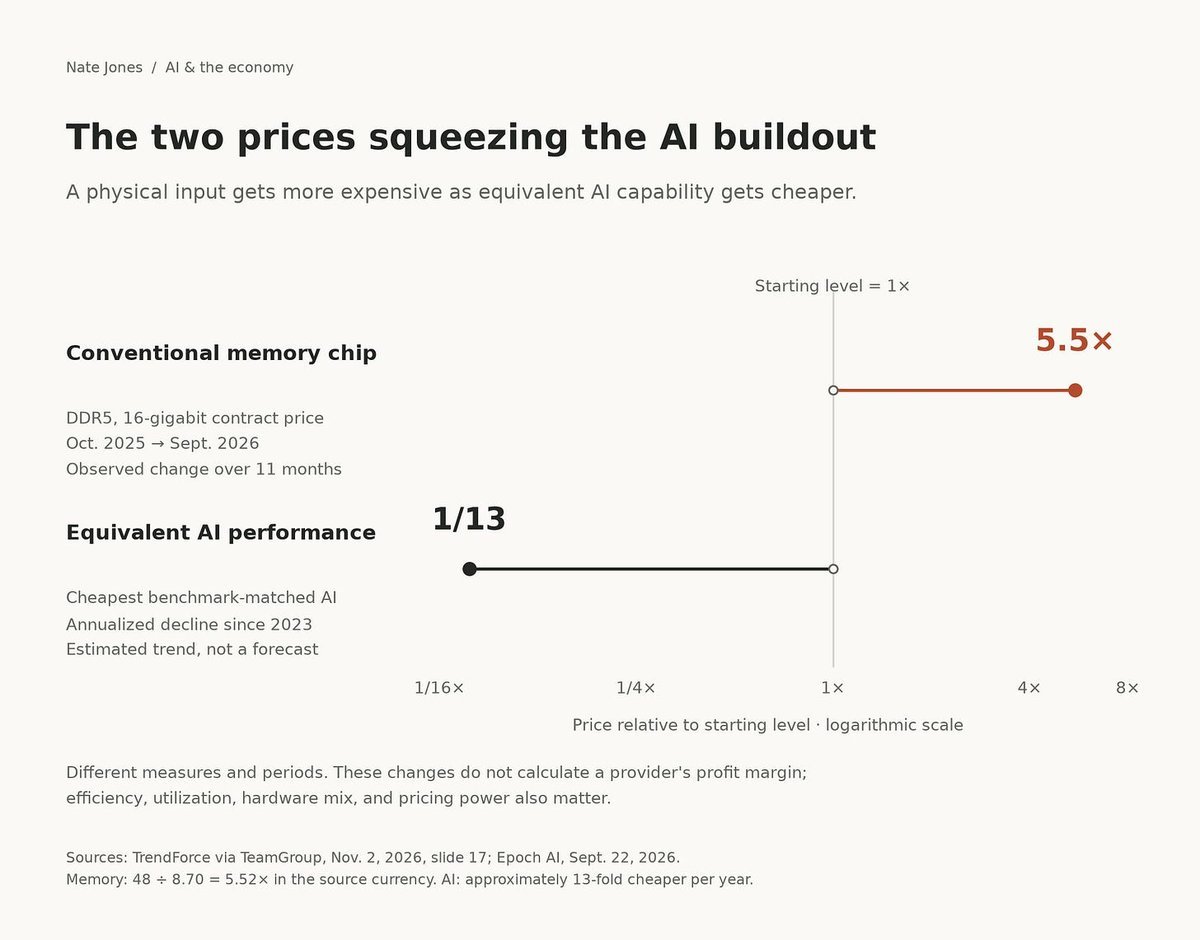
The firms buying this hardware face a squeeze of their own. Epoch AI estimates that the price of reaching a fixed level of AI performance has dropped about 13 times each year since 2023 on the benchmarks it tracked. That’s the cheapest path to a capability, not what your subscription costs.
Meanwhile, the contract price of a common 16-gigabit DDR5 chip rose roughly 5.5 times from October 2025 to September 2026, using TrendForce numbers that TeamGroup republished. Costs go up as the selling price of a fixed amount of AI falls.
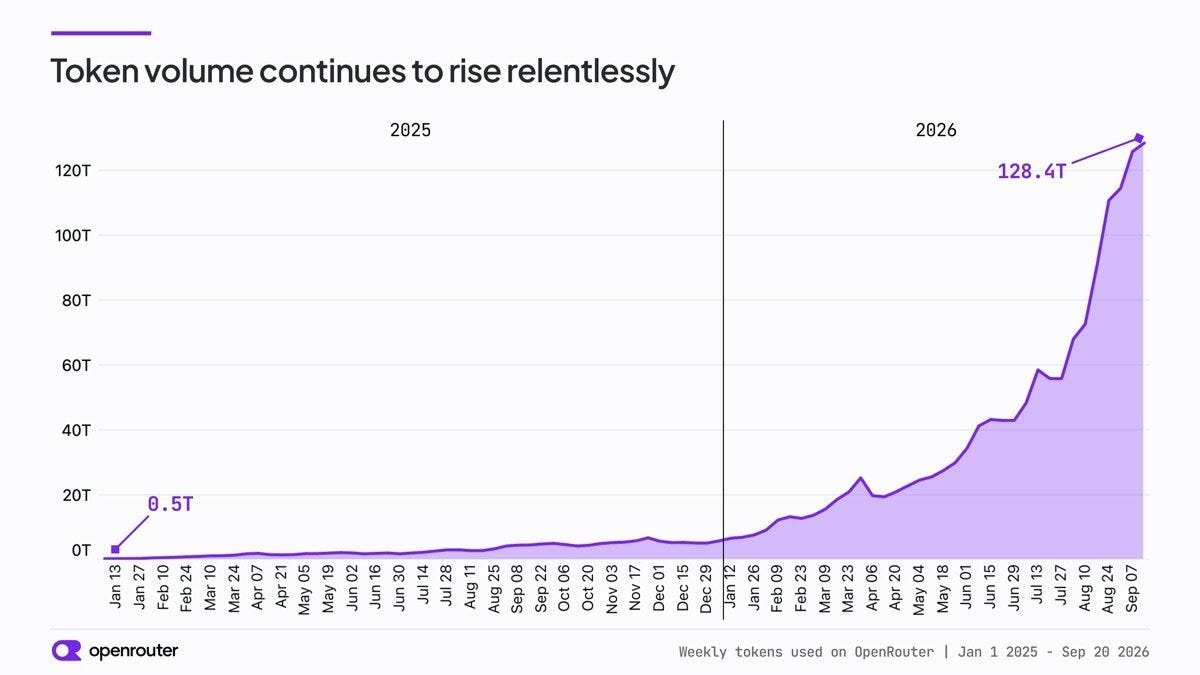
Demand itself isn’t the issue. Weekly token volume on OpenRouter jumped from 0.5 trillion in January 2025 to 128.4 trillion in September 2026, about 250 times higher in 20 months. Anthropic says its third-quarter revenue is over 12 times last year’s.
Where the financing gets tight
Strong sales don’t prove the borrowing works. A Federal Reserve governor has described a buildout that leans more and more on debt, plus long leases and similar obligations. A Brookings conference paper suggests GPUs can lose their economic value in three to six years, while the buildings and electrical gear last far longer.
If lenders grow pickier, heavily exposed builders could have trouble paying for expansion or refinancing existing debt. Providers might respond with stricter usage caps, new subscription tiers or a push toward their most profitable customers. None of that means every AI price will go up.
How to buy a device now
- A machine that still does its job can skip an optional upgrade.
- If work forces a replacement, size it for your workload and how long you’ll keep it. RAM you can’t add later is a costly place to save.
- On budget devices, where memory costs bite first, compare how much RAM and storage a given price buys.
- Weigh refurbished and last-generation units that carry enough memory against new entry-level models, and check battery health, warranty and software support dates.
Older stock isn’t automatically a deal, and no sale event will end a supply shortage.
Using AI tools while access is cheap
Run routine work on cheaper, faster models and reserve the frontier model for tasks where its extra reasoning visibly improves the result. Keep copies of the prompts, files and test examples that an important workflow depends on, and try a second provider before an outage or price hike forces the switch.
When judging a vendor or employer, ask three things. Does the business cover its bills at today’s compute costs, or does it depend on more price drops, discounts or new financing? What happens if its compute bill rises 30%? And what would customers keep paying for if model access became interchangeable?
What to watch next
A useful skill is knowing the true cost of a finished task, counting model calls, failed tries, software and the hours people spend reviewing output. Pick one repeated workflow, run a sample through your present setup and a cheaper one, then compare accepted results, spend and review effort. If memory contract prices keep pushing laptop and phone prices up while AI prices fall, that comparison will shape both your next device purchase and your next AI budget.
Source: natesnewsletter.substack.com