AI agent authentication is usually framed as a question of which protocol to pick. A better question is why the company building an agent would adopt one at all. The recent fight between Amazon and Meta over Muse, Meta’s AI agent, shows how the incentives play out.
What happened with Muse
Amazon began turning Muse away on September 20, 2026. Its stated reasons were that Meta never warned it the agent would visit, that the agent hides what it is while browsing, and that it seems to keep shoppers’ login details.
The second point is the telling one. Security firm Cequence examined Muse and described a cloud-hosted Chrome session routed through a consumer VPN, built so traffic resembles a normal shopper. That looks a lot like a professional scraping rig.
Amazon wasn’t alone. Analysts at Jefferies ran Muse against hundreds of sites and saw the results fall into three roughly equal piles: sites that refused it, sites that throttled or quizzed it, and sites where it worked without friction.
Why agents try to look human
An agent is sold on the idea that it can act online like its owner, with the owner’s accounts. Its builder therefore wants it to never hit a wall, because a blocked agent means a failed product. One restricted to approved sites is worth less than a person with a browser.
That leaves two roads. The first is blending in: a genuine browser, clean IP addresses, a coherent fingerprint and human pacing. It’s expensive and needs constant upkeep as anti-bot vendors improve. Muse went this way. The second is proving identity with credentials a site can check. It’s cheap to build, but the site gets to say no.
Muse shows that blocking cuts both ways. Announce yourself and a site can refuse you outright. Hide badly and you’re caught anyway: two out of three sites in the Jefferies run stopped or restricted an agent designed to pass as human. A protocol spreads only once the second road beats the first on payoff.
Pay per Crawl shows the same math
Cloudflare’s Pay per Crawl is a precedent. Joining means naming yourself, paying the site’s price and accepting refusals. An unblocking service lets a scraper pay per request and ask no one. While that route works and costs less, there’s little reason to join. Over a year on, Cloudflare’s own documentation calls the program a closed beta, and no public adoption figures have turned up.
Courts may push the same way. Amazon took Perplexity to court in November 2025 over the Comet browser, alleging much the same thing: Comet posed as a regular Chrome session. A district judge barred Comet from shopping on Amazon in March 2026, and the Ninth Circuit lifted that order on August 4. Its reasoning was that a user who hands an assistant a task is the one reaching Amazon’s systems. The ruling only concerns the preliminary order. The lawsuit goes on, with an amended complaint filed and a motion to dismiss pending.
Reading agents and shopping agents
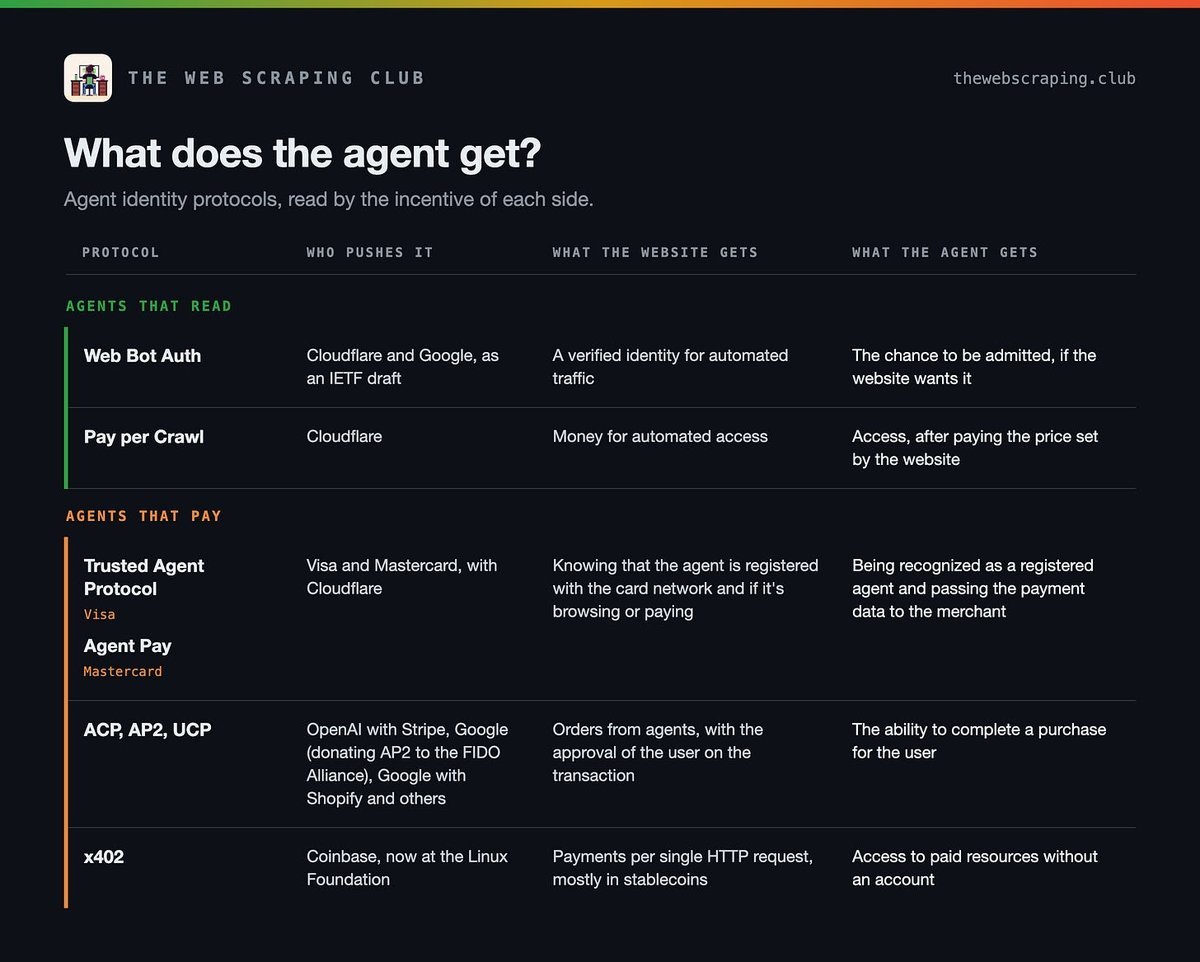
Web Bot Auth underpins one family of protocols. Each request carries a signature made with a private key, and the matching public key sits in a published directory, so a site can check the sender. The draft is upfront about its limits. A good signature shows the holder of that key sent the request. It doesn’t reveal who runs the agent, whether it’s harmless, or whether the action is permitted.
Some agents already sign. ChatGPT agent, Block’s Goose, Browserbase and Anchor Browser were among the first on Cloudflare’s list, and Amazon Bedrock AgentCore Browser has followed. A signed agent still receives a bot score of 1 on Cloudflare’s scale, which means certainly automated, so the outcome rests with the site’s rules. The payment-focused family builds on the same signature: Visa and Mastercard added a label showing whether an agent is browsing or buying.
Here the two types of agent split on AI agent authentication. An agent that only reads gets nothing from AI agent authentication that it can’t get anonymously, and the site gains no ad impression from the visit. Both sides have reasons to play detection against evasion.
A shopping agent’s session ends with a payment. Merchants want the sale and card networks want it safe. The agent needs a payment its issuer will honor as approved by the user, which no amount of looking human can fake. If verified payments are limited to agents that authenticate, the builder’s incentive points at the protocol. Visa reports that over 175 issuers across 45 markets have joined Agentic Ready, Google said in April it would give AP2 to the FIDO Alliance, and the x402 Foundation started operating in July with forty members. All of that comes from the companies involved, and independent data on live merchants is missing.
What AI agent authentication means for sites and publishers
For online stores, accepting shopping agents looks like the lesser evil. Fewer people visit, and sites will depend on the agents to choose them, so price and optimization may count for more than brand and marketing. Amazon knows this race: it runs its own assistant, Rufus, and a November tally counted 99 crawlers and agents listed in its robots.txt. Amazon and Meta are reportedly negotiating an end to the Muse block, with search result presentation and advertising still unresolved.
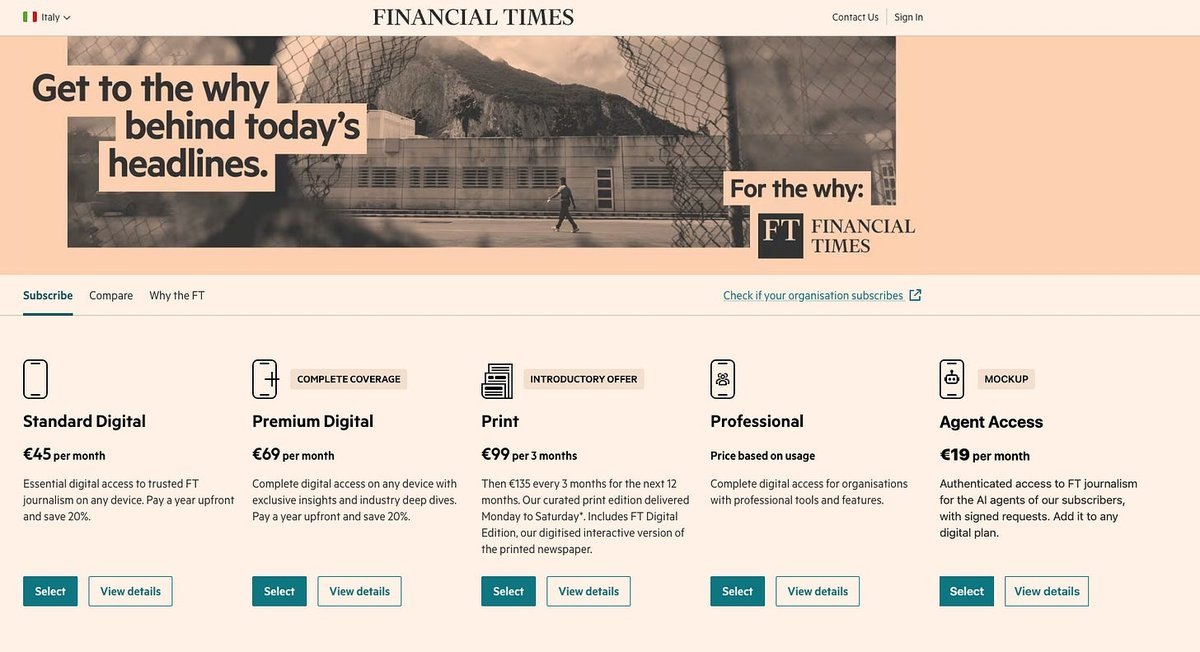
The open web looks worse. Today nothing rewards a reading agent for declaring itself, and declaring only invites a block. One idea is a subscription for agents, like a newspaper selling a separate tier that lets subscribers’ agents read its articles through these protocols. Scrapers would pay to leave a legal gray area, and publishers would earn from traffic they now get nothing for.
Source: scraping.club