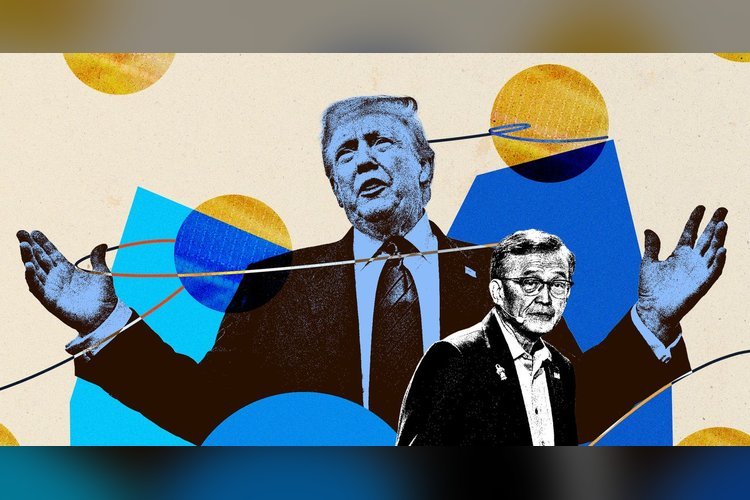
Newly unredacted court documents allege that the White House forced Intel to hand over a tenth of the company in 2025. The Trump Intel stake, announced in August of that year, is now at the center of a shareholder lawsuit against Intel’s board, and its details look familiar after this week’s news that Nvidia is bringing Jensen Huang back as CEO.
President Donald Trump said on Monday that he had “convinced” Nvidia’s board to rehire Huang. Court papers suggest it is not the first time the administration has reached into a chipmaker’s leadership and finances.
What Intel’s board was told
In August 2025, Commerce Department lawyer David Shapiro told Intel’s chief financial officer not to make the “mistake of thinking that this is a negotiation,” according to internal notes from a company call reproduced in the lawsuit. The president, he said, expected to announce a deal on those terms that Friday.
A summary prepared for Intel’s directors says Shapiro acknowledged the board could refuse, but warned that rejection “will have consequences” he could not predict. On a later call he pointed to the “benefits of having a friend in this administration.”
Days after that, the board agreed. Trump announced that the US now owned 10% of Intel, valued at about $11bn, and that the government had paid nothing for the shares.
How the deal was built
Intel had won up to $11bn in grants and contracts under the Biden administration, much of it through the CHIPS Act. By March 2025 it had received about $2.2bn. Trump then called the CHIPS Act “a horrible, horrible thing,” and the remaining money was put on hold while the administration renegotiated.
That same month Lip-Bu Tan became Intel’s CEO, and his ties to China quickly drew attention. His former firm, Cadence Design Systems, pleaded guilty to violating US sanctions and agreed to pay more than $140m in fines. Tan was never personally charged. Trump posted that Intel’s CEO was “highly CONFLICTED” and should resign.
Tan met Trump, Commerce Secretary Howard Lutnick and Treasury Secretary Scott Bessent in the Oval Office on August 11. He promised to give up his China holdings. In the end, the government traded the $8.9bn in grants Intel had already won for roughly 10% of its stock. Meeting minutes reprinted in the lawsuit say the board found the economic terms unattractive, yet it went ahead anyway.
The legal fight
Shareholder Richard Paisner, who brought the suit, alleges the board “caved to the government’s extortion.” Intel’s lawyers dispute that reading. They argue there was real back-and-forth and that the final terms were better for the company, and they say the deal made the grants “immediately available.”
Paisner filed a second case in April against Nvidia, which asks for internal records. It targets the company’s arrangements to sell chips to China: the government took 15% of sales of the H20 chip, then 25% of sales of the more advanced H200. His lawyers call those surcharges “unlawful taxes.” Nvidia’s lawyers say the company never entered an illegal agreement and only said it would follow federal rules.
Why critics are alarmed
Scott Lincicome of the Cato Institute called the pattern “straight-up coercion” and said companies end up deciding based on politics instead of shareholder value. A former Commerce official said the department’s yardstick has shifted away from jobs and competitiveness toward one question: will a company pay the government in cash?
The two cases are not identical. With Intel, Trump all but accused the chief executive of being compromised by Beijing. With Nvidia, he reportedly dismissed his own intelligence agencies’ worries about Huang’s China links.
What to watch next
Nvidia’s board chair, Harvey Jones, said last week the company did not intend to reinstate Huang, citing a disclosure about personal behavior. After days of pressure from administration officials, the company reversed course on Sunday night. Both lawsuits are still pending, and the Intel board’s motion to dismiss will test whether a court sees coercion or ordinary negotiation. Representatives for Intel declined to comment, and the White House, Commerce Department and Nvidia did not respond to requests for comment.
Source: WIRED