Snap’s MCP Gateway is one shared route for employees and their AI agents to reach internal tools, and it runs on a single principle: if an agent acts for a person, the request must clear access checks for both. The gateway sits in front of more than 60 Model Context Protocol servers and over 1,100 tools, and the list grows every week.
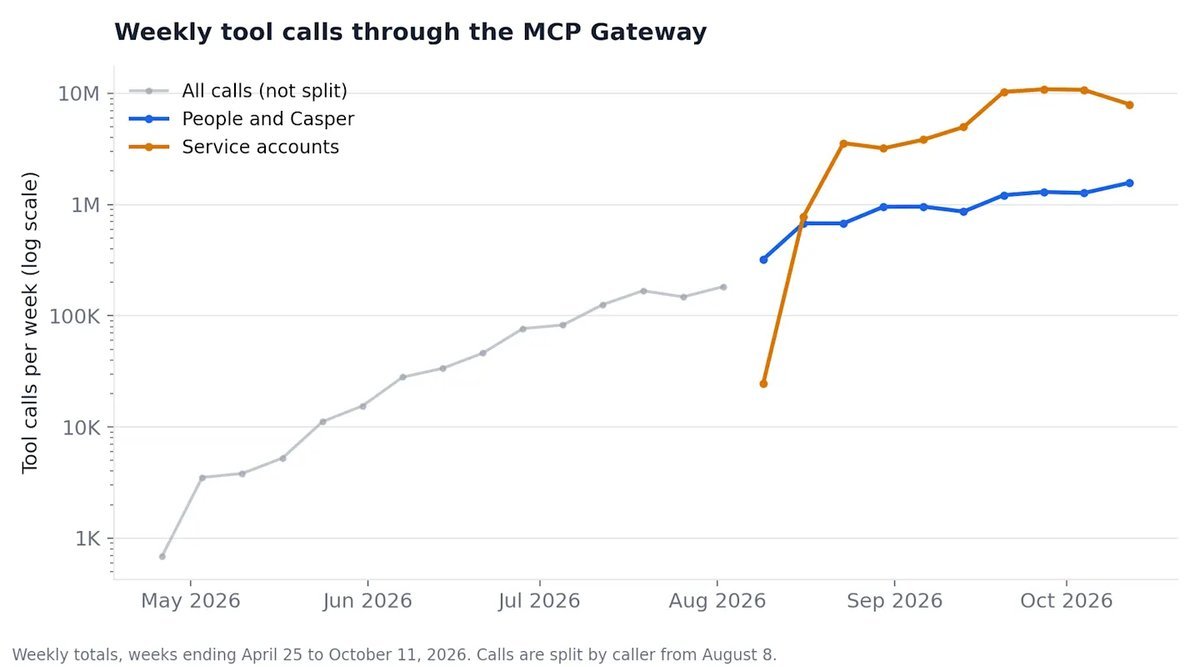
During the week ending October 11, 2026, staff and Snap’s agent Casper sent roughly 1.6 million tool requests through it. Automated jobs running under service accounts add several million more each week.
The error that exposed the gap
Early testing turned up the problem. A server that behaved locally returned “forbidden” once routed through a central gateway. Logs at the receiving service showed the caller was the server’s own service account, not the engineer. A second test had an agent on a remote machine open a pull request for an engineer, yet GitHub showed the agent’s app as the author.
Who started the request was getting lost along the way. Internal systems generally expect a person with valid credentials at a browser, and agents don’t fit that picture.
Local proxy to hosted gateway
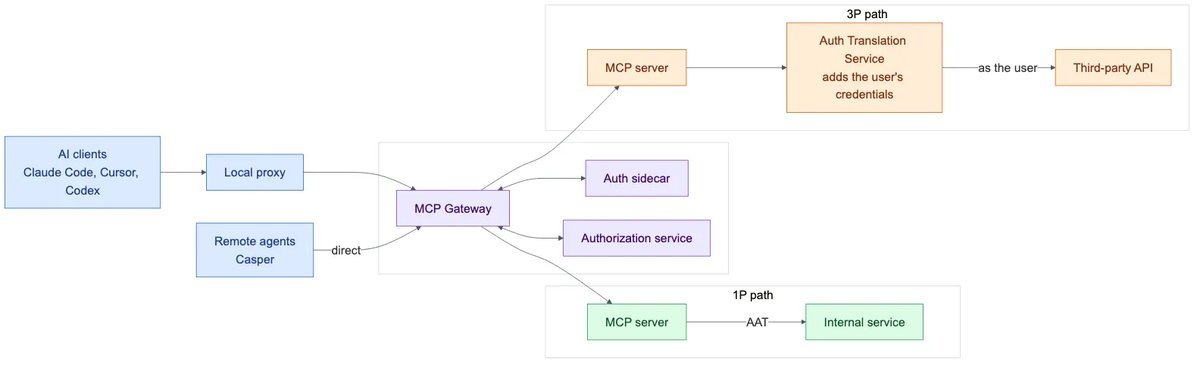
The first version was designed for people. A local MCP Proxy handled authentication to internal services, and many servers ran in local Docker containers. In November 2025 Snap showed a demo that went from Jira ticket to GitHub pull request inside the IDE in about 7 minutes. Beyond ten servers the setup got unwieldy. Nobody wanted to run that many containers, and logins for OAuth tools like Jira and Slack lapsed roughly every day.
Snap considered building from scratch, adopting open source, buying a product, or converting the proxy into a central service. Docker’s MCP Enterprise Gateway fit best. Snap became a design partner and wired it into its service mesh, while Docker built the gateway core.
Two identities per call
Internal authentication runs service to service. When A calls B and B calls C, service C sees B but never A. An agent adds a hop, and the caller shrank to a single agent identity shared by everyone using it.
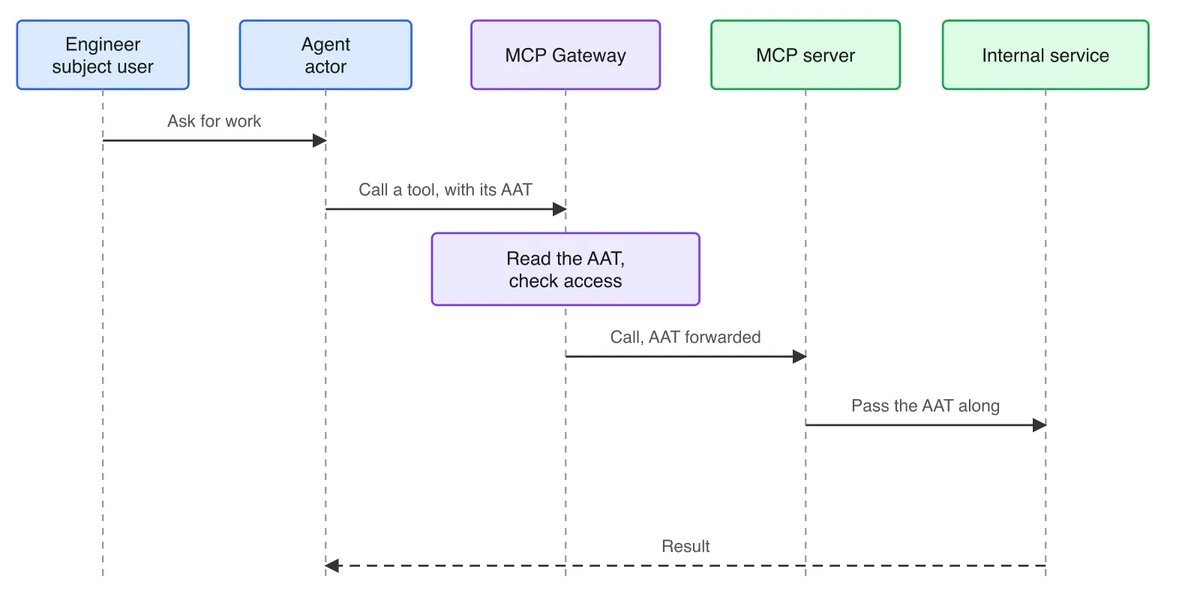
Snap and its Security team built an Agent Attestation Token. It names the original requester, whether a person or another agent, along with the agent making the call. Just a handful of trusted services, Casper among them, can obtain a token that lists someone else as the requester, and each must confirm that person first. For a Slack message, that means validating Slack’s signature and finding the sender before the token is issued.
On restricted tools, the gateway asks Snap’s authorization service about both parties. An agent may hold rights to a team-only MCP, yet the call fails if its user is outside that team. In the other direction, an agent gets only the tools it was granted, never everything its person can touch. The gateway logs each call, approval and denial.
Rights earned tool by tool
New agents start with read-only defaults. Extra rights arrive through grants, and a destructive tool needs consent from the agent’s team and from the tool’s owner. Grants are requested in a pull request that a named approver must accept. An on-call agent needing A/B figures for a weekly report asked for six read-only tools and nothing more. Since the first grant in August 2026, over 60 agents have gained tools beyond their defaults.
Each tool is labelled read or write, destructive writes are flagged, and each MCP gets a data sensitivity rating. A tool nobody has labelled can’t be granted. The team also points out that prompt injection remains unsolved, which is why even reads need care.
Third-party credentials sit in Security’s existing Auth Translation Service, away from the gateway and the servers. People log in once, and the service renews tokens where providers permit. Ownership followed a similar logic. Building servers centrally didn’t scale, so the team behind a service now owns its MCP.
Plans from here
Snap lists three goals. Make the gateway the default path so a workflow behaves identically on a laptop or in the cloud. Let risky operations pause for a human to confirm, using MCP elicitation. And have central enforcement judge permission combinations, since two harmless MCPs plus a sensitive one may be too much together.
The team’s advice is practical. Design identity early, record the agent next to the person, keep user tokens out of gateways and servers, and plan for non-engineers who will use MCP. Each tool also eats context, so load tools only when needed.
Source: eng.snap.com