Signal is shutting out the AI agents built into phone operating systems. The messaging app will now stop AI agents such as Siri AI on iOS 27 and Gemini on Android from capturing what is on its screen, a step it says is needed to keep its privacy promise intact.
It is the second time the nonprofit behind the app has had to do this. Last year, Signal used screenshot blocking to keep Microsoft’s Recall feature from storing images of Signal messages on Windows 11 by default.
What Signal is changing
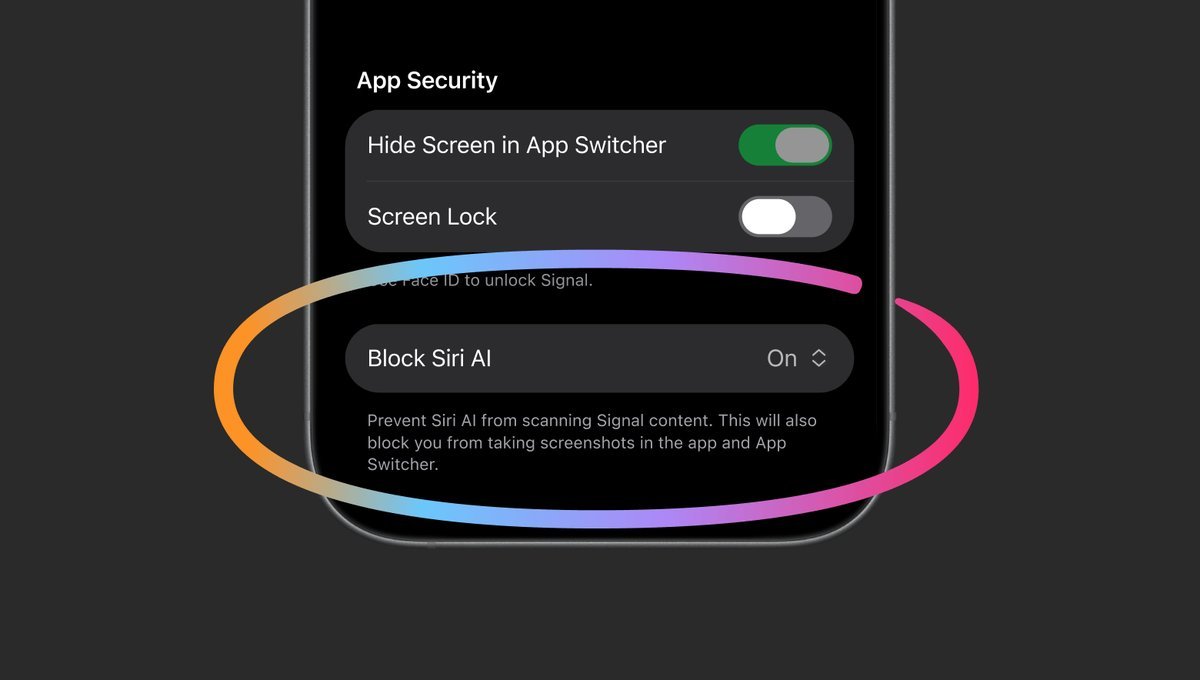
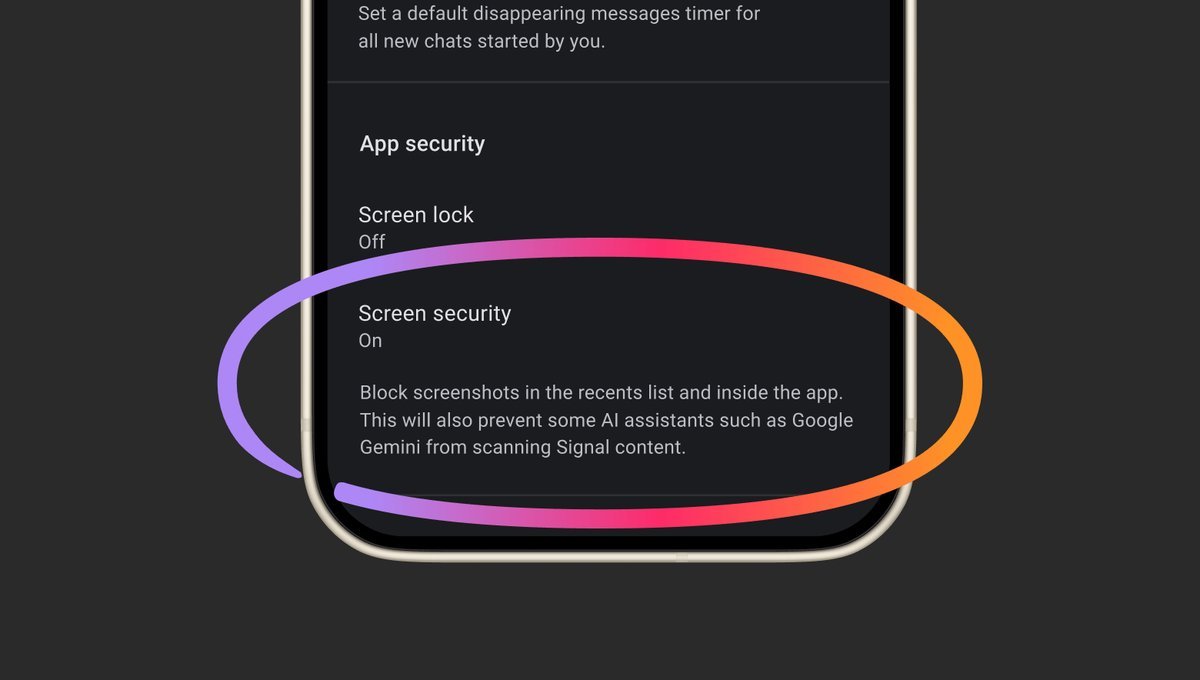
On iOS 27, Signal will block screenshots inside the app. On Android, it will turn on its “Screen security” setting automatically when it detects an AI assistant trying to read the screen. Signal chose that route because on many Android vendors’ builds it can’t reliably tell when an ordinary screenshot is attempted, and it didn’t want screenshots to simply stop working and confuse people.
Anyone who wants to take screenshots can switch the protection off in the app’s settings. Signal warns that doing so may expose your messages, and your contacts’ messages, to those assistants.
Why the AI assistants are a problem
The AI features in question include Google’s Gemini Intelligence, Apple’s Onscreen Awareness in Siri AI, and Microsoft’s Recall. To answer questions and act on a user’s behalf, they read whatever is on screen. That means a private conversation can be captured, stored, and passed to a local database or a remote server that Signal doesn’t control.
Recall shows how far this can go. It grabs the screen every few seconds, pulls out text with optical character recognition, and builds a searchable on-device database. Signal says that could keep your messages indefinitely, disappearing messages included.
The organization argues this undercuts a guarantee it has made for more than a decade, one backed by open source code and a formally verified encryption protocol. Once a message is on screen and an agent has copied it, strong encryption in transit doesn’t help. Everyone in the conversation is affected, not only the person with the AI assistant switched on.
The fix is incomplete
Signal is open about the limits. Blocking screenshots doesn’t stop an agent from reaching content already stored on the device through the filesystem. Android coverage depends on detection that won’t work on every vendor’s build.
macOS is not covered at all. Signal says it can’t reliably block screenshots there, partly because the screen-protection APIs that exist work for streaming and DRM-protected media but not for ordinary screenshots, which is how most agentic systems pull data from apps. For now, the only advice for macOS 27 users is to add Signal to the Excluded Apps list under System Settings, Siri, so Siri AI can’t proactively read message content.
What Signal wants from Apple, Google and Microsoft
The group is asking the three operating system makers for two things:
- A simple, documented way for developers to opt an app out of AI data access and processing, including screen reading, filesystem access, notifications and other system frameworks, without breaking the app’s core features.
- Better documentation and technical specifications for how these agents work and what data they handle.
Signal also says confidential computing doesn’t answer these concerns, because it still leaves the provider in charge of deciding how much privacy users actually get.
The documentation gap has been costly. Over the past few months, Signal developers have spent considerable time on forensic work across Android and iOS just to learn what happens when AI systems touch app data.
Third-party AI agents are the next worry
Signal sees another risk in outside assistants such as Meta’s Muse. Users are encouraged to give these agents deep permissions during setup, and in many cases they use accessibility settings built to help people use their apps. Signal says those settings were never meant to work as a skeleton key for AI agents, and it wants tools that can keep them out of app data.
What happens next
Signal says it is talking with other parts of the industry and is cautiously optimistic that Google and Apple are engaging on how their AI systems should work with privacy-sensitive apps. It hopes to share more soon and wants the platform makers to agree on standard approaches.
The organization calls itself the canary in the coal mine. If a messaging app built around privacy can’t wall off its content from system-level AI, other app developers face the same problem, and they won’t have Signal’s engineering resources to work around it.
Source: Signal Messenger