OpenAI and Cisco have released Shirudo, an open-source runtime that lets teams shield running Linux systems from an exploit before a patch is installed. In a controlled test, a shield generated with OpenAI’s Codex stopped a Java4Shell attack on a live Elasticsearch service without a restart.
The Shirudo runtime targets a familiar gap. Testing and rolling out a patch can take days or weeks, and the service stays exposed while teams wait.
Why patching leaves a window
Blocking an attack by hand is harder than it sounds. An exploit and a legitimate request can depend on the same Linux operation, so cutting that operation off might take the service down along with the attacker.
Shirudo is built around that tradeoff. The name is Japanese for “shield,” and each temporary safeguard is called a shield. Operators can test whether a shield stops the behavior that exposes the flaw while normal requests still pass. After an operator approves it, the shield goes live while the service keeps running.
How the shields work
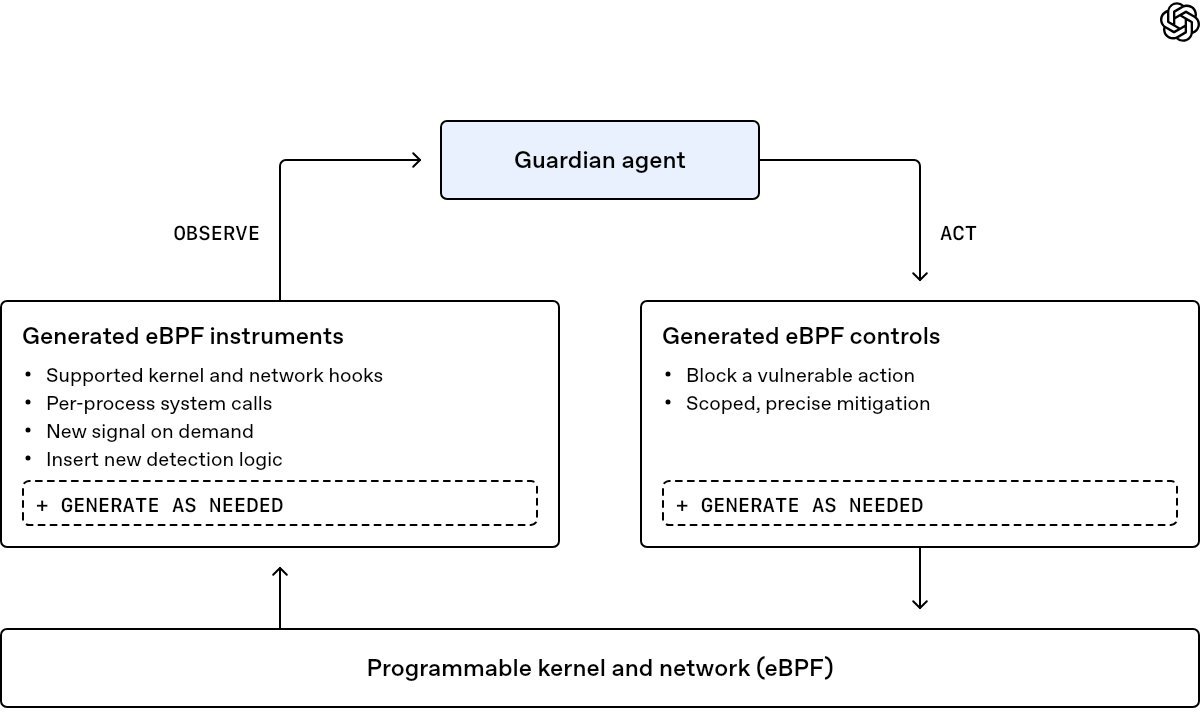
The Shirudo runtime relies on eBPF, a Linux technology that runs small programs at chosen points inside the operating system. Those programs can watch for suspicious activity and apply narrow protections on a system that is already in use.
OpenAI and Cisco describe four design goals:
- Live protection: shields block vulnerable code paths with no restart, and teams can see how a proposed shield would affect applications before it is enforced.
- Machine-speed defense: AI agents get programmable controls to investigate a flaw, draft a targeted shield and check it against exploits and real workloads, while security teams decide what gets deployed.
- Trusted deployment: shields are cryptographically signed and verified before loading, the Linux eBPF verifier checks each program against its safety rules, and kernel controls limit unauthorized changes.
- Hardware-backed verification: a Trusted Platform Module keeps a verifiable record of protections being loaded or removed, so operators can prove what was running.
The layered checks matter because a shield runs deep inside the operating system. A faulty one could cause harm of its own, which is why the design pairs automated drafting with signing, kernel verification and a human sign-off before anything is enforced.
The Java4Shell test
The demonstration used the Java4Shell vulnerability. Codex produced a shield that added an input check to Java’s Base64 decoder, and the team attached it to a running Elasticsearch process. When the exploit was tried, the shield rejected the malicious input. Elasticsearch never went down.
A technical walkthrough from the Linux Plumbers Conference shows the full process of applying a shield and verifying it on the target host.
Licensing and how to try it
Both companies are opening the code so developers, security researchers and infrastructure operators can inspect it, test shields and contribute. Shirudo uses the BSD 2-Clause license, and its BPF programs are dual-licensed under BSD and GPL.
There are three ways in. A VM quickstart walks through signing, loading and verifying a test protection. Isovalent offers a self-guided lab. A technical deep-dive webinar is set for December 15.
Where the Shirudo runtime goes next
The companies call this a first step. Their longer-term aim is for defenders and AI agents to find affected systems quickly, validate protections and deploy eBPF shields without disrupting workloads. They also want applications to run with only the permissions they need, under policies that are generated and maintained automatically.
That work includes hardening the kernel and core services, limiting workload permissions and making updates and recovery safer. Hardware-backed attestation and independent network controls are meant to add assurance even when individual systems are compromised.
Detection and recovery are part of the plan too. The companies say they want it to be easier for operators to spot a compromise, stop attackers from moving between systems and return services to a verified, known-good state.
One concrete plan stands out. OpenAI and Cisco want tested shields to ship alongside vulnerability disclosures. Operators would then have a vetted temporary fix to evaluate and deploy while the permanent patch is still being prepared.
For security teams, the practical question is whether shields generated by AI hold up outside a single controlled demo. The open code gives outsiders the chance to check.
Source: OpenAI