
Selling to AI agents is becoming a distribution problem for almost every online business. A new study put four consumer agents (Grok Bot, Muse, Instinct and Dots) through 11,307 completed runs on 1,270 prompts, between October 22 and November 8, 2026. For contrast it also ran shopping queries on ChatGPT, Gemini and Perplexity, and it matched the findings against YipitData card-spend figures.
Prompts covered physical products, such as noise-canceling headphones under $150, and software, such as choosing between Adobe and Descript. Five patterns came out.
Agents share default picks
For broad requests, an item picked by one agent was picked by at least one other agent 73% of the time. About a quarter of the time, all four settled on the same top pick.
The shortlist is narrow. Muse, the one agent that shows its full research logs, usually starts with its own Meta catalog and pulls at most 50 options. When it also browses, it opens only about three product pages on average. Agents mostly decide on price and reviews.
Specific needs change the winner. Asked to choose between a Shark FlexStyle and a Dyson Airwrap, agents picked the cheaper Shark 91% of the time. For fine or color-treated hair, Dyson won 51% of runs, and for daily use its margin rose to 88%. For general graphic design software, Canva came up in 78% of runs and Adobe in none. Add a request for professional-level output, though, and Adobe won every time.

Agents read pages, so pages must be readable
Agents start with what they’ve stored about the user, then check internal catalogs and connectors, then search the web. Muse and Dots use their own search systems, while Grok Bot and Instinct use Exa. They visit product pages more than ordinary chatbots do, so a site needs to state what the product does, its price and its limits.
Software works the same way. When Dots was asked to make ten ads from a product photo, it found Midjourney’s guidelines say there’s no general API and prohibit most automated use. It moved to Ideogram, which offered an API and an official MCP integration, with sample code in its docs.
Agents calculate total cost
Agents add up shipping, subscription terms, return rules and warranties. With equal prices at two retailers, they chose the one with the better return policy in 86% of tests.
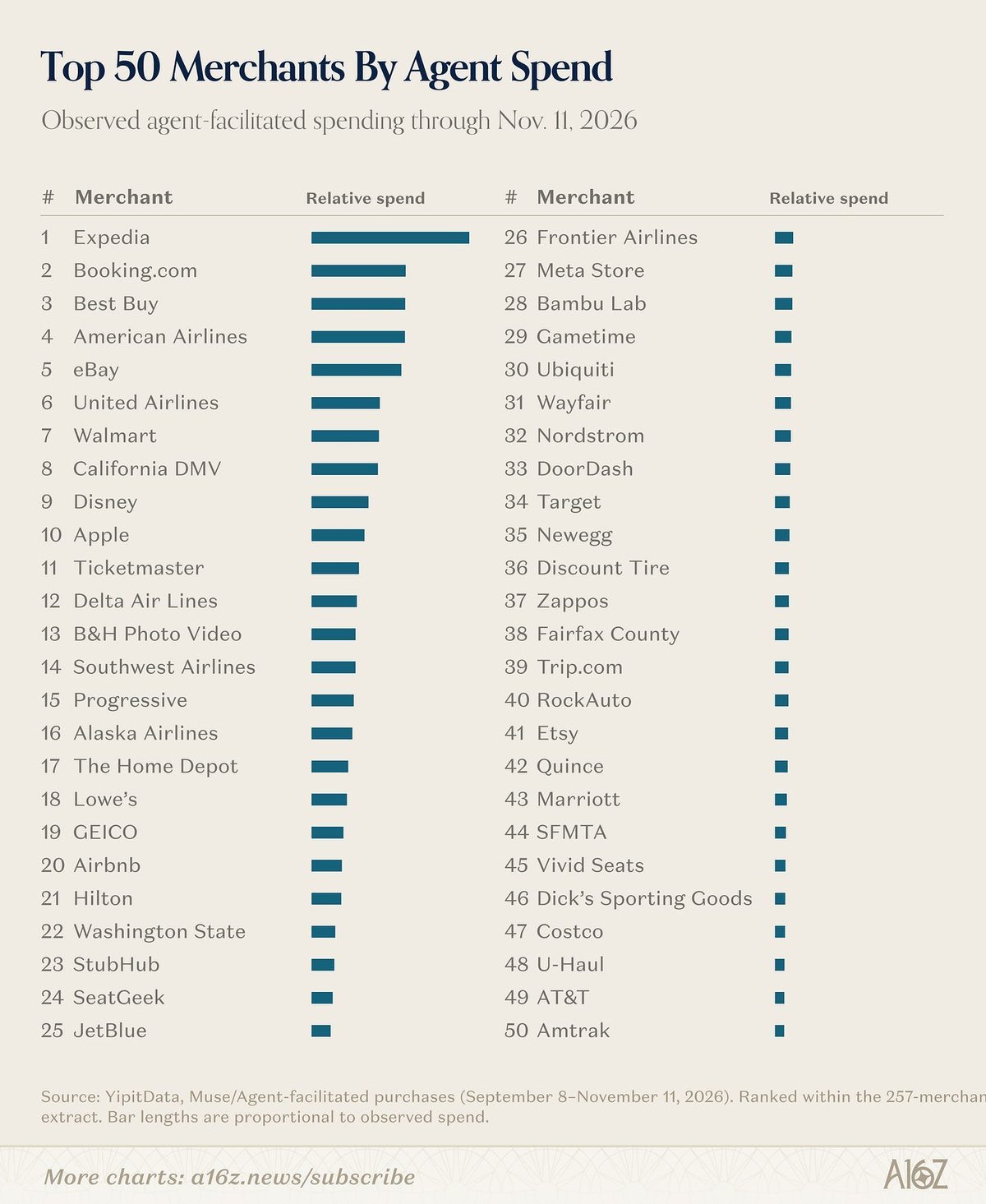
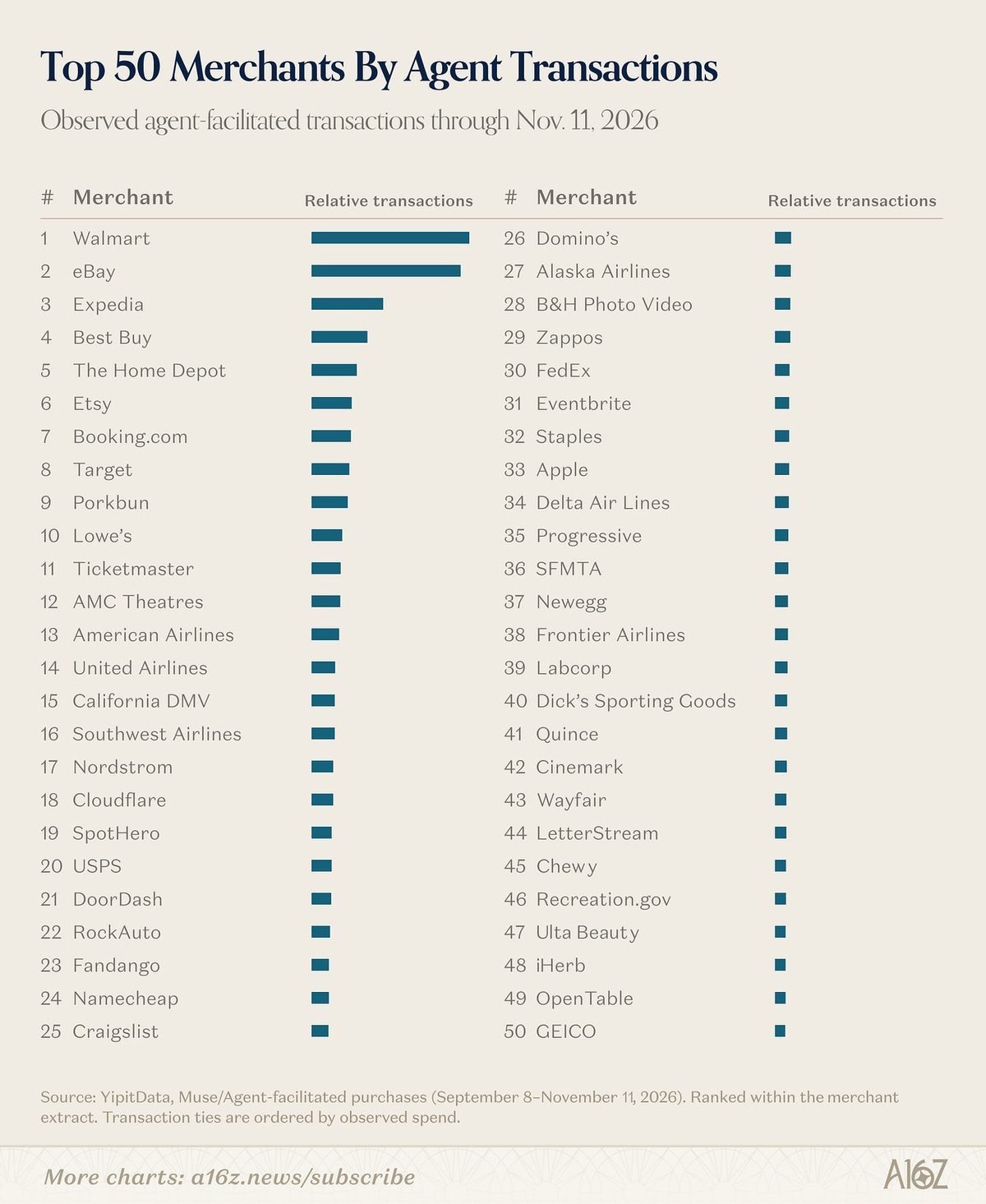
Quince lands in the top 15 retailers by consumer agent spend, though it isn’t among the world’s 15 largest retailers. Its product pages put price, free shipping, stock status and reviews near the top. Porkbun is ninth by number of agent transactions and first among technology companies, ahead of Cloudflare (17th) and GoDaddy (112th), though those two register 2.6 and 4.8 times as many domains monthly. Muse and Dots liked Porkbun’s clear pricing and lack of year-one discounts that jump later.
Trust can outweigh price. Across 275 real-store comparisons, agents recommended the more expensive, trusted seller 72% of the time. Discounts under 10% didn’t move them, discounts of 10% to 50% won the cheaper option only 24% of the time, and discounts over 50% were avoided.
Each agent behaves like a different customer
Amazon checkout tests split the field: Grok Bot got to the cart in every run, and the other three were blocked in every run. Grok Bot pointed users to Amazon in 17.5% of runs while no rival went above 1.6%. Muse favored Walmart (26% of answers) and Best Buy (22%).
Evidence preferences differ too. Muse cites reviews in just 10% of picks, against 30% to 41% for the others. Dots brings up professional product tests in 11.4% of runs, versus at most 3.7% for the others. Instinct often questions the ratings it sees, and better reviews decided just 4 of its 26 tiebreakers. These tastes may harden as agents sign retail deals.
Marketplaces and checkout decide the sale
Among the 50 merchants that take the most agent spend, close to a third of the money went to marketplaces and aggregators. That rises to 46% with retailers running third-party marketplaces and 55% with multi-brand retailers. Travel skews this, with Expedia and Booking.com the largest merchants, and American Airlines and United fourth and sixth. The YipitData sample excludes Amazon.
Checkout is the last hurdle. Agents reached the end of the form in 81% of runs on stores with guest checkout. Every run on a store requiring a login stopped early. Muse, Grok Bot and Instinct use Stripe’s Link wallet, while on November 13 OpenAI introduced ChatGPT Wallet for Dots, starting with US Pro users.
What sellers should do now
Sellers can publish clear prices, shipping, return terms and API details, allow guest checkout and track how they appear on aggregators. Connector use is still low: Grok Bot suggested linking an app in 5% of runs, and the other three did so in under 1%. That’s changing, with OpenAI’s Businesses in ChatGPT and Shopify Catalog adding product feeds.
Source: a16z.news