A claimed proof of the Riemann Hypothesis, produced with Claude and far too long for a person to read, has made science without understanding a live question. On 20 November 2026, Anthropic mathematician Levent Alpöge said he believes he has the proof. Printed as prose it would exceed 250,000 pages, and he admitted he has not yet mastered much of the mathematics involved.
Terence Tao responded that he expects “the digestion process will take some time.” Software will verify the result well before any human grasps it. One researcher predicts most fields will operate like this within a decade.
Why understanding is a lossy summary
The case begins with how scientists think. Every concept, claim and theory swaps a large body of detail for a small one, and something gets lost each time.
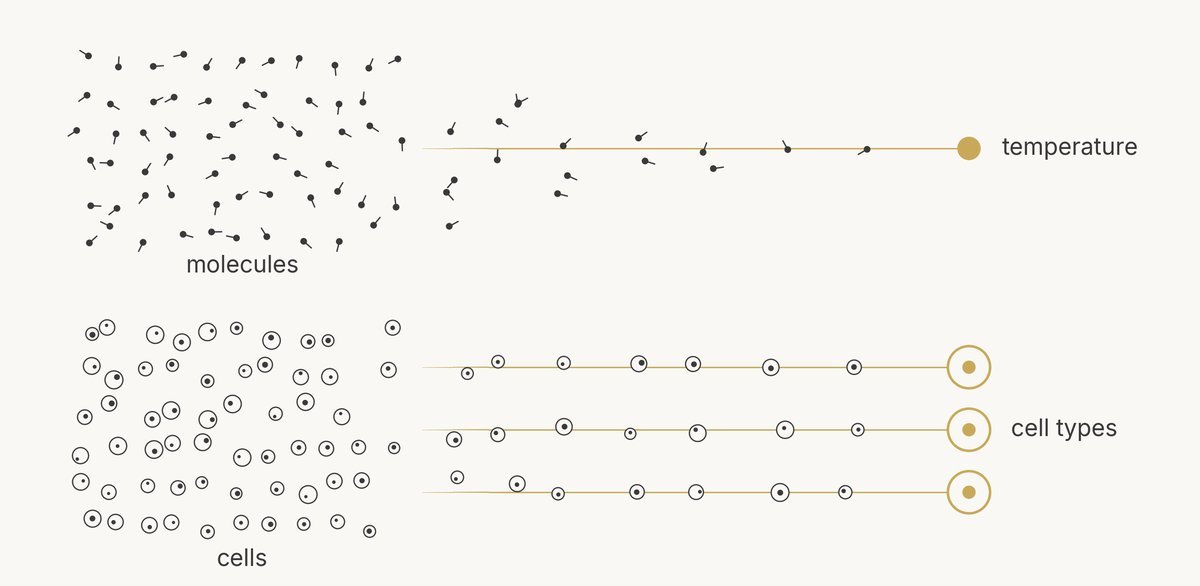
Take temperature. A single figure stands in for countless molecules, each with its own position and speed, and many different molecular arrangements produce the same figure. Biology works similarly: a body holds roughly 37 trillion cells (Bianconi et al., 2013), yet we file them under names like “T cell” that keep shared traits and discard individual differences.
Claims summarize raw measurements. A study may record around twenty thousand genes per sample, but what readers retain is one statement, such as a gene being more active in tumors than in healthy tissue. Theories summarize claims. “DNA makes RNA, and RNA makes protein” covers thousands of findings and skips awkward cases like retroviruses.
We summarize because no one can keep ten thousand studies in their head. The catch is that feeling you understand a field only means the summary suits your brain. It doesn’t measure what was left out, which is why science without understanding looks less strange than it first sounds.
A mind that skips the summary
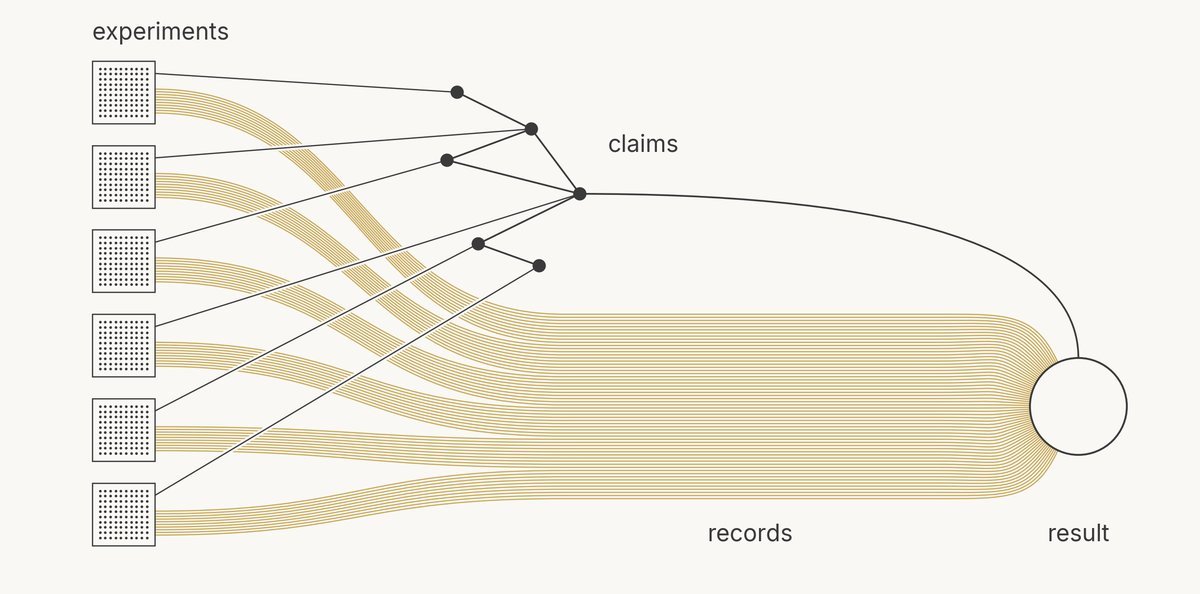
A system with enough capacity could read experimental conditions, individual outcomes and readouts across many studies at once and decide which details matter for the question at hand. It would reason from records. Many of its internal concepts would have no equivalent in human language.
Early evidence exists. This week, Xinming Tu and Leo Tianlai Chen reported that recent Claude models can extend protein sequences from bacteria and archaea that almost no one has studied. The strongest model guesses the next amino acid correctly 54% of the time, versus 9% on scrambled versions of the same proteins. Most of these protein families lack any papers, so the model had no published claims to lean on. If that holds up, a general model is already reading biology directly.
Narrow models already took over pieces
Smaller predictive systems have been absorbing tasks for years. AlphaFold matched experimental accuracy in most cases (Jumper et al., 2021) without handing people a rule for folding that they could use unaided. AlphaMissense scores each of the 71 million possible single amino-acid substitutions in human proteins for disease risk (Cheng et al., 2023). AlphaGenome reads a million DNA letters and predicts thousands of signals, such as gene expression and chromatin accessibility (Avsec et al., 2026). Virtual cell models forecast how cells react to drugs or genetic edits.
Each of these was adopted because it predicted well. No one decided to give up understanding. Paul Humphreys flagged the issue for computer simulation in 2009, calling it the anthropocentric predicament. Daniel Dennett’s phrase for such machines was competence without comprehension.
What checking results would require
The researcher’s view is that a finding needs to survive validation, not be understood. Alpöge’s proof will be judged by proof checkers. AlphaFold’s structures earned use by agreeing with experiments.
Chris Anderson made a similar argument in a 2008 Wired piece, “The End of Theory,” saying that with petabytes of data “correlation is enough.” The researcher disagrees that the scientific method is finished. Experiments, predictions and validation would stay, and predictions would play the role theories did by covering cases no one has measured. In that world, science without understanding still has rules:
- Experiments are stored in full, since models reason from records, not abstracts.
- Each prediction names the result that would disprove it.
- A separate system, not the predictor, runs the check.
In mathematics that system is a proof checker. In biology it could be an automated lab that tests predictions almost as fast as a model makes them.
What to watch next
People would keep publishing papers, afterward and for each other. Since results get validated before anyone understands them, how quickly they can be checked becomes the bottleneck. The researcher’s conclusion is that building the validation system is biology’s most important job.
The immediate test is Alpöge’s proof. If the checkers confirm it, a major result will have been accepted before any one person could read it all.
Source: 「应可钧」Kejun Albert Ying