
Remote attestation is spreading through banking apps, government ID apps and games, and it decides whether your phone is allowed to use them. Critics argue that it works as a lock on the smartphone market, because only devices on Google’s and Apple’s approved lists get through.
How remote attestation works
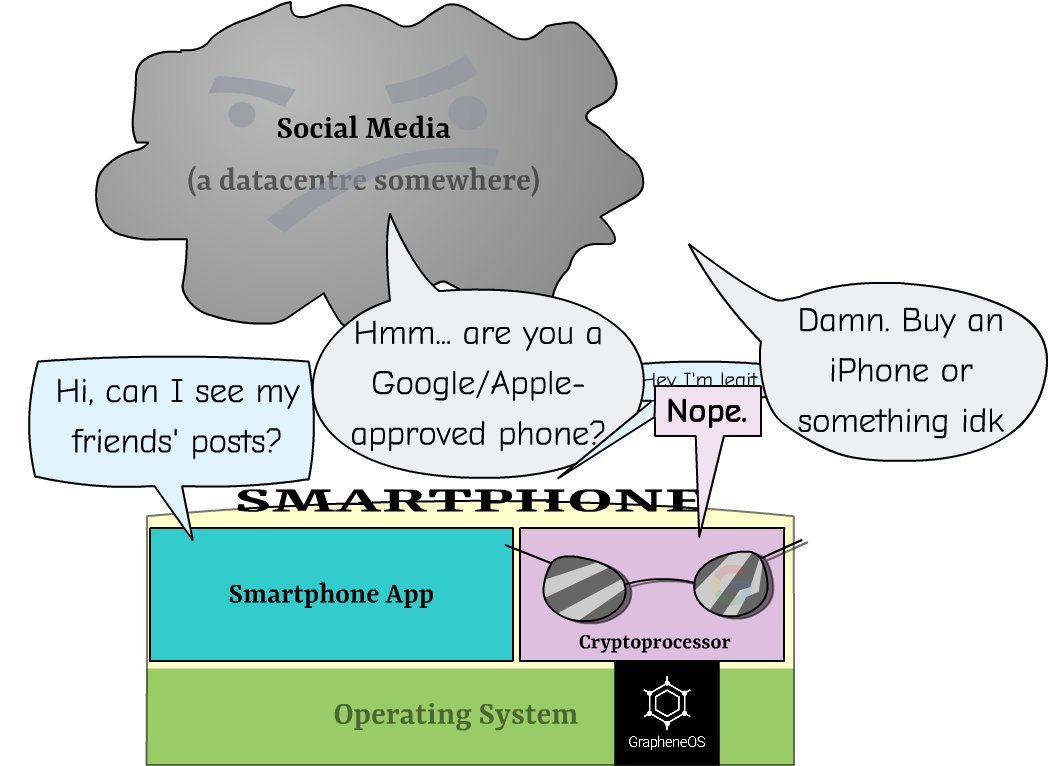
Modern devices carry a tamper-resistant chip called a cryptoprocessor. It records which operating system loaded at startup and whether anyone modified it. When an app asks, the chip vouches for that state to the app’s servers.
Two pieces have to be in place. The app must request the proof, and the server must reject connections that lack it. Developers usually ship the first piece and wait until most users have updated before enabling the second.
The check can’t spot a scam or a virus. It only confirms that the software is on a list someone else approved.

Who gets blocked
GrapheneOS, a security-focused Android derivative made by a Canadian nonprofit, is the clearest case. Most government ID and banking apps refuse it. The Commodore Callback 8020 flip phone, built to avoid social media, is blocked from the few Android apps that demand attestation.
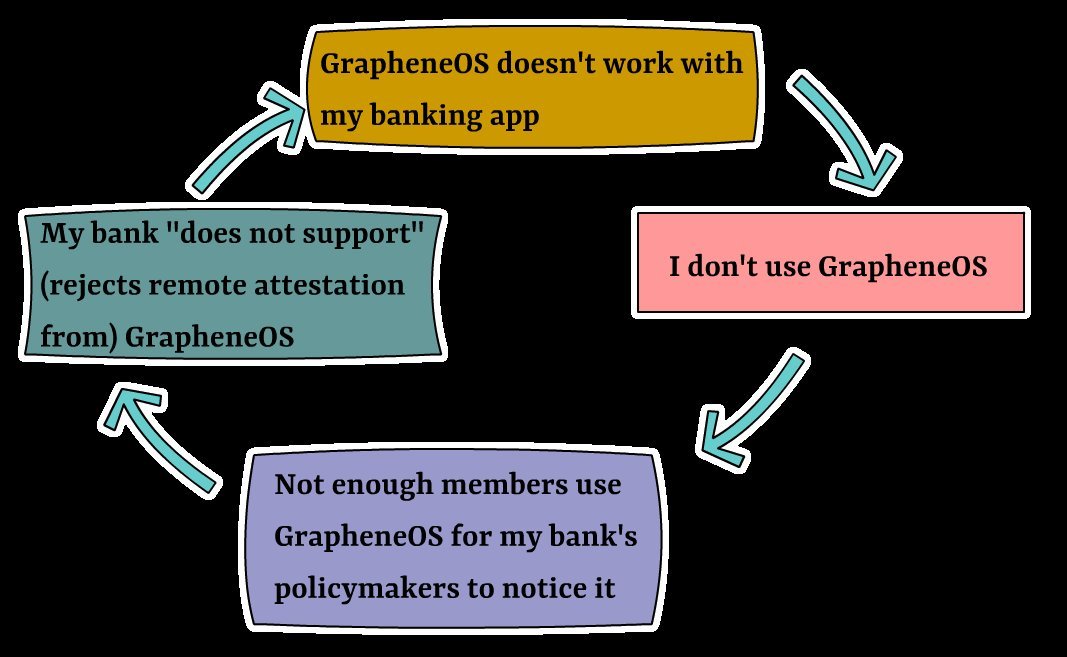
Banks that officially support GrapheneOS include AmeriCU Credit Union, Swissquote and Triodos. Any other bank that works today could stop at any time by turning attestation on.
Wero, Europe’s payment system, reportedly said it supports only the Apple and Android ecosystems because they cover most consumers. Jolla’s phone, marketed as Europe’s only independent smartphone, isn’t on the list.
Some changes have gone the other way. Roblox recently added GrapheneOS to its approved list. Earlier this year, GrapheneOS users also lost the ability to connect to their Volkswagen cars.
Which apps are checking
GrapheneOS has a built-in tool that shows which apps asked for attestation credentials and failed. The author’s friend reported Discord, Facebook, Hinge, Spotify, Uber, WhatsApp and Wise. A separate check found Instagram and the author’s own bank doing the same.
That doesn’t mean those apps will lock out unapproved devices. It means they are already asking, and they could start rejecting at any time.
The case for regulation
The author’s fix is a ban, applied at either end: devices shouldn’t report, or services shouldn’t ask. Either would restore a level field, and it would also remove the trap built into passkeys.
No such rule exists today. Montana’s Right to Compute Act protects residents from government limits on running software, but it doesn’t bind private companies. The author wants a version that does.
The author rejects the argument that supporting every device is too costly. Modern laptops, phones and consoles work alike enough that software usually runs elsewhere with modest effort. Valve’s Steam Deck runs Windows games on Linux, and HarmonyOS runs Android apps unless they use attestation.
Why alternatives struggle
The effect compounds. Users hesitate to buy a phone when important apps might stop working, so independent devices stay niche. Because they stay niche, banks and other platforms have little reason to approve them.
Covering the gap case by case doesn’t scale. GrapheneOS keeps a list of compatible banking apps, but entries come and go as apps tighten security or grant exceptions, and the list leaves out smaller banks. A buyer would have to confirm every essential app before choosing a phone, with no guarantee that it keeps working.
Hardware is part of the picture too. The iPhone 5s, from 2013, was the first Apple device with a cryptoprocessor, and many older PCs can’t move to Windows 11 partly because of the same chip requirement.
The other side
Attestation does have a legitimate version. Used voluntarily, it lets owners confirm that nobody tampered with their device. The complaint is about services that make it mandatory. Banks also have a real fraud problem, and attestation gives them a simple answer, however blunt.
What to watch next
Watch two things: whether more of the apps now asking for attestation start rejecting devices, and whether any regulator takes up the question. Until then, anyone considering a phone outside the Google and Apple lists should check that their bank, ID and payment apps still work.
Source: nonfunctional.substack.com