
Rapidus has reportedly failed to produce working SRAM cells on its 2nm process, a milestone it was supposed to reach by summer 2026. The report also says the Japanese chipmaker is fighting cleanroom contamination, which threatens its plan to start mass production in 2027.
Rapidus hasn’t confirmed any delay. It says it is still on track for mass production in the second half of fiscal 2027, which ends March 31, 2028.
From working transistors to working memory
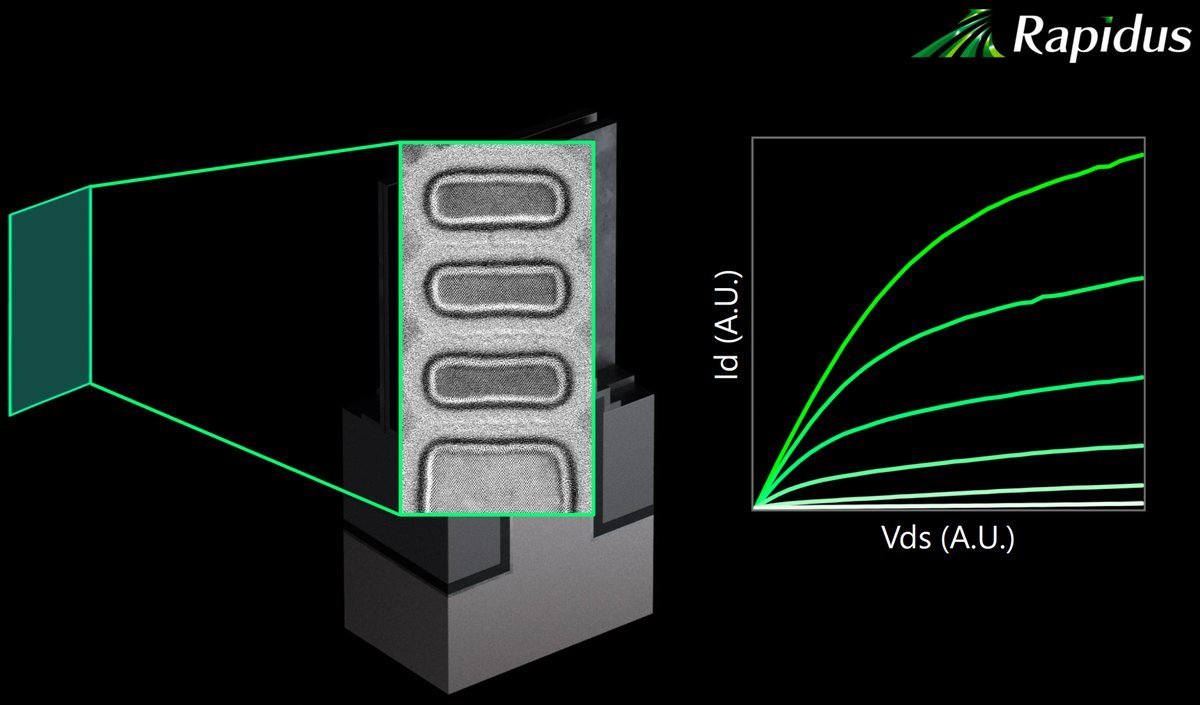
In July 2025, Rapidus said test transistors made at its IIM-1 fab in Hokkaido showed the expected electrical behavior. They used gate-all-around (GAA) designs on a 2nm-class process. CEO Atsuyoshi Koike told Hot Chips 2025 that the transistors “actually work.”
A single transistor is far easier to build than a circuit. SRAM is the harder test. It forms the cache in processors, and its repetitive arrays quickly reveal defects and transistor variability that single-device tests miss.
A standard 6T SRAM cell uses six transistors, plus contacts, local interconnects and links to wordlines, bitlines and power rails. A full SRAM macro adds decoders, sense amplifiers and write drivers. The report doesn’t say whether Rapidus is stuck at the cell, the array or the yield stage.
Rapidus has said it plans to mass-produce chips in the second half of fiscal 2027. Earlier targets gave no calendar or fiscal year, which most people read as calendar 2027. The fiscal-year wording adds roughly three months of slack, but not much more.

How TSMC’s path compares
TSMC usually reports 256 Mb SRAM yield as a progress marker for new nodes. For its N2 process, it showed over 50% yield in April 2023, over 80% by April 2024, and over 90% in May 2025, about six months before volume production. Rapidus has published no SRAM results, and the report implies its yield is effectively zero.
Rapidus still has to prove SRAM cells, scale them into larger arrays, reach acceptable yield, qualify the process and start risk production roughly a year before high-volume manufacturing. That leaves little room.
Without that kind of public data, outsiders can only guess how far along Rapidus is. There is no fixed rule for how many quarters before mass production a working SRAM array must exist, yet the gap between the reported result and the schedule is plain.
Why GAA and EUV are hard
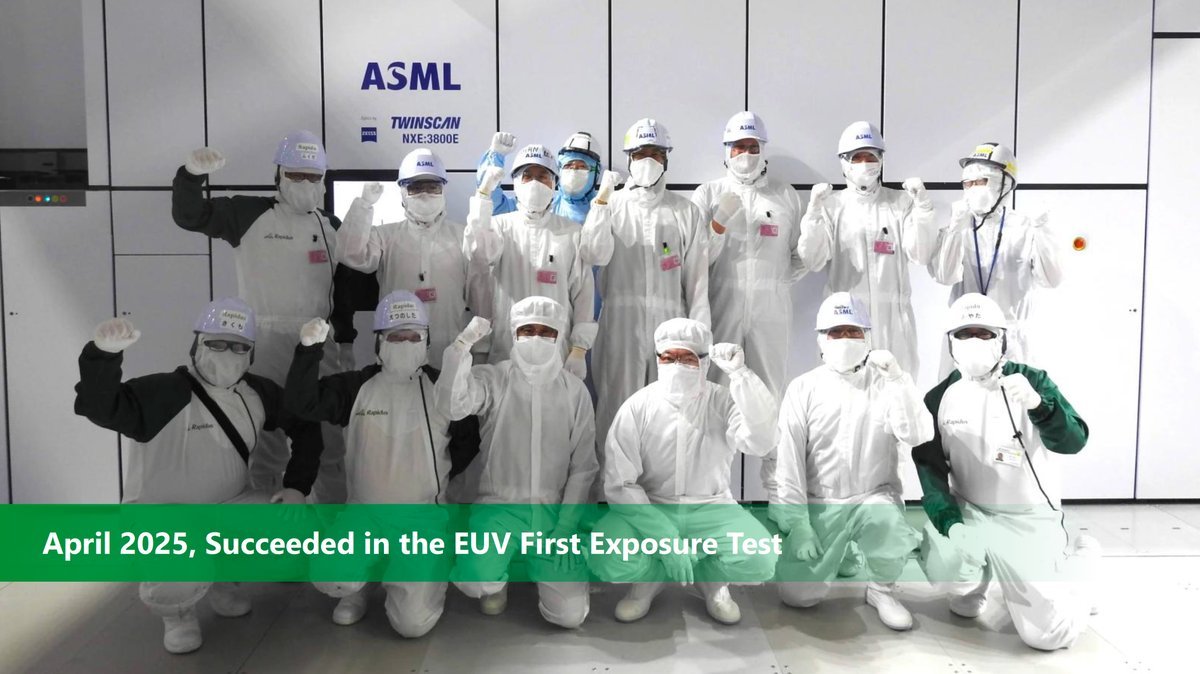
Only Intel, TSMC and Samsung have begun mass production on GAA nodes. Rapidus was founded in 2022 and builds on process technology from IBM, so it has to reproduce a very complex flow in a new fab.
Several steps can go wrong:
- Removing the silicon-germanium layers between nanosheets without damaging the silicon channels
- Forming the tiny inner spacers that isolate the gate from source and drain
- Depositing gate materials evenly around stacked nanosheets, which affects threshold voltage and SRAM read, write and retention margins
- Controlling random EUV patterning defects, which hit large circuits harder than test transistors
Contact resistance, interconnect defects and particles can add further problems.
Gate stack work adds more risk. Differences between transistors that should be identical shrink the read, write and retention margins of an SRAM cell, which can keep it from working reliably at its intended voltage and narrow the whole process window.
Random EUV effects can leave malformed or missing features. A single test transistor may still work, but a circuit with millions of connected devices is far more likely to hit one of those defects.
The cleanroom and the wafer grid
Rapidus is reportedly working to improve dust and particle control. IIM-1 uses an unconventional grid-based wafer transport system for single-batch processing. That raises questions about whether the system has been fully qualified for contamination, though a transport system alone is unlikely to explain near-zero SRAM yield.
The wafer grid is a distinctive feature of the fab. It supports single-batch processing and faster handling for urgent lots, and it is part of why the cleanroom work draws attention.
What happens to the 2027 target
Rapidus says it is committed to the fiscal 2027 schedule. Until it shows functional SRAM and then larger working chips, doubts about commercial 2nm production will remain. Its next public SRAM result is the thing to watch.
Source: Tom's Hardware