
The Nvidia crisis began on November 12, 2026, when Jensen Huang resigned as CEO. He had run the company since co-founding it in 1993. In the week that followed, Nvidia lost about $550bn in market value.
The fallout goes beyond one company. Nicolas, Head of Research at Vsquared Ventures, argues in an analysis that the episode shows how Washington now sees AI chips and who is paying for the AI boom. What follows is that view, set against the facts reported so far.
The Megaspeed probe behind the resignation
Megaspeed, a Singapore firm that was a heavy Nvidia customer until recently, is under investigation by the Justice and Commerce Departments. Investigators want to know if chips were rerouted to China against US export rules.
Alice Huang, who used to work at Megaspeed, has been labeled a Chinese spy by many commentators. Author Desmond Shum, who wrote Red Roulette, thinks she was more likely a dealmaker helping Chinese buyers secure Nvidia hardware.
He reasons that the board had little choice once the heat rose. Treasury Secretary Scott Bessent has openly wondered whether Nvidia chased these sales for revenue, and he has pointed a finger at Commerce. In December, three House committees will question Huang and General Counsel Tim Teter in private.

Why now?
Little of this is new. The Megaspeed probe surfaced in Bloomberg coverage in December 2025, a short seller raised Alice Huang’s name in May 2026, and the New York Times says President Trump got a briefing a year ago.
He offers two theories about scandals. Leaks serve the leaker, and facts can sit in plain view until someone finds a use for them. Watergate fits: Nixon carried 49 states in 1972 with the story already reported, and it blew up only later.
Washington treats AI as national security
He compares the affair to Iran-Contra. A scandal turns dangerous, he says, when press revelations, domestic grandstanding and national security arguments combine. He sees all three now.
Several actions are already under way:
- Commerce and Justice put out a joint statement on Megaspeed.
- Senator Ron Wyden and Rep. Richard Neal are running an inquiry. They allege an export approval followed at least $26m directed by Nvidia and Huang toward Donald Trump’s personal priorities, including the White House ballroom.
- California’s attorney general has subpoenaed Nvidia, and other states could follow.
Democrats hold both chambers of Congress from January, and the analyst expects them to hit hardest. Senate committee chairs control hearings and can compel documents and sworn testimony. Many tech investors and founders backed Huang right after he resigned. From Washington, he says, that looks like an industry shielding its own.
Stratechery’s Ben Thompson reads Bessent as wanting Nvidia to behave like a bank. That means checking where chips actually end up instead of accepting a customer’s signed promise. Thompson’s verdict: the doomers and hawks prevailed.

Who pays for the AI boom
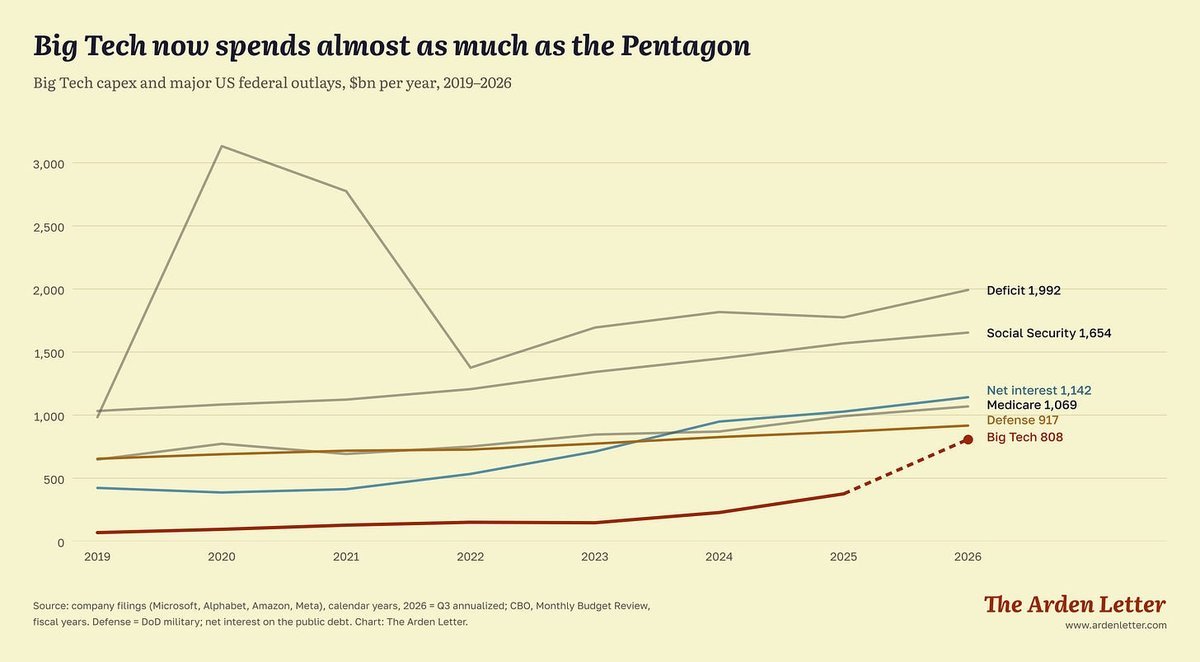
The analyst also looks at the money. Microsoft, Alphabet, Amazon and Meta together invested $202bn in the third quarter of 2026, largely on data centers, servers and chips. In early 2019 the quarterly figure was $14bn.
Spending by US businesses on computing equipment and software has reached 5.3% of GDP, above the 4.5% dot-com peak, and roughly 45% of US growth over four quarters came from tech investment. At this rate the four hyperscalers will spend around $800bn annually, against $917bn for the Pentagon. Washington pays $1,142bn a year in interest and borrowed $1,992bn in fiscal 2026.
He argues the US is chasing three goals that conflict: wide, cheap productivity gains, strong returns for investors, and a win over China. Cheap AI means thinner margins. Keeping China out shrinks the market and adds compliance costs.
The two questions that decide the decade
The outcome rests on two open questions. Does Washington treat AI as a weapon, or allow open global spread? And will the investors funding the boom earn a real return on their capital? His series will examine four scenarios, and he notes that European savers supply much of the money, while Europe’s own grids and power plants wait.
The next markers are the December closed sessions, the new Congress in January and whether the Megaspeed investigation widens.
Source: ardenletter.com