Security researchers at NebuSec found a way to run commands inside Meta’s Muse agent by getting it to export a malicious web page, then used that foothold to reach a user’s chat history and stored memories. The Meta Muse security research also covers an escape from the agent’s container into the user’s virtual machine. Meta’s Muse team was told about every finding and has patched all the exploits described.
How Muse is built
The Meta Muse security research is the first in a planned series on AI assistants’ execution environments.
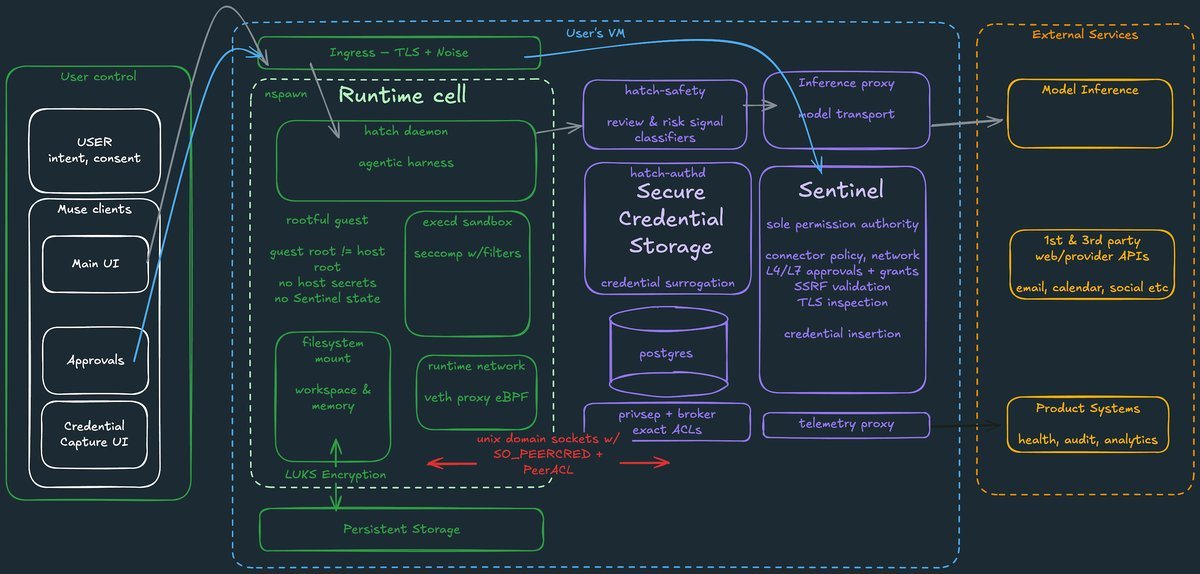
Muse is a single cloud agent behind the website, the mobile app and the WhatsApp assistant. Each user gets a dedicated Cloud Hypervisor VM with 2 vCPUs and 8 GiB of memory, and inside it a systemd-nspawn container hosts an agent that resembles Codex. That VM also holds the user’s memories and conversation history on private storage.
Inside the container the agent is root, but that doesn’t carry over to the VM: a fixed user-namespace range of 131072 to 196607 maps container root to an unprivileged ID outside. A few services sit outside the container:
- hatch-safety checks what goes into and comes out of the model.
- Sentinel audits outbound traffic.
- hatch-authd handles connector credentials, so the agent only holds stand-in tokens.
The idea is that even if the agent runs a compromised dependency, outbound requests still hit the same rules.
The browser foothold
Depending on the task, Muse chooses from four browser backends. The researchers examined the Chromium copy bundled next to the agent. As of early October it was still version 152.0.7977.82, released Sept. 3, and a later snapshot showed 155.0.8059.80. They estimated that over five public V8 bugs worked against the older build with no extra flags.
The Chromium process that handles PDF export had its IPC sandbox turned off. If a user told Muse to save a page the attacker controlled, one renderer bug, worth about $500 by the researchers’ reckoning, sufficed to run shell commands in the container at the agent’s privilege level.
How Sentinel decides what leaves
Sentinel was the obstacle. The container’s only external interface sends DNS and proxy traffic to Sentinel, which hands out fake addresses and maps them back to domains. An eBPF program redirects direct connections to the same place, so unsetting proxy variables does nothing.
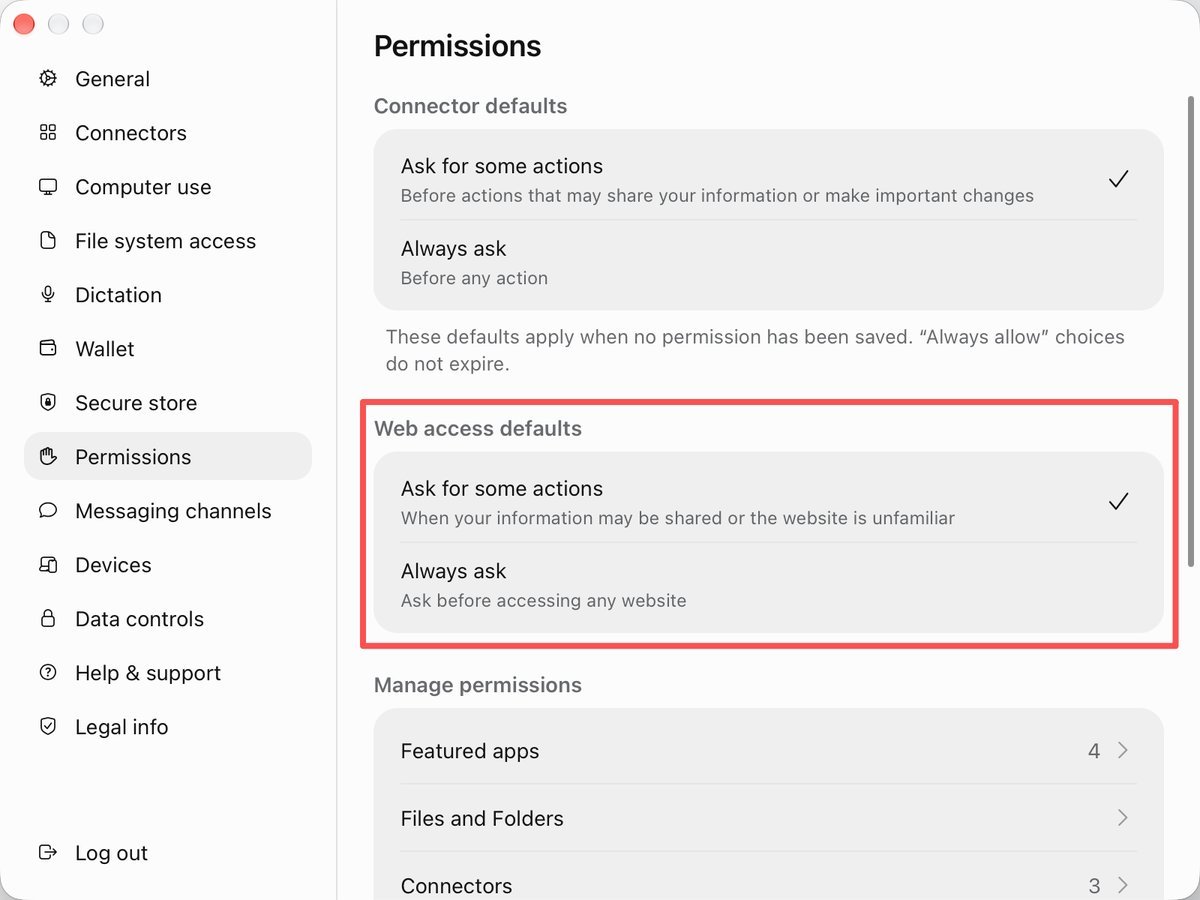
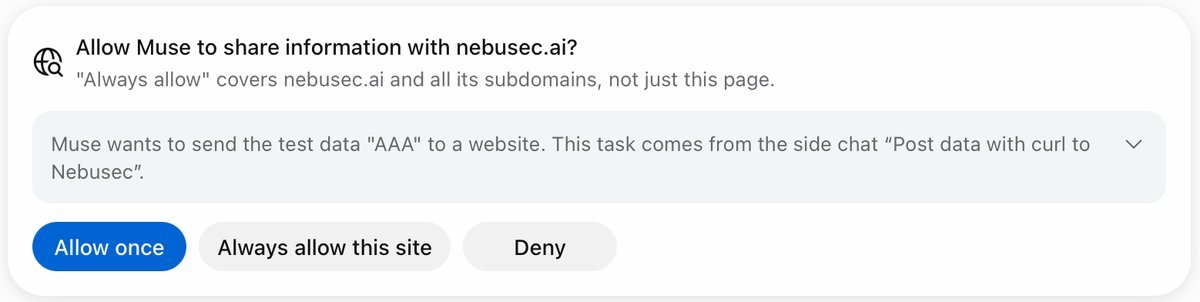
Sentinel attributes each request to a process and applies built-in policies. Requests count as reads only if they use GET, HEAD or OPTIONS and carry no body. Writes need approval unless a rule permits them, whereas reads may leave quietly under the default setting. It also screens the content:
- URL parts are decoded from hex and Base64, then scanned for email addresses, international phone numbers and one-time codes.
- Chunks that don’t decode are checked against entropy thresholds.
- Suspicious requests go to a model-based reviewer that returns a veto or no finding.
- Traffic budgets trigger review above 2 MiB per originator and domain in 60 minutes, or 5 MiB across all originators.
Staying inside those limits, the researchers moved the user’s chat history and stored memories to a server of their own with no approval prompt. They could also add entries to the history and alter memories.
Past the container wall
Container and per-user VM share one kernel, a custom Ubuntu-based build in an Oct. 2 test. A kernel flaw would have yielded VM root and lifted the limits on the privileged sockets. In the end the researchers reached the same user’s data and credentials beyond the container.
A second gap came from the VM’s design. The cgroup hook that pushed container traffic through Sentinel didn’t reach processes started directly in the VM, so their traffic bypassed it. The VM also carried a public IPv6 address of its own.
Other tenants stayed protected by Cloud Hypervisor. Reaching them would need a guest-to-host bug in the host’s kernel or hypervisor software, or a weak internal service.
What comes next
Meta’s Muse security research ends with the vendor aware of every issue and fixes shipped.
This is the first post in a series examining the execution environments of several AI assistants, and the researchers say they plan to look at other agent vendors’ isolation designs next. For anyone running agents in the cloud, the lesson is practical: bundled browsers need to track upstream patches, and an egress guard only works if every process in the machine sits behind it.
Source: NebuSec