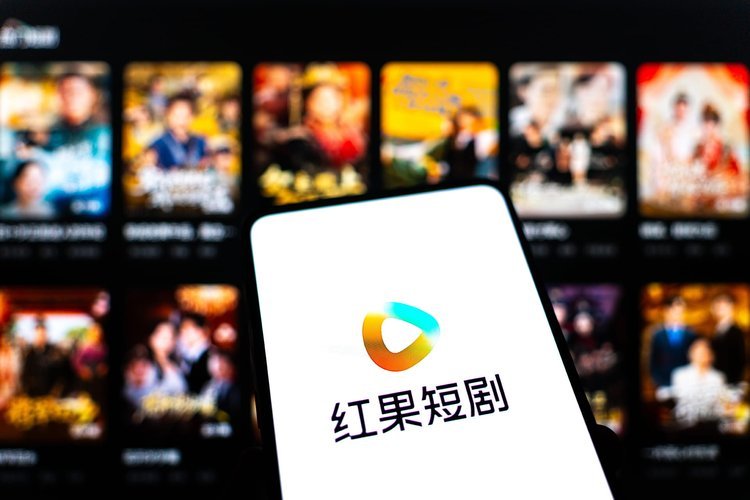
The Hongguo short drama app, owned by ByteDance, passed 200 million daily active users in July 2026. That is more than the combined daily audiences of iQiyi, Youku, Tencent Video and Mango TV. It got there in under three years, and in 2026 AI-generated series did much of the work.
A side project that outgrew its forecast
The name means “red fruit.” The app began life as a spare package sitting with the Fanqie Novel team and launched after a few weeks of prep. Staff assumed 50 million daily users was the ceiling.
Growth stalled once in early 2025. The jump from 120 million to 150 million daily users took five months, a crawl for an app that had been doubling every quarter. Then it broke through that level without anyone inside quite knowing why.
A romance drama called Summer Rose helped. It drew more than five billion plays in the second half of 2025 and got office workers in China’s biggest cities talking about short dramas.

Why guaranteed payments worked
The business model came from Fanqie Novel: free content paid for by ads. Paid short dramas had become expensive to market. In 2023 China’s microdrama industry took in RMB 30 billion (about USD 4.5 billion) at a profit margin near 5%, and paid traffic acquisition ate an estimated 80% to 90% of costs. At the leading producer, Dianzhong Tech, three in ten shows lost their whole investment and fewer than one in ten became hits.
Hongguo paid studios a floor fee and a cut of revenue on top. Director Yu Honglin said that safety net gave producers room to try new ideas after pure pay-per-view had become a gamble. Content spending reached RMB 3 billion (USD 449 million) in 2025. Majiu, the studio behind Summer Rose, received RMB 30 million from that show alone.
Free dramas had only 11% of the market in January 2024. By October that share reached 50%, and free viewing then moved ahead of paid.
An ad machine feeding user growth
A former employee described a tight model: for every RMB 1 spent on acquisition, Hongguo could predict the users gained and the ad income each would generate. That favored heavier ad loads, with the proceeds reinvested in growth. Losing one irritated viewer didn’t matter if the money brought in five new ones.
Its biggest rival sat inside ByteDance. Douyin at one point sharply limited referrals to Hongguo, which cut Hongguo’s user growth by double digits. The feud ended in May 2025, when Douyin Group merged both apps’ business development teams into one short drama rights center.
How AI dramas took over the Hongguo short drama app
Hongguo expected photorealistic AI series to win first. In November 2025 it gave them a revenue-sharing weight of 60, above 2D and 3D animation. It offered up to RMB 30,000 (USD 4,490) per minute for top-rated AI dramas, more than Tencent and Kuaishou paid.
The first hit format was far simpler: narrated comics and still images set to music, which some producers likened to PowerPoint slides. Plenty of viewers were middle-aged men who used to listen to audiobooks, so sound mattered more than visuals.
Everything changed after Lunar New Year 2026, when ByteDance’s Seedance 2.0 let small teams turn out AI video in bulk. Industry estimates count about 122,000 AI-made short dramas in the first quarter. That was over 95% of releases and more than all AI output in 2025.
Two in five Hongguo viewers now watch AI dramas with lifelike characters, another two in five watch AI 3D animation, and one in five watches live action. AI drama viewing time passed live action in the first half of 2026. The audience also broadened to include more men.
Winners, losers and a crackdown
Live-action studios report shrinking payouts. Heard Island recorded its first-ever loss in April and turned toward overseas markets. Yujin Wuliang’s revenue fell to under a quarter of its year-earlier figure by October.
AI producers didn’t keep their edge for long. From April, China’s broadcast regulator tightened licensing for short dramas. On April 7, Hongguo said 3,522 titles had been blocked, penalized or removed in a single week. That month the revenue-sharing weight for photorealistic AI dramas fell from 60 to 40, and 3D animation dropped from 50 to 40. Judian’s monthly output fell from a peak of 500 shows to just over 200.
What comes next for Hongguo
Advertisers are tightening budgets, and e-commerce still brings in little. Melolo, the overseas version launched in November 2024, faces tougher competition than Hongguo does at home.
Executives see two paths. One is a Douyin-style super app mixing video, audio, text and shopping. The other is a global business built on original story franchises. An early test is the AI series Wanyao Tulu Zhuan, launched in March, whose 14 seasons have passed ten billion plays.
On October 21, Hongguo announced that coin rewards would end for new users on November 1 and disappear entirely by year’s end. The rewards had encouraged marathon viewing.
Source: KrASIA