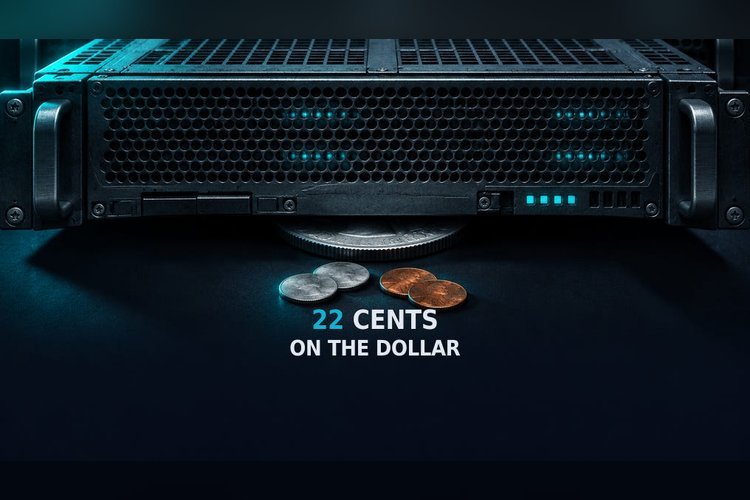
Data center tax breaks are getting their first real audit, and the numbers are ugly. Virginia’s legislative auditor now estimates that each dollar the exemption costs brings back only 22 cents, a sharp fall from the 48 cents it estimated a year ago. Texas senators want theirs repealed, and Nvidia is facing questions about guarantees that now total $118 billion.
Texas wants its exemption gone
The Texas case shows how data center tax breaks can outgrow their forecasts.
Back in 2013, Texas exempted data center equipment from sales tax. Lawmakers budgeted $14.6 million in lost revenue for 2014-15. The Comptroller now puts the cost of the next two-year budget at $3.3 billion, over 200 times the first figure.
Senator Joan Huffman, a Republican who heads the Senate Finance Committee, introduced SB 293 on November 9 to end the exemption, and most of the Senate has joined as co-authors. Her view is that Texas should welcome investment without handing out an open-ended subsidy. Comptroller staff told her committee in July that 138 data centers hold the exemption, 59 of them approved in 2026, and that the state checks compliance only once five years have passed.
Virginia’s audit cuts the return by more than half
Between 2021 and 2025, operators in Virginia saved $811.5 million a year on average through the exemption, while the activity attributed to it generated $179.4 million in annual taxes. In June the state budget left the exemption in place and layered on a two-year levy of 1.1 cents per kilowatt-hour of data center power. Revenue beyond $600 million a year, after administration costs, is refunded to operators according to what each one paid.
That design assumes officials know the exemption’s true value. The state auditor, JLARC, first put the return at 48 cents per dollar in December 2024. Its newest review, released November 9, says 22.
Most of the drop traces to one input: the share of data centers that arrived because of the incentive. Earlier reports assumed 90% or 100%, and the new one assumes 50.2%. Georgia’s auditors credit its exemption with just 30% of the state’s facilities. Fiscal 2025 forgone revenue there was $474.2 million, and the taxes that 30% generated came to $41.5 million, roughly 9 cents per dollar.
No one can see what a company would have done without the incentive, so economists guess, and that guess decides the result. JLARC’s figure also ignores local taxes. Property taxes on data centers supply about 39% of Loudoun County’s budget, which gives its board every reason to approve projects even as the state loses money.
Neighbors and voters push back against data center tax breaks
xAI powered its first Memphis cluster with gas turbines that had no air permits. For its second, it acquired a plant site just over the Mississippi line in Southaven. Mississippi regulators cleared 41 permanent turbines totaling around 1.2 gigawatts in March, residents appealed, and the board kept the permit in place on November 10.
Voters in ten states approved 40 of 41 local ballot measures restricting data centers on November 3. An NBC News exit poll found 56% rated AI and data centers a major factor in their congressional vote, though every other issue tested ranked higher. Gina Hinojosa, who defeated Greg Abbott in Texas, has pledged a freeze on approvals. Keisha Lance Bottoms in Georgia said she will order a pause by executive action.
UBS estimates curbs could touch around 30% of the American capacity due online in 2028. Ohio’s Governor Mike DeWine halted new applications in May, after a sales-tax break forecast at $136 million cost an estimated $1.57 billion in 2025.
Nvidia stands behind the rent
In Pike County, Ohio, SB Energy is building a compute campus of about 4.25 gigawatts for OpenAI on the site of an old uranium enrichment plant. In its August filing, Nvidia said it would guarantee up to $105 billion of rent and power payments there if OpenAI defaults.
Jensen Huang resigned as CEO on November 12, and the board opened an independent investigation. CFO Colette Kress is interim CEO. The company’s guarantees reached $118 billion on October 25, up from $108.5 billion in August, and it says it has made no payments under them. Its commitments to neoclouds dipped from $36 billion to $32 billion. Kress told investors the company would be disciplined about committing capital.
Revenue hasn’t flinched. The quarter ended October 25 brought $115.8 billion, up 103%, with data center revenue up 110% at $107.6 billion. Nvidia guided to $130 billion for its next quarter, which runs one week longer. Those orders were placed before the election, so they say little about the next taxable purchase or the next local approval.
On November 5, OpenAI released a National Community Compact pledging to cover what its campuses cost in power and to disclose each site’s water and electricity consumption. It applies only to future campuses that OpenAI itself owns and operates, and it has no penalties.
What to watch in January
The Texas session opens in January. The Senate bill would end existing exemptions, while the House version would let them expire, and the chambers are split between parties. Ohio’s pause covers only new applications. The Southaven permit stands. Whether data center tax breaks survive in their current form will depend on that Texas fight and on whether other states commission audits like Virginia’s.
Source: techtrenches.dev