
Claude Ship is a new beta that carries a pull request from review through fixes to an approval decision. It works with GitHub repositories on Claude Team and Enterprise plans, and it follows policies that each engineering team writes itself.
The reasoning is straightforward. Plenty of developers now build with agents, so typing the code is no longer the slow step. Waiting for review, chasing red CI checks and finding someone to approve are. Anthropic says Claude writes most of the code on its own Claude Code team, and it wanted the stages after the pull request to keep up.
Three parts, two of them new
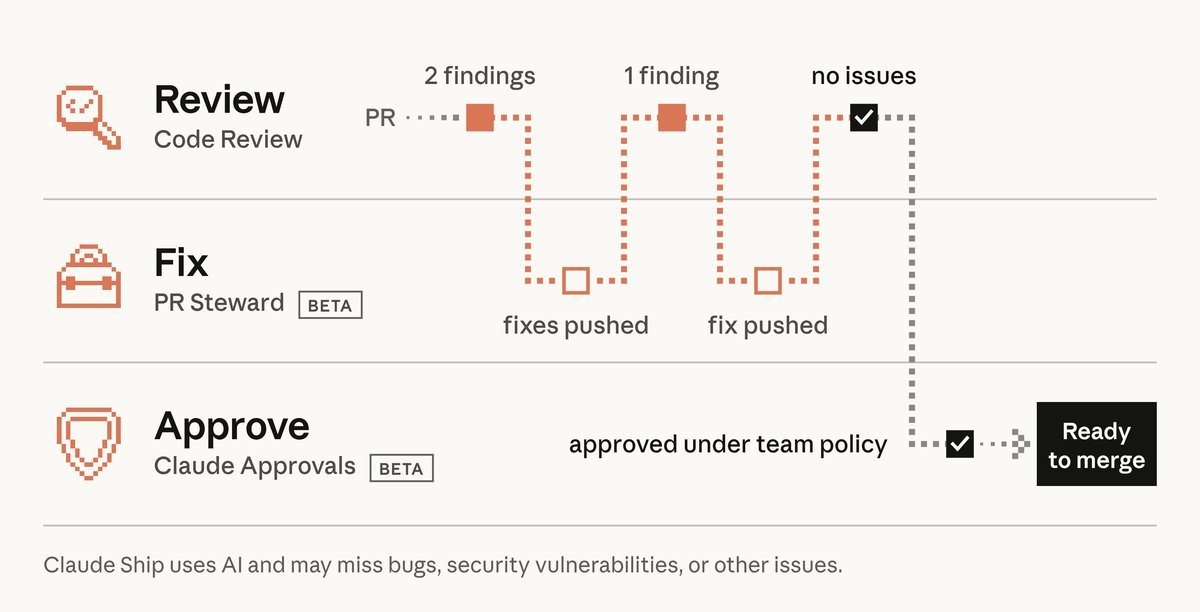
The package bundles Code Review, which is generally available, with PR Steward and Claude Approvals, both in beta.
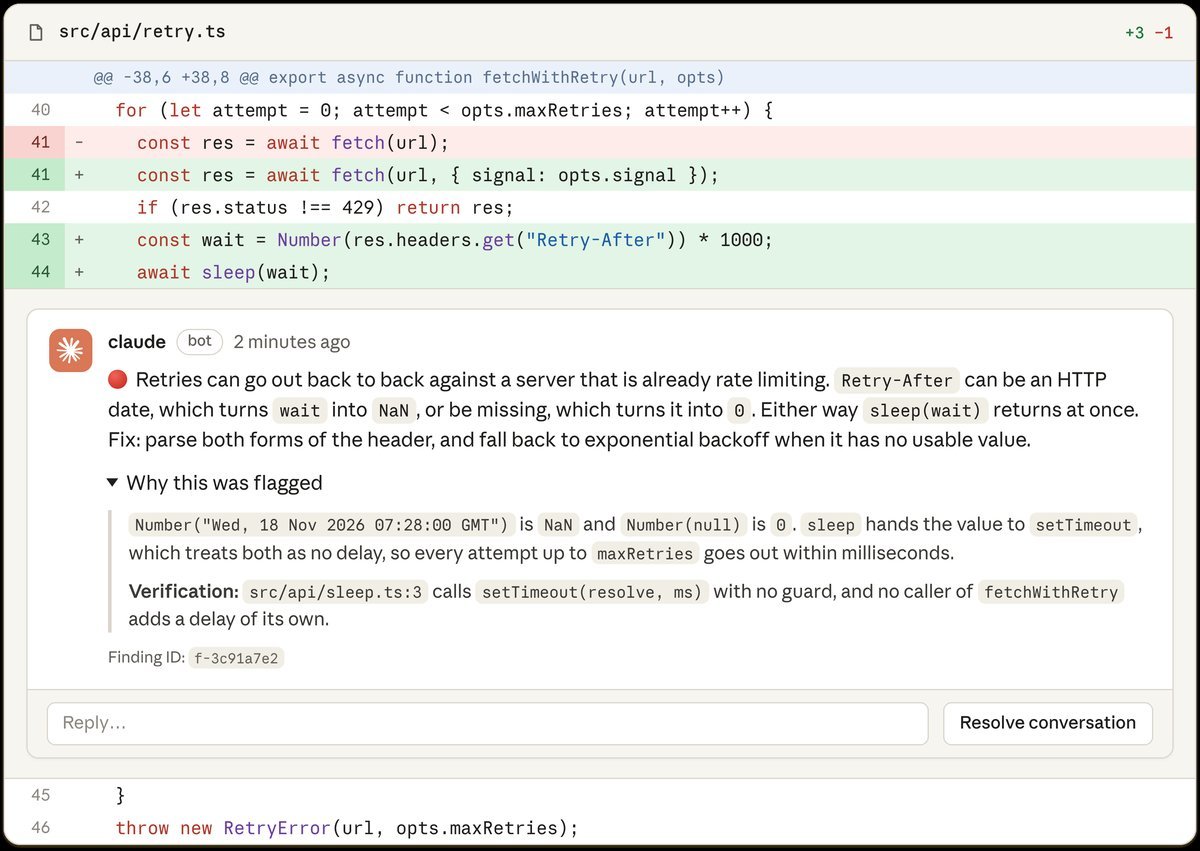
Code Review examines a pull request against the codebase from several angles. It gathers findings, tries to knock them down, sorts the survivors and posts them to the PR. Each repository gets a Quick, Standard or Deep setting. Inside the Claude Code team, where Claude’s review is one layer among several, merged pull requests more than doubled from June to September. The share of changes reverted dropped by over 40%.
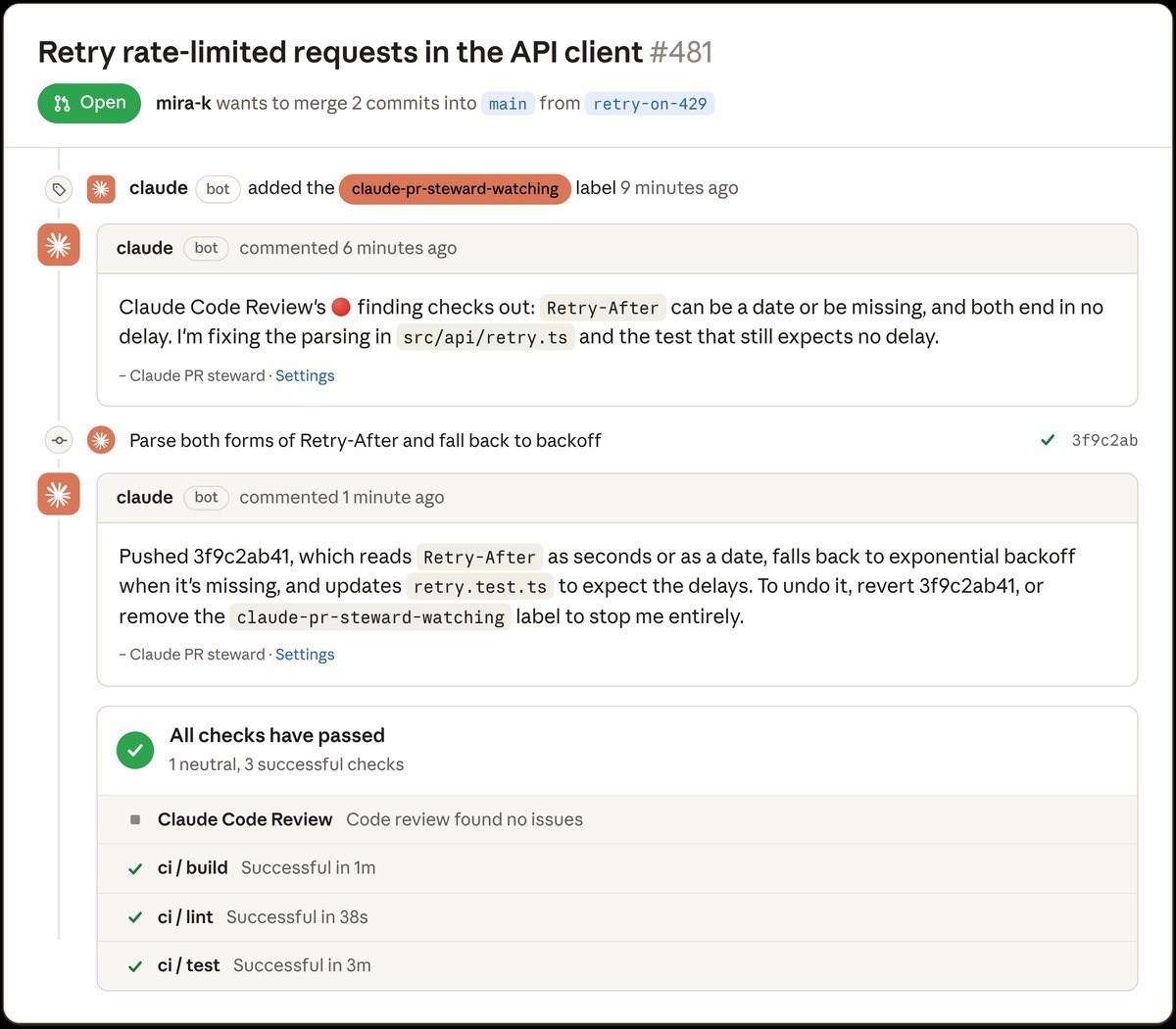
PR Steward keeps a pull request moving toward green. It reacts to failing checks, merge conflicts and comments from Code Review, other tools or colleagues. It’s built so it can’t approve or merge. After each push it explains what it changed and how to roll that back. Developers can write @claude with an instruction to redirect it, or @claude stop to pull it back.
Claude Approvals then decides. A team writes its approval policy as a file in the repo. Routine changes can be approved by Claude alone when the policy permits, while sensitive scenarios can demand a human reviewer. Anthropic likens it to a smarter CODEOWNERS file. Inputs can include Code Review findings or classifiers the team describes in plain language.
Two entry points
An individual developer runs /ship once a change is ready. Claude pushes the branch, opens the PR, reviews it, then works through feedback and failing checks. Whether anything merges still hinges on that developer’s permissions and the branch rules. The command begins rolling out today in Claude Code and the desktop app.
Admins can instead enable the whole stack for a repository, so nobody has to type the command. The controls are granular:
- Code Review and PR Steward are switched on one repository at a time.
- Claude Approvals starts when the default branch holds a policy file, and admins can turn it off.
- Review level, timing and spend caps are set per repository.
- Branch protection and required checks keep applying.
Anthropic suggests most customers begin with Claude Approvals in observe-only mode. After a team trusts its judgment, it can configure branch protection to demand that green light.
A docs fix in one evening
Anthropic described a case from its own team. Documentation for the Analytics API suggested that an Admin key could retrieve Pro and Team usage, which confused a customer. A product manager asked Claude Tag if a fix was underway, and it opened one. Code Review flagged nothing that blocked, a docs reviewer approved, Claude Approvals passed, and the change was merged by evening.
Two early users commented. Vatsal Bhatt, Director of Engineering at TELUS Digital, said Code Review caught real problems before a human looked, and PR Steward helped contributors repair them. His team keeps a person in the loop, so reviewer time goes to the changes that need it. Alex Devkar, a Senior Vice President at Carvana, said pilot teams spend less time on review feedback.
Pricing and limits
Billing follows token use, so enabling Claude Ship can raise costs. The size depends on how many pull requests are covered, how big they are, the review level, run frequency and how much PR Steward does. Spend limits exist for Code Review and PR Steward.
Claude Approvals carries no base fee. Classifiers in a policy are charged by the tokens they consume, and a policy using Claude’s review will trigger a paid Code Review even while observing. The /ship command is billed as normal Claude Code usage.
Eligible Claude Enterprise organizations may claim at least $10,000 in credits, spendable within 30 days of the claim. Claims close January 15, 2027, and terms apply.
One limit to know: organizations on Zero Data Retention, the HIPAA configuration or customer-managed encryption keys can’t use it.
Where to begin
Developers can update Claude Code and try /ship on the next change. Teams that already use Code Review can add PR Steward to a repo and pair it with an observe-mode policy. Newcomers follow the setup guide to connect GitHub and enable a first repository.
A cautious rollout is one repository, a monthly spend cap and an observe-only policy. That shows what Claude would have approved before it holds any real merge power.
Source: Claude