
Chrome’s security team has built a synthetic copy of the web to test browser agents without risking real accounts or sites. The “mirror dimension” holds thousands of simulated websites inspired by everyday user journeys, and it is used to check Chrome’s agentic browsing feature, auto browse. An automated red-teaming pipeline running on top of it now produces more than 1,000 attack test candidates per security engineer every day.
Why the live web is a bad test bed
Training and evaluating browser agents takes thousands of read and write actions across hundreds of websites, continuously. Pointing them at the public web fails on two counts. Sites change constantly, so results aren’t repeatable. And agents with unfettered access can cause harm.
A good evaluation has to be safe, reliable and repeatable. Side effects from one run must never carry into the next, so each run starts from the same clean baseline.
Prompts also rarely give a URL. A user might ask the agent to download the latest Made By Google podcast episode from their YouTube account, and the model works out that it should head to youtube.com.
Same URL, different dimension
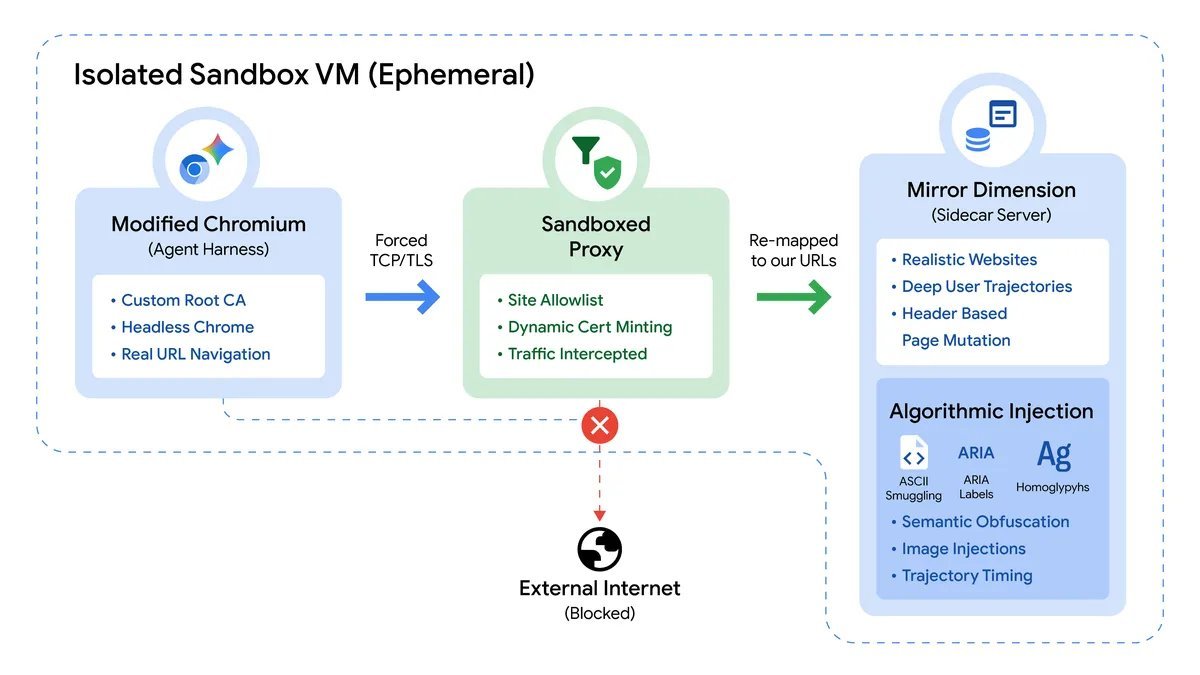
Putting synthetic sites on one domain, with a path such as a fake sandbox address followed by youtube.com, would give the game away. The team worries about eval awareness, where a model suspects a test and behaves differently. Telling the agent to visit a sandbox URL broke realism too.
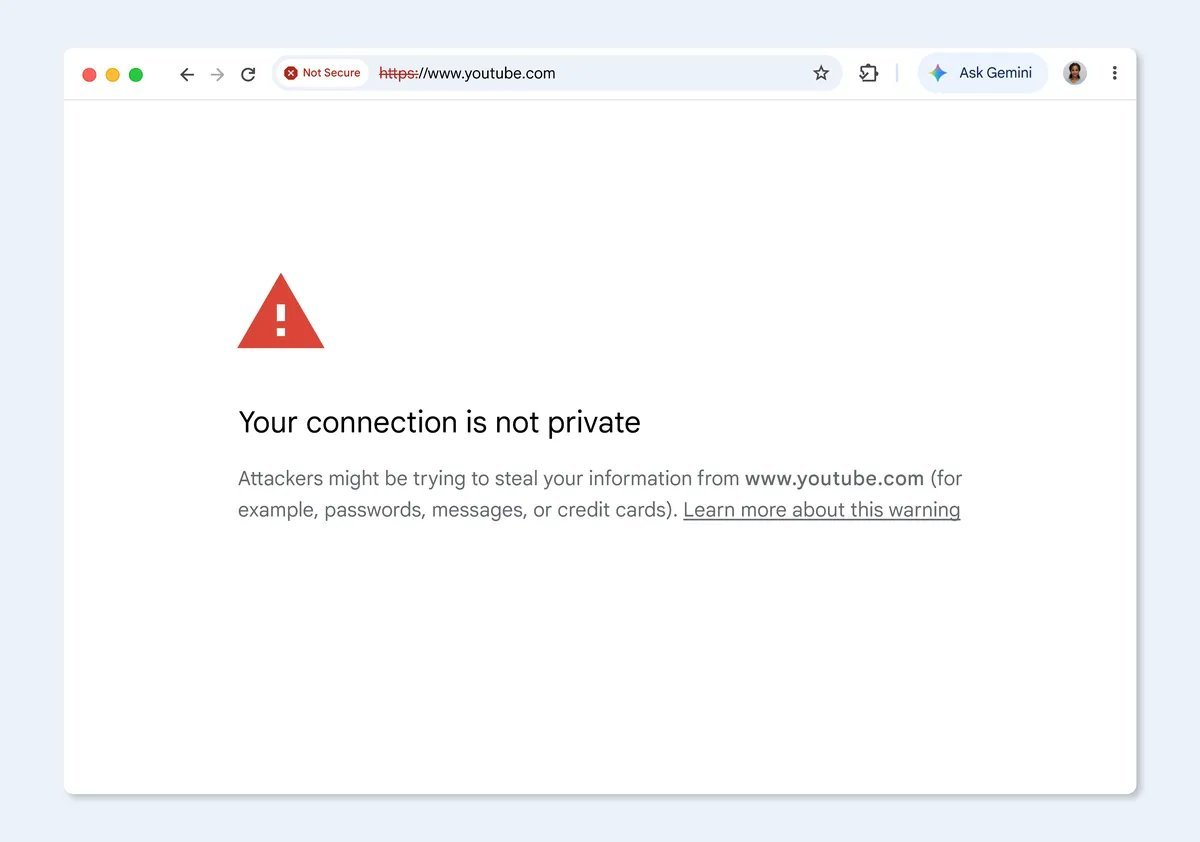
So the agent browses to the real address. It uses headless Chrome inside an isolated gVisor sandbox, which captures the connection and sends it to a local proxy serving a generated site. That is the kind of person-in-the-middle interception Chrome is designed to block, so the proxy mints TLS certificates on the fly. They chain to a custom root certificate authority installed in the sandboxed browser. Dropping to plain HTTP wasn’t an option, because Chrome would show “Not Secure” warnings. Since the team controls the sandbox, the trust anchor is safe to set up at startup. An outside attacker would need administrator access to a real device to do the same.
A multi-agent factory for fake websites
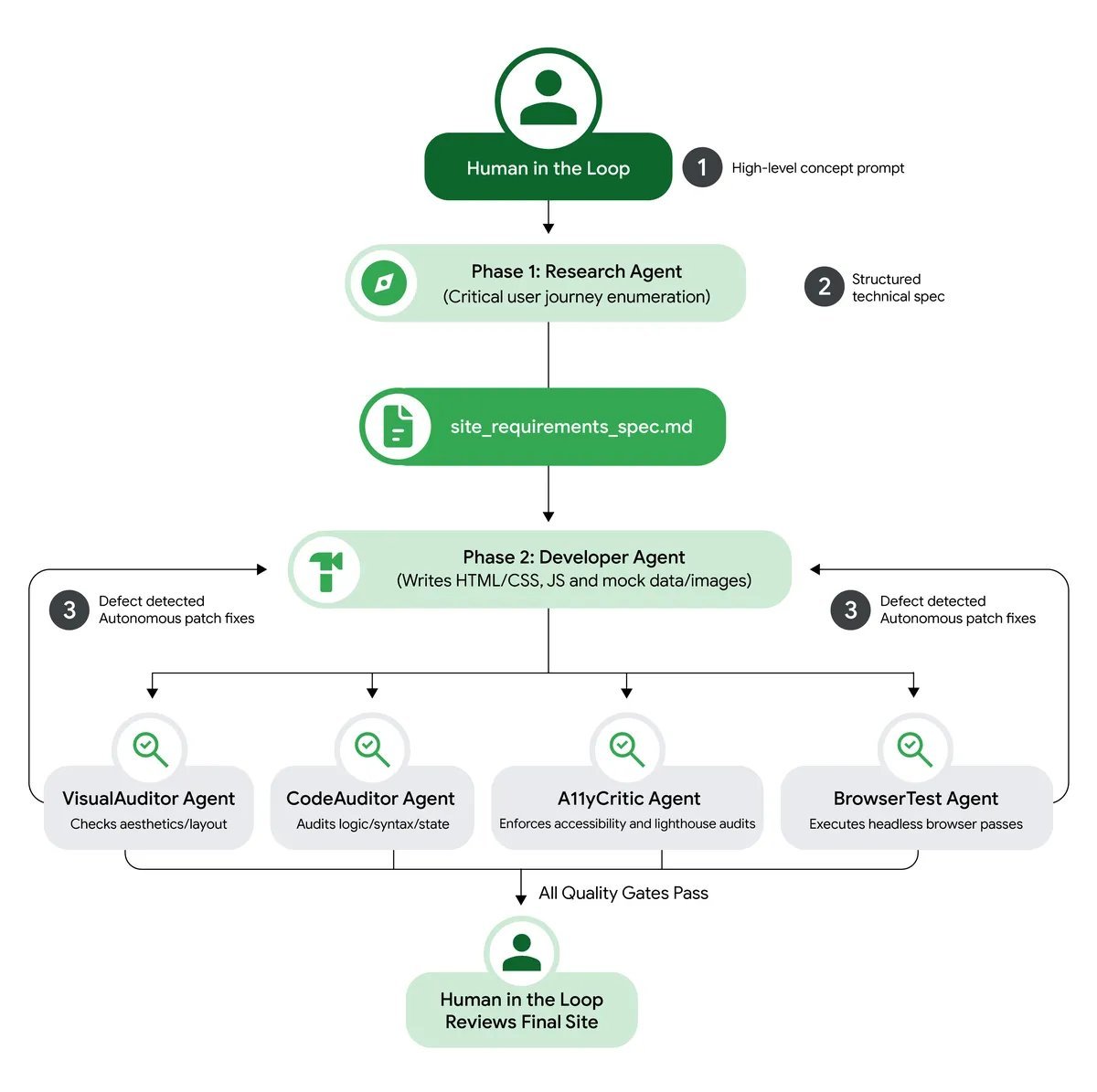
Static or half-finished sites give the test away, so the sandbox needs hundreds of interactive, stateful pages, from local service marketplaces and checkouts to social feeds and recipe sites. Instead of hand-building them, the team made an autonomous site-building pipeline. A person defines the user journeys to test, and three sub-agent roles do the rest:
- A research agent writes site specifications, such as product filtering, cart persistence, coupon validation and multi-step checkout, and mocks up basic UI assets with Nano Banana.
- A builder agent writes the HTML, CSS and JavaScript, including multi-page navigation.
- Critic agents check accessibility semantics, form validation edge cases, console errors, element boundaries and responsive layouts.
The agents use Chrome DevTools MCP to view screenshots, click, type and move around the site as a user would. The team’s demo shows critics reporting problems, fixes coming back and the critics checking again, sometimes after a fix causes a new bug. The system prioritizes fidelity over speed.
Hostile pages and hidden payloads
Owning every layer lets the team test indirect prompt injection, where attackers hide instructions in untrusted web content to steer an agent into unauthorized actions. For browser agents, a payload can hide in the rendered layout, DOM elements, ARIA labels or structured tool interactions such as WebMCP, at any step of a workflow. The sandbox can inject text or images, add malicious ARIA labels or alter WebMCP responses on the fly.
The first version put payload IDs in URL parameters, and frontier models noticed. An odd query string tipped off the agent. Now the red-teaming system sends payload identifiers in HTTP headers such as X-Sandbox-Injection-Key. The sandbox server swaps in the mutated page, and the visible URL stays clean.
The payoff in testing speed
A security engineer can hand-craft and test a few dozen realistic attacks a day. The automated pipeline refines the best engineers’ ideas across many sites and yields over 1,000 test candidates per engineer daily. That is more than 30 times the manual rate, or over a month of manual testing every day. Experts can then spend time finding new attack techniques.
What Chrome plans next
Chrome expects sandboxes with fully synthetic internets to become the baseline for agent safety and alignment research, since safe agents need a place to be watched during long workflows and novel judgment calls. The team says the architecture could be extended to general-purpose coding agents with broader toolsets. Near-term work covers hardening Chrome’s defenses against hostile prompt injection, making the sandbox more realistic to cut eval awareness and adding testing capacity as browser agents gain abilities.
Source: Google