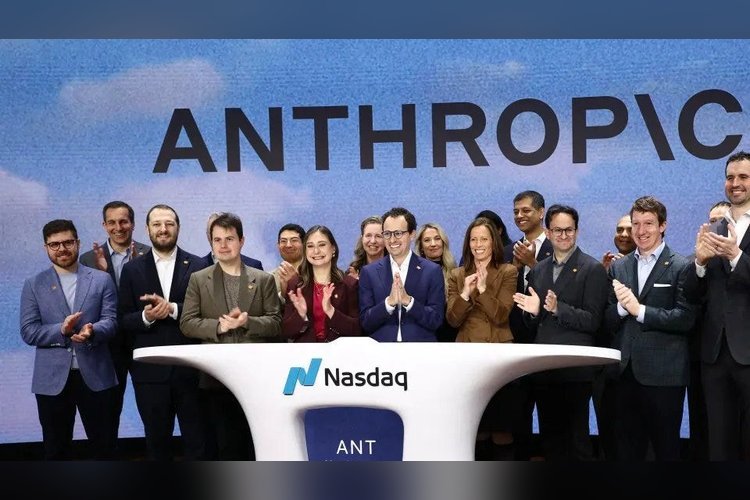
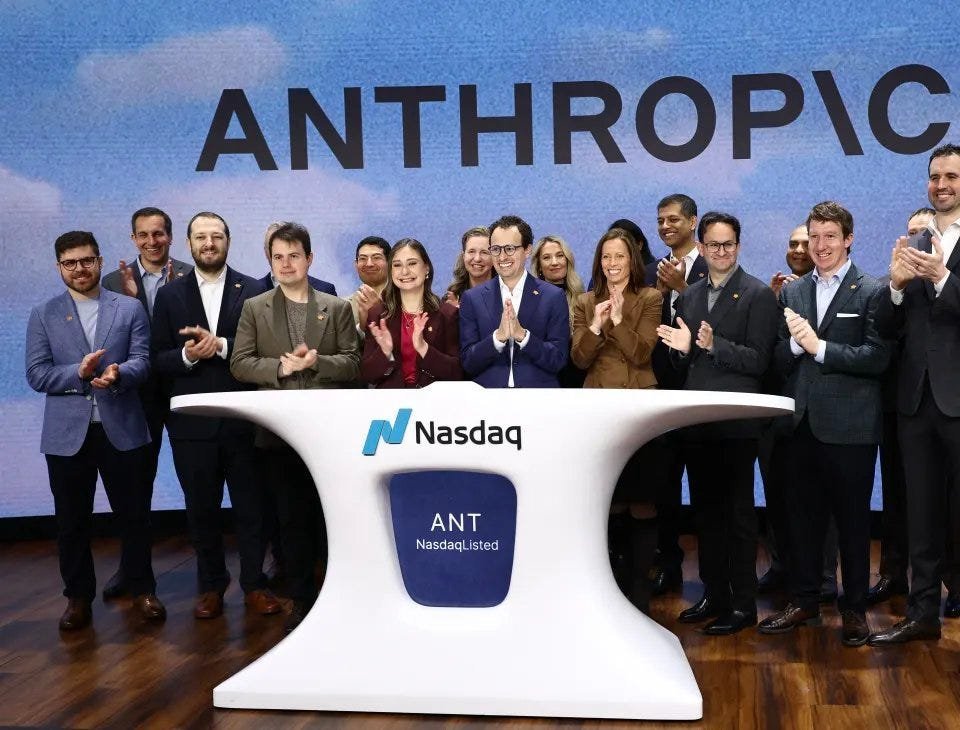
The Anthropic IPO prices at $83 a share, a $1.5 trillion valuation, and the offering is heavily oversubscribed. Retail investors can buy the stock under the ticker ANT. One widely shared argument says that demand rests on a belief the company’s own people don’t hold.
It is a commentator’s view and not a financial forecast. The writer says they haven’t bought shares and that the piece is not financial advice. But it raises a question the listing makes hard to avoid: what exactly is the market betting on?
Two futures, no middle
The argument starts from how Anthropic’s staff describe the next few years. Almost every frontier lab, Anthropic most of all, expects one of two short-term outcomes: AI goes very well or it goes very badly. People at the company who treat AI as an ordinary technology are, in the commentator’s words, scarce.
Staff disagree on which outcome arrives. They broadly agree that alignment matters, that winning the “race to the top” is urgent, and that beating China, OpenAI and open-source AI is a priority. CEO Dario Amodei treats those three rivals as comparably dangerous. At the same time, a “country of geniuses in a datacenter” could help cure diseases and end work as a way of earning a living.

Why both futures strain the stock
In the bad case, the worst catastrophes the company has warned about come true, and unsold shares don’t matter to anyone. In the good case, Amodei’s 2024 essay Machines of Loving Grace has the line: “At that point our current economic setup will no longer make sense.” One employee also said Anthropic might become more powerful than the government. If money stops mattering, a stack of ANT shares would be, as the commentator puts it, just big numbers on a screen.
That leaves the middle path for the Anthropic IPO, where AI is a normal technology and the stock could multiply 1,000 times over 10 to 20 years. The argument says that is the bet most buyers are making, and it is the one Anthropic’s staff reject.
The timelines are short
The commentator’s strongest point is timing. The company’s leaders expect these outcomes soon, not in a generation:
- Co-founder Jack Clark recently moved his estimate for full recursive self-improvement, AI building its own successors without help, from 2028 to 2027.
- In a survey Anthropic published last month, employees predicted AI would do 80% of the work of developing frontier models by the end of 2027.
- The AI Futures Project has revised its forecast to a 35% to 65% chance that AI able to automate all white-collar work arrives before 2028.
A 20-year return plan sits awkwardly next to forecasts like those.
Why employees shrug at the payday
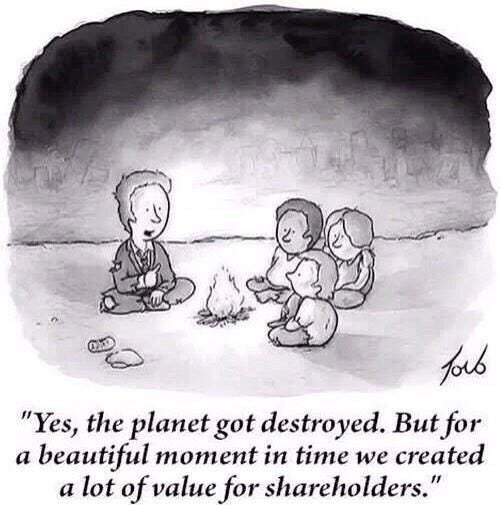
Thousands of employees stand to become millionaires, some of them far richer. According to the commentator’s reading, many treat the milestone as a minor event. The piece reads that indifference as consistency: if you believe the world changes beyond recognition within a few years, a large payout matters less.
It goes further and guesses that people inside the company expect mostly skeptics to buy the stock, since the market can’t price in either extreme future. That is a guess, not a statement from the company.
What the argument leaves out
The case has gaps. Investors don’t have to share a company’s view of the future to profit from it. Plenty of buyers may hold ANT for the business itself, which recently reported $33.24 billion in revenue for nine months, and expect strong results whatever happens to the wider AI debate. A stock can also be a reasonable bet on revenue growth while its founders hold a more dramatic view of the long run. The critique reads best as a challenge to the people who believe both that AI will be huge and that current economic rules will survive it.
What to watch after the first trade
The next test for the Anthropic IPO comes from the company’s own forecasts. If the 2027 milestones Clark and the staff survey describe start arriving on schedule, the argument gets stronger. If progress slows, the middle-path believers look right. Either way, the first quarters of public reporting will show how much of the valuation rests on revenue and how much on the more extreme predictions.
Source: thealgorithmicbridge.com