
AMD has its own China problem, and the evidence sits in a firmware file. After the U.S. put Chinese server maker IEIT Systems on its Entity List in March 2025, IEIT kept shipping updates that contain AMD’s startup firmware. The most recent went up on October 19, 2026, and the AMD China exposure now looks closer to Nvidia’s than many investors assumed.
Firmware that kept flowing
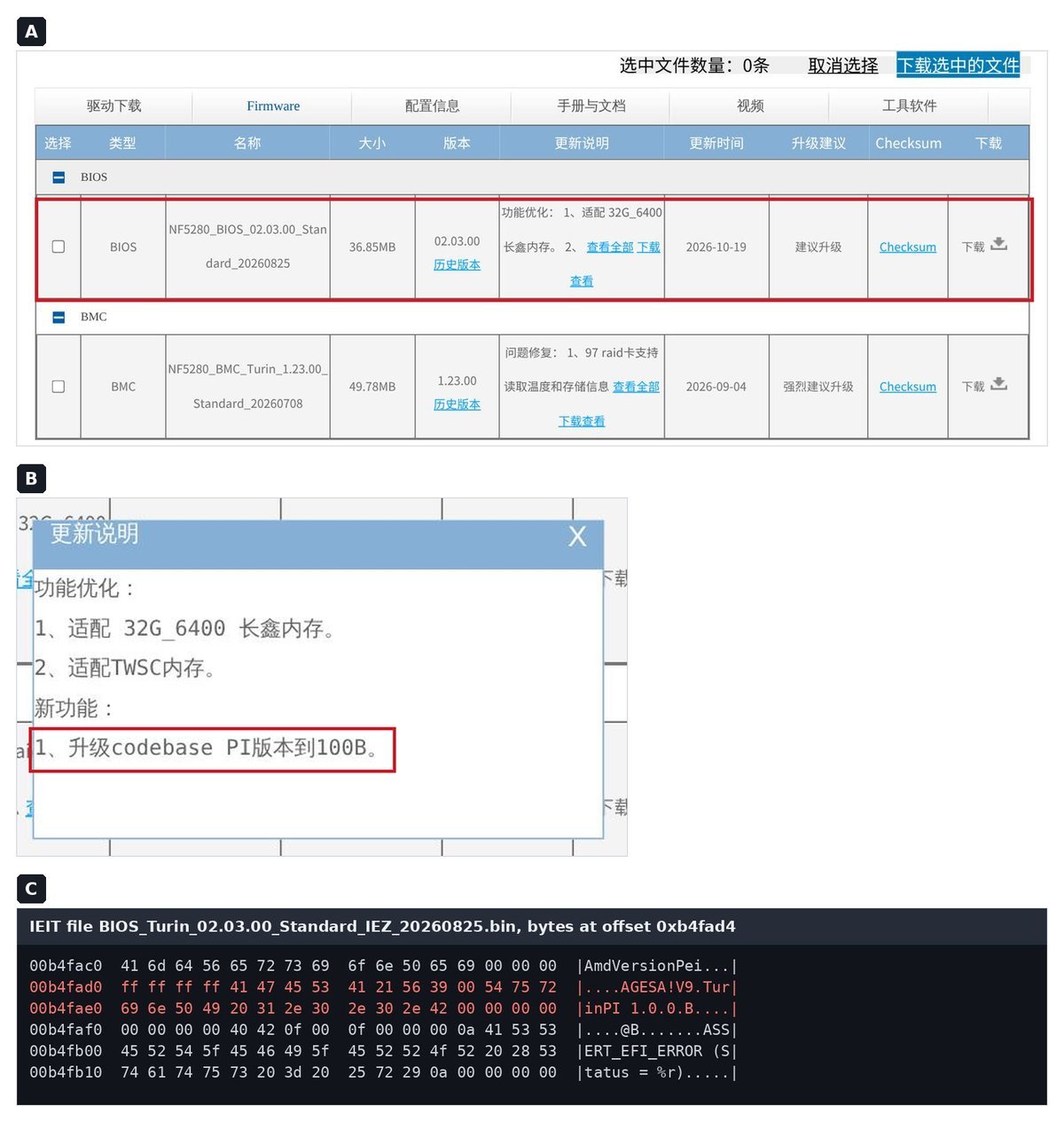
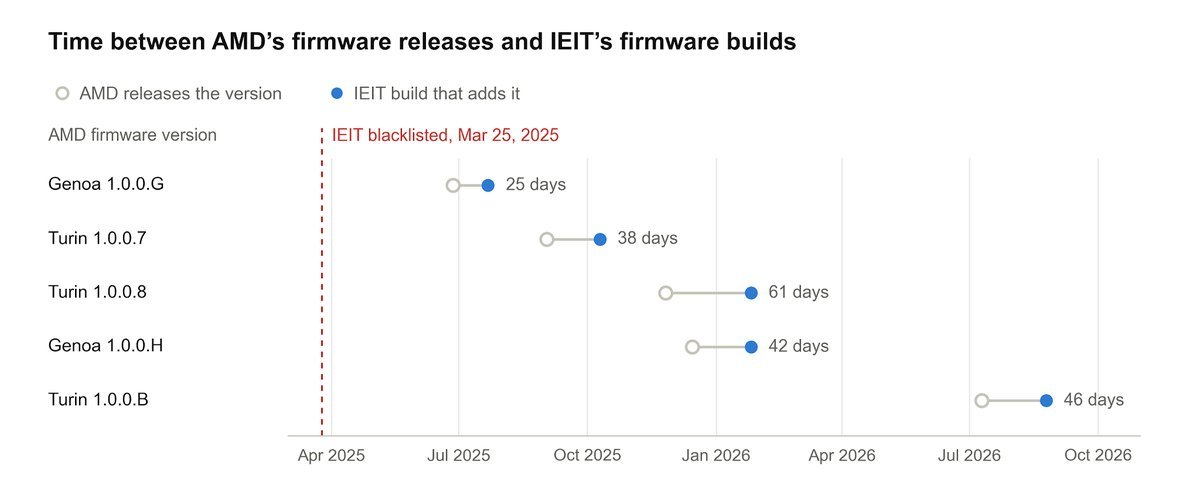
Listing a company this way means American exports to it need a license, and the Commerce Department says it will refuse them. Since the listing, IEIT has built at least six newer versions of AMD’s firmware into its products. That firmware is what lets AMD chips run inside servers.
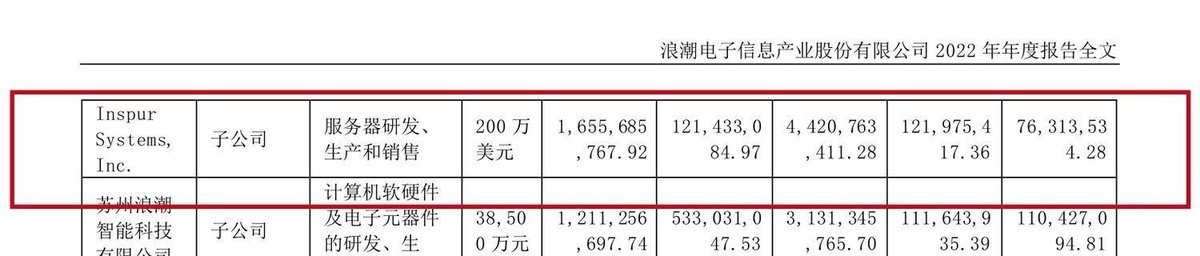
Three other sellers post almost the same firmware: Maginfra (China), Kaytus (Singapore) and Aivres (California). Each markets AMD-based servers under its own name, which hints that the blacklisted company may have designed the hardware. Corporate records agree. IEIT’s 2022 annual report counted Aivres, previously Inspur Systems, among its subsidiaries, and Kaytus’s audited accounts identify IEIT as the top parent.
AMD has not explained the firmware. It requested extra time to respond to questions, got a day, and never came back. Nor has it said if any license covers sales of chips or software to the blacklisted firms. IEIT, Maginfra, Kaytus, Aivres, Hygon, Tongfu and the Commerce Department’s export bureau also stayed silent.
The Nvidia comparison
Until now, the AMD China exposure drew far less attention than Nvidia’s.
The timing matters. On November 12, Nvidia said Jensen Huang had stepped down as chief executive in a scandal with national security implications. Allegations hold that billions of dollars of its AI chips got to China via middlemen in Southeast Asia, and lawmakers want to know how the shipments were cleared. William Blair raised its AMD rating partly because of Nvidia’s troubles.
That pitch assumes AMD doesn’t share the problem. Yet AMD’s website lists Aivres among makers of servers built on its Instinct AI chips, and Aivres announced such a server in July. From April 2024 to February, Aivres sent at least $5.6 billion worth of advanced technology into Southeast Asia, over $3 billion of it in machines using top Nvidia chips. Customers included data centers that serve Chinese firms such as Alibaba and ByteDance. In one case, around 2,300 Nvidia chips went from Aivres to an Indonesian facility working for a Chinese AI startup.
The AMD China exposure is not limited to one customer. It runs through supply, sales and licensing at once.
Rules that could tighten
One rule, currently suspended, would apply export limits to foreign companies half or more owned by blacklisted entities. The suspension ends January 10, 2027, and the rule could then reach Kaytus and any other foreign business that IEIT owns at least half of.
A separate interim final rule takes effect today and demands licenses for advanced chips going to Singapore and four more countries. In fiscal 2025 AMD invoiced Singapore customers for $4.28 billion, above a tenth of its sales, so licensing delays or refusals could hurt.
Other ties to blacklisted names
- Licensing income of $67 million in 2025 came from two Chinese chip ventures that were blacklisted in 2019.
- A server from Cancon, which is an alias of blacklisted Suma, appears in AMD’s February 2026 catalog.
- More than 20% of its revenue is billed to customers in China and Hong Kong.
AMD also depends on a Chinese partner for chip finishing. Tongfu Microelectronics holds 85% of two ventures that do most of the company’s assembly, testing and packaging, and AMD holds the remaining 15%. It loaned one venture $100 million, and the balance was unpaid when September ended. Lisa Su joined the Suzhou city Communist Party secretary at a May ceremony for a new venture factory.
What AMD has to answer about its China exposure
The open question is whether any license covered support that reached IEIT after March 2025. Investors should watch for an AMD response, the January 10 deadline on the ownership rule, and how the new Singapore license requirement affects its next quarter. On the evidence so far, AMD appears no less exposed to China chip restrictions than Nvidia.
Source: hntrbrk.com