A software engineer with more than seven years of experience before coding agents says the useful way to think about agent-driven development is an AI software factory, not another “engineering” buzzword. After building and abandoning an overbuilt first version of his own, he mapped the idea onto the software development lifecycle and drew a firm line around where humans stay involved.
Three months ago he built Squid to ship small and medium projects with minimal human input. The first version was so elaborate he stopped using it.
Too many labels, not enough outcomes
Prompt engineering gave way to context engineering, then a third label for the scaffolding around agents. In July 2026 loop engineering and graph engineering arrived, and he thinks they read more like marketing than solutions. Boris Cherny, who leads Claude Code at Anthropic, has said “My job is to write loops,” so the terms aren’t wrong. They just overexplain things teams have done since the LangGraph era began around 2024.
At AI Engineer World’s Fair 2026, Tereza Tížková of Factory.ai defined a software factory as the whole loop of developing software with autonomy.
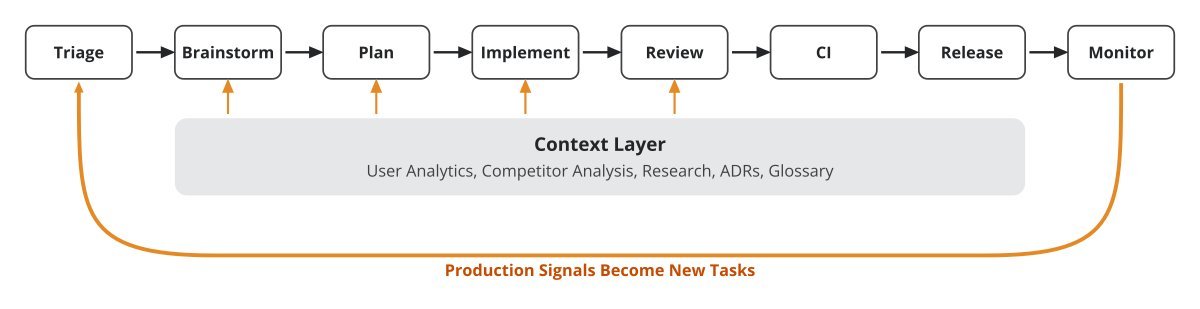
Eight stages in three groups
Incidents, feature ideas and defect tickets go in, and shipped software comes out. The factory has eight stages.
- What to build: triage and intake, brainstorming, and planning.
- Building and checking: implementation, review, CI review and release.
- Self-improving: monitoring and incident response feed production signals back into triage.
A context layer runs across all of them. It matters most at the front, because brainstorming can only use the data it sees. With no examples of a feature in the context layer, a model predicts the most common solution, which often isn’t the best for your product. One approach is the LLM Wiki, a term coined by Andrej Karpathy, which turns data into a structured knowledge base made of plain files.
Where the human belongs
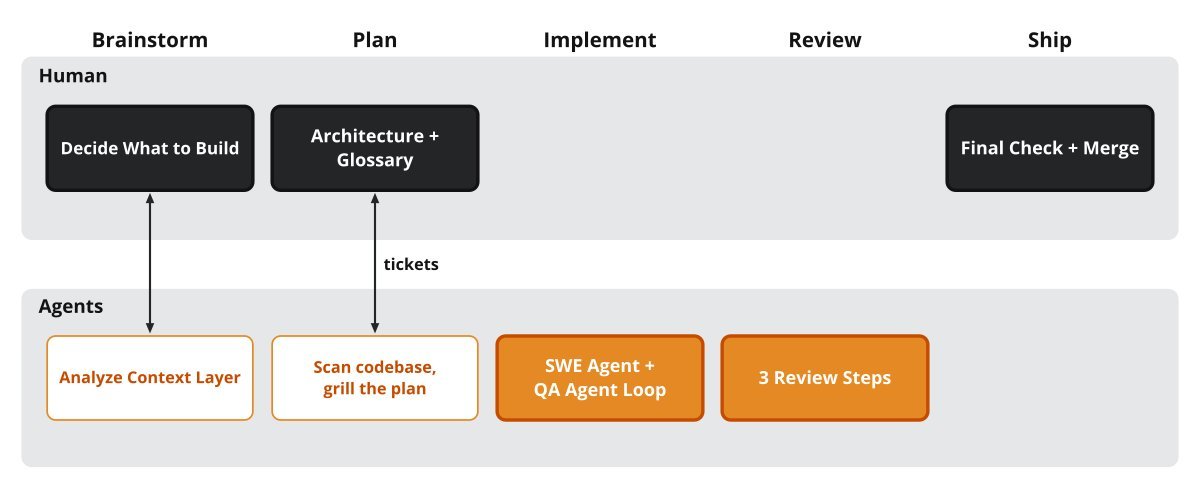
He walks through a shopping assistant whose recommendations users ignore. Agents do the grunt work in brainstorming: analyzing usage, scanning competitors, pulling research. A person then diagnoses why users disengage and writes a spec that solves a business problem without prescribing a technical fix.
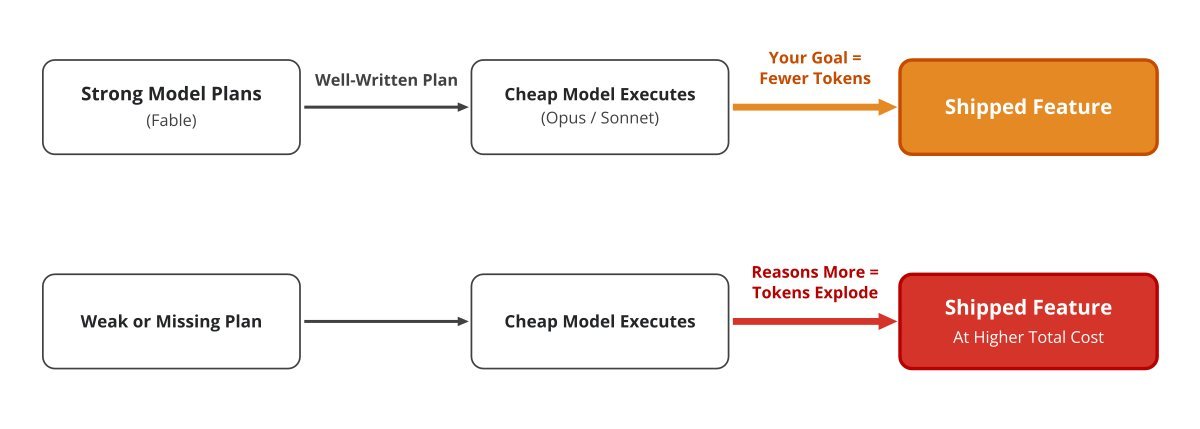
Planning is where the person turns the spec into tickets, an architecture decision record and a glossary update, while the agent grills them on the plan. He recommends the strongest model for brainstorming and planning. Those stages burn fewer tokens than coding, and a weak plan makes cheaper models retry until the savings vanish. He has seen Sonnet on high reasoning cost more than Opus on the same task.
After planning, a software engineer agent takes tickets and a separate QA agent stress-tests the result, since a model is too easy on its own work. Review checks requirements, code quality and the CI/CD pipeline, and every failure creates a new task. If a loop keeps failing, he says the cause is almost always missing plumbing, not the agents.
His summary: a person is indispensable in brainstorming and planning, then returns for the final check. OpenAI took the idea furthest, with about 1M lines and about 1,500 merged pull requests over five months and no hand-written lines.
Why the first Squid failed
He chased full autonomy with remote workflows and parallel agents in one pipeline. When it went off script, he couldn’t debug, halt or redirect it without throwing the run away.
The fix was two modes. Granular commands let him grill a plan, implement one task or review one step. An end-to-end command chains them for full autonomy. Planning stays a separate, human-driven command.
He also doubts the claims of people shipping 100 features in parallel. His features build on each other, so he parallelizes only with local agents in isolated worktrees.
Build or buy
Everyone starts with a prebuilt coding agent tool: Claude Code or Codex, or open source options such as OpenCode or Pi. A small team can get far with skills and agents defined in markdown files on top of that. The factory is about process, and one that doesn’t match how a team works never gets adopted.
The buy line arrives when engineers you don’t personally supervise run agents. Observability, tracing and cost tracking become a full-time job, and tools like Factory.ai or Warp’s Oz make sense. At the largest scale, teams may build again when platform limits cost more than replacing them.
What to do next
His advice echoes Warp CEO Zach Lloyd: find one annoying part of your job and build the smallest loop that handles it. He expects nearly the whole lifecycle to be automated eventually, except brainstorming and planning. For now, he says, anyone claiming to have solved the problem is probably selling something. In his own factory, the bottleneck stays at planning.
Source: stackoverflow.blog