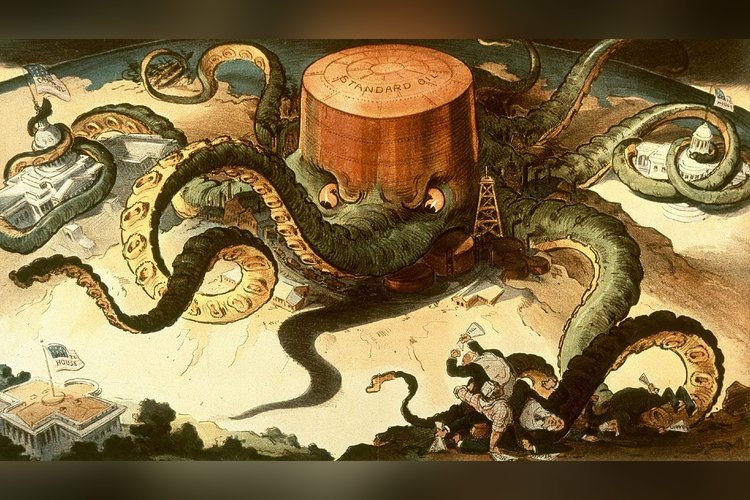
The idea that a few AI labs could end up owning most of the economy runs against a long record of general-purpose technologies. Steam, electricity, the combustion engine and the railroads all followed the same arc, and in each case the biggest winners were not the pioneers who built the technology.
That is the argument of a new analysis of AI economics, which sets the AI labs against earlier industrial booms and concludes that Anthropic won’t be the only company left.
The pledge, the turn and the prestige
The pattern has three stages. First comes a display of breakthrough capability and heavy hype. Then capital pours into infrastructure, winners are declared early, and investors stop checking fundamentals. A crash or slow productivity gain follows, and many investors leave. Afterward, the overbuilt infrastructure makes the real transformation possible, but most value goes to whoever owned the scarce complementary assets needed to scale it.
The analysis places AI between the first two stages. It points to lab claims that models may be conscious, that only one lab can be trusted with the technology and that regulation is needed. It also notes a claim that a lab might one day become the only private company left, which Gavin Baker attributed to Dario Amodei. Anthropic researcher Sholto Douglas denied it, and Amodei did not address it directly.
What happened last time
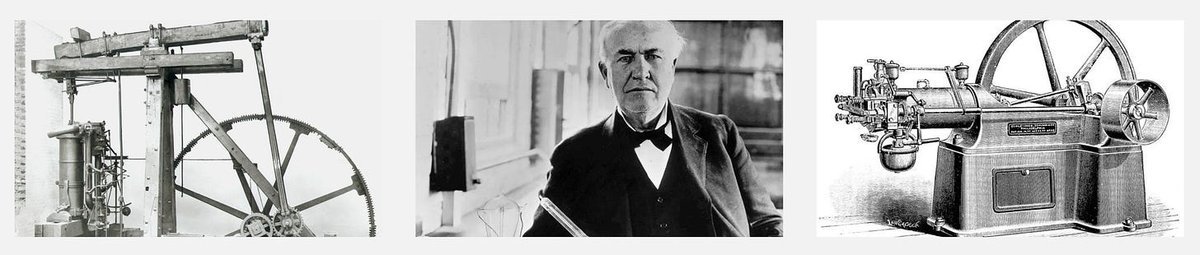
Boulton & Watt held a patent monopoly on steam for decades, yet yarn prices collapsed and by 1830 cotton goods made up roughly half the value of British domestic exports. Electricity became a regulated utility sold by the kilowatt-hour, while factories captured the upside: electric motors went from under 5% of U.S. factory drive in 1899 to almost 80% three decades later, and manufacturing labor productivity growth rose from 1.5% a year to 5.1%.
More than 700 firms entered the U.S. auto race, and by 1941 the industry had shrunk to the Big Three and a few independents. Value moved to complements. Gasoline went from a near-worthless byproduct to 44% of the crude processed by U.S. refineries in 1931.
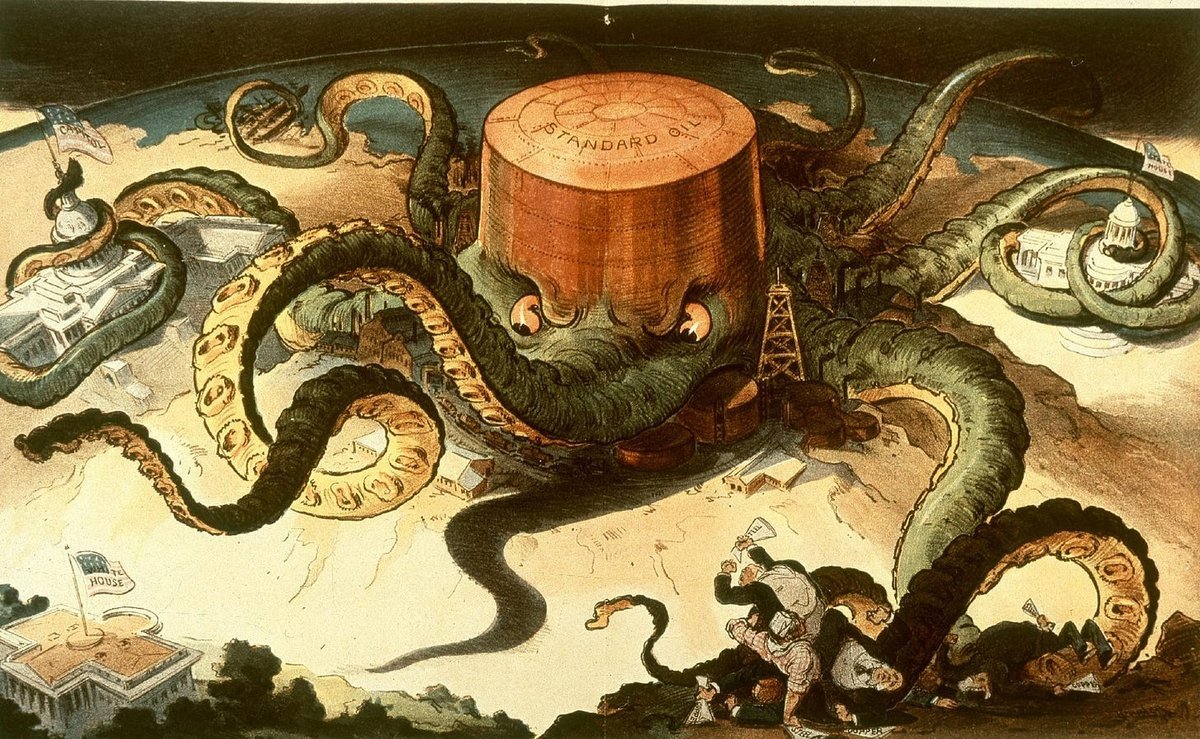
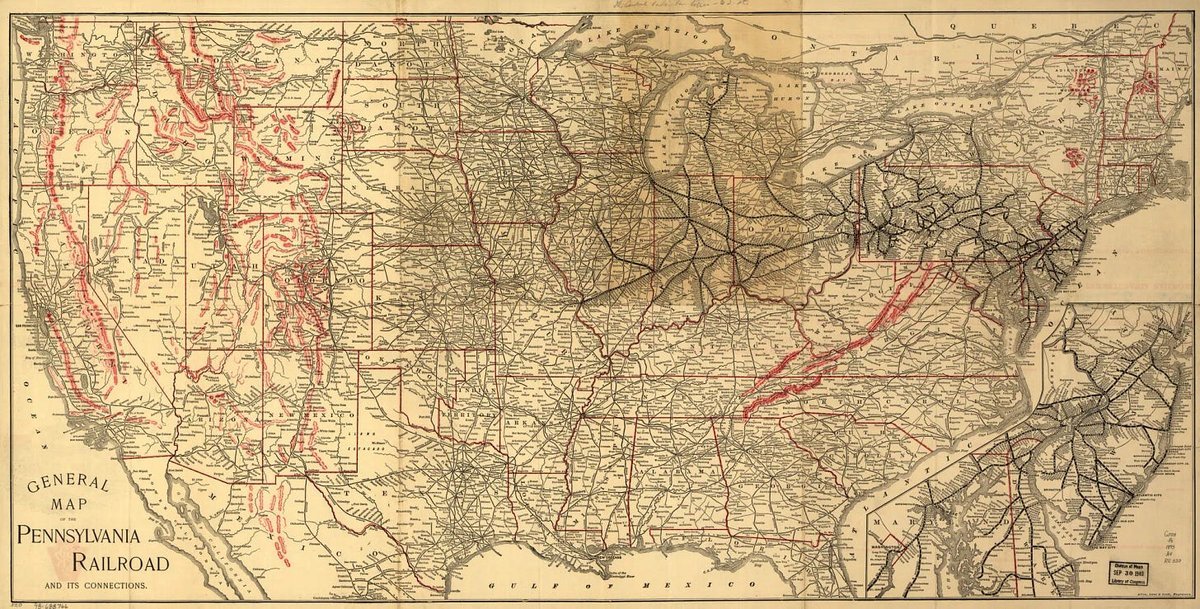
The railroad case is the closest match. In 1876 the Pennsylvania Railroad, led by Tom Scott, was the world’s largest freight carrier. Standard Oil supplied most of its oil traffic. When the railroad’s affiliate moved into refining, Rockefeller moved his freight to rivals, a price war and the Great Railroad Strike of 1877 followed, and Standard Oil ended up with the affiliate’s assets. The Panic of 1893 later pushed more than 100 railway companies into receivership, yet the tracks stayed. For 1890, estimates put the private return at 3.5% against a social return of 48%. Sears, which built a catalog business on the rails, grew sales from $750,000 in 1895 to $50 million in 1907.
Who plays Standard Oil and Sears now
If the AI labs are the railroads, Standard Oil is any enterprise controlling valuable demand, such as AI workloads that rely on proprietary data and can be routed elsewhere. Sears is the application layer, where customer relationships and distribution gain value as intelligence gets cheaper. Nvidia, for now, is a scarce supplier to both.
The author argues that AI models are hard to protect and easy to learn from, a weak appropriability regime. In that setting value flows to whatever bottlenecks large-scale deployment, not to whoever invents the most. Open weights wouldn’t kill investment, they’d change its direction.
Why compute may not be the moat
Compute and chips are the obvious scarce complements, and Amodei named them as sources of concentration if open-weight models prevail. The analysis counters that hardware doesn’t follow software’s winner-take-all dynamics. Its bottlenecks are physical and visible, and high prices attract new capacity even if it takes time to build.
The response from the AI labs, it says, is to chase chips, push into cybersecurity where small advantages raise willingness to pay, and pursue biology and medicine, where a patent can turn a small lead into a right to exclude. But the areas with the steepest demand for intelligence also cap private power, because the marginal buyer is a nation-state that can use procurement, compulsory access or nationalization. To keep their freedom, the labs must succeed but not too much.
Data and the real-world learning loop
Labs gathered public data cheaply under fair-use arguments. Gains in specialized fields will depend more on proprietary traces, tacit knowledge and systems of record. Enterprises are wary of handing these over, and the analysis expects market leaders to combine open-weight models with their own information to match frontier performance on the tasks that matter to them, at lower cost.
What stays defensible, it concludes, is control of a real-world learning loop: deploying AI and collecting the telemetry to check that automation worked and improve it.
What to watch
For the AI labs, the signals to follow are how fast open-weight models close the gap, whether chip supply loosens as new capacity arrives, and how many enterprises build their own models from proprietary data.
Source: catalini.substack.com