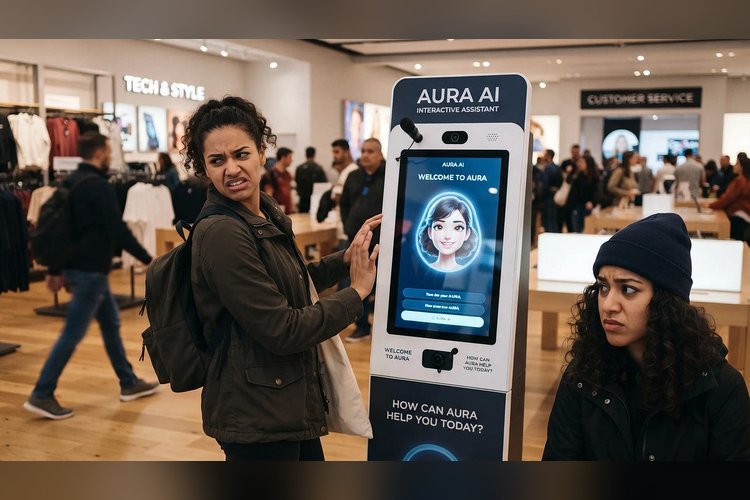
Companies are pouring money into AI customer service, and customers are walking away from it. Gartner found that service leaders raised AI spending by 38% this year while overall budgets grew just 2%. Only 4% of the 275 leaders it polled in July and August said their AI projects had paid off as expected.
Customers pick their own AI over yours
Gartner put questions to 3,566 business and consumer customers early in the year. Faced with a service issue, they leaned roughly 3 to 1 toward outside tools like ChatGPT instead of the brand’s own bot. Brand chatbot usage hasn’t moved since 2022, while outside tool usage almost doubled over twelve months.
The customers and their problems didn’t change. Ownership of the AI did.
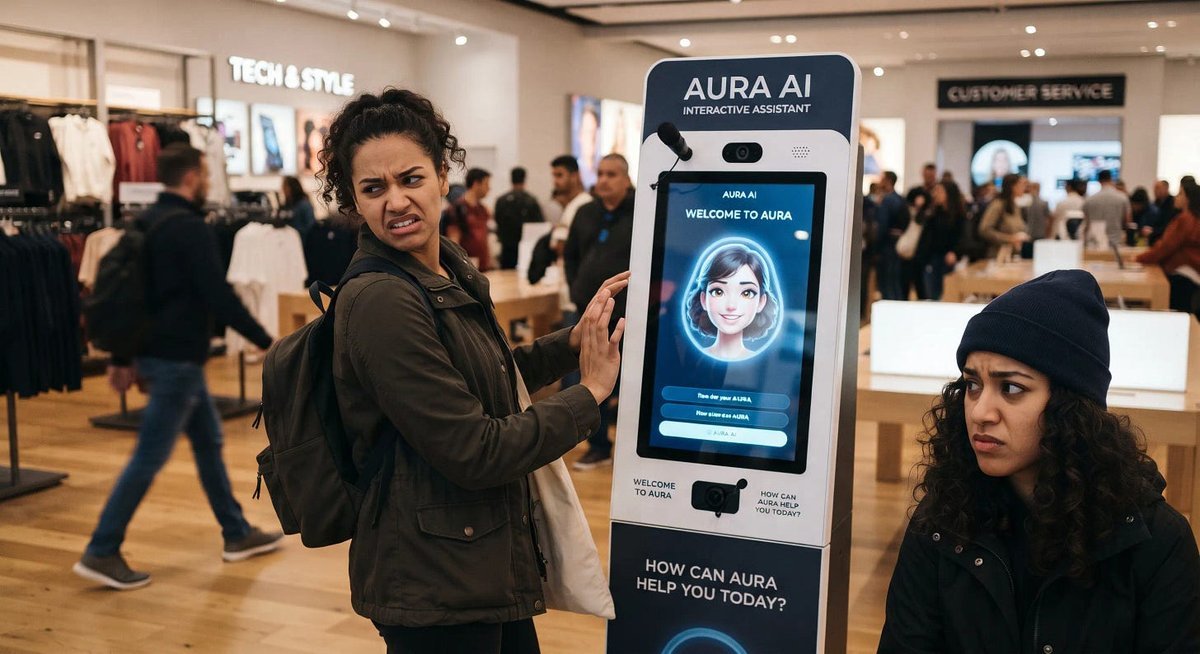
Disclosure costs sales
Trust is the sticking point for AI customer service, and the research on it is consistent.
The pattern predates ChatGPT. In a 2019 study published in Marketing Science, Xueming Luo and colleagues randomly gave over 6,200 clients of a financial firm a structured phone pitch from a person or a bot. Undisclosed, the bot matched a skilled salesperson and beat a novice fourfold. Once callers learned it was a bot at the start, purchases dropped by upwards of 79.7%.
Newer research agrees. University of Arizona researchers Oliver Schilke and Martin Reimann ran 13 experiments with over 5,000 participants and saw trust fall for anyone who admitted using AI. Graphic designers lost 20% of client trust after saying so. Saying the AI only proofread the work, or that a human checked it, still cost trust.
Washington State University researchers gave 1,000-plus US adults the same product copy, once with the phrase “artificial intelligence” and once without. Buying interest dropped for the AI wording in every one of eight categories, smart TVs among them.
Public mood is part of it. Pew says 52% of Americans now feel more concerned than excited about AI in daily life, up from 37% in 2021. Only 9% are more excited than concerned.
Job fears sit behind the distrust
One explanation is jobs. Challenger, Gray & Christmas tallied 121,401 US layoffs announced with AI as the stated reason through October. That is over twice the 54,836 for all of 2025. The monthly count peaked at a record 38,579 in May and dropped to 1,265 by October, but people remember. A late-summer Axios-Generation Lab survey of 1,075 Americans aged 18 to 34 found 27% knew someone, or were themselves, replaced by AI.
Support is where executives have spoken most openly. Salesforce CEO Marc Benioff said his support team shrank from 9,000 to about 5,000. Klarna said in February 2024 that its AI assistant matched 700 agents’ output, then admitted in May 2025 that it had over-weighted cost and quality slipped. It has since hired humans again.
A shopper who has heard all that sees a support bot as someone’s replaced desk. Bots are often judged by containment rate, the proportion of chats that never reach a person, so one optimized for it can bury the exit.
Where shoppers do accept AI
Shoppers happily use AI they chose. Adobe recorded a 693% surge in visits to US retail sites from generative AI tools over the 2025 holidays, and those visitors bought 31% more often than other traffic. It forecasts a further 130% increase this season.
Amazon is the counterexample. CEO Andy Jassy says its Rufus assistant served 300 million-plus customers in 2025 and added close to $12 billion in annualized sales, with users spending half again as much per order. Those are Amazon’s numbers, and Rufus speaks only when a shopper asks.
Retailers are also drawing lines around checkout. Since July 2025, Shopify’s default robots.txt has declared checkouts a human space and barred agents that buy on a user’s behalf. OpenAI introduced Instant Checkout in September 2025, then by March was shifting purchases back to merchants’ own sites, since its data showed people researched in ChatGPT but seldom bought.
Amazon took Perplexity’s Comet browser to court. A March injunction went Amazon’s way, but the Ninth Circuit threw it out on August 4, ruling that the user, not Perplexity, was the one accessing Amazon.
What retailers can do next
Retailers rethinking AI customer service have a few clear options.
The law limits hiding a bot. California’s B.O.T. Act has barred deceptive bot use in sales since July 2019, and the EU AI Act’s Article 50 started applying August 2, requiring that people be told when they deal with AI. In Gartner’s data, 87% of customers want a human option from any company using generative AI for service.
The practical advice is to keep AI away from the sales role. Give shoppers a person or a single click to reach one, let any assistant wait for a prompt, and use AI behind the scenes for search, stock, fraud checks and routing. Gartner analyst Christopher Sladdin said this month that humans and AI suit different jobs.
Source: blog.galratner.com