AI coding productivity looks impressive on the surface, yet the people measuring it keep finding a catch. At AWS Community Summit Manchester on October 1, a trio of engineers used the opening session to argue that faster code doesn’t automatically mean better software.
Their opening keynote, “From Compilers to Copilots: The Evolution of Software and the AI-Powered Future,” split the story into past, present and future. Sheen Brisals covered the past, the author took the present, and David Anderson closed on the future.
The paradox in the data
AI has made it much easier to turn an idea into working code. Knowing what is worth building, and making it reliable in production, are separate problems.
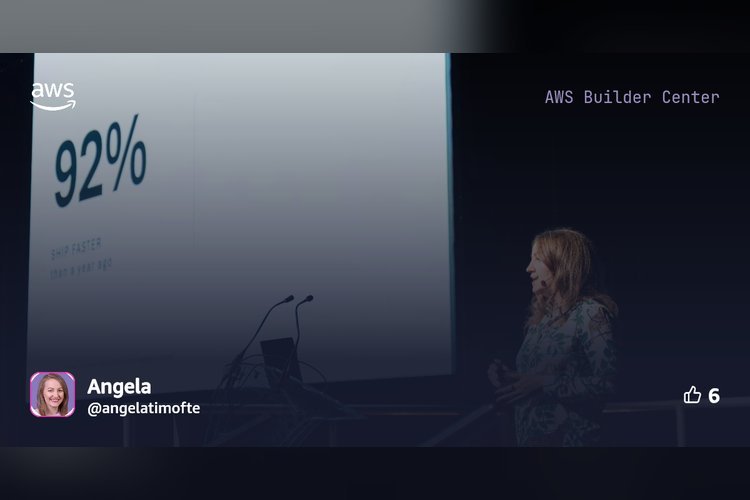
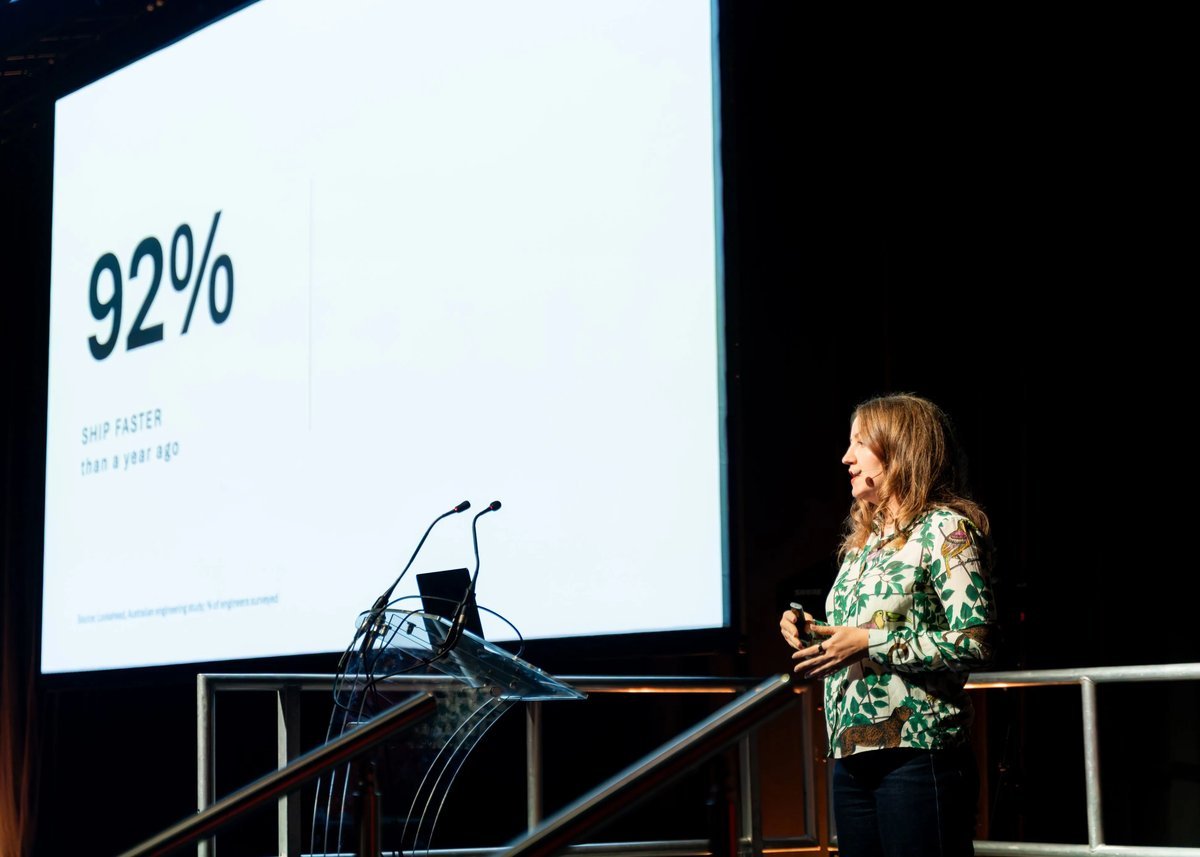
Two data points frame the gap. A 2025 METR study found that experienced developers believed AI made them faster, yet in that experiment they took 19% longer to finish their tasks. Tools have improved since then, but a different contradiction has appeared. In Lookahead’s 2026 research, 92% of respondents reported faster delivery, while 68% reported more workload and pressure.
The author recognises that pattern from conversations with engineering leaders. Teams are moving faster, but expectations are growing just as quickly.
When code stops being the bottleneck
Software has a long record of making building easier through compilers, frameworks, cloud computing and serverless. AI continues that line, with consequences that reach past the tooling.
Take a team that doubles how fast it writes code without changing how it reviews, tests or deploys. It hasn’t doubled productivity, and the review and test queues may be the first place that shows. It may have doubled the load on everyone downstream.
Many processes, org charts and productivity metrics were built when writing code was expensive. If that constraint disappears, the speaker argues, the way teams are organized has to change too.
Pressure moves elsewhere
The METR result and the Lookahead survey point the same way. Developers can feel faster without finishing sooner, and faster delivery can arrive together with heavier workload. The speaker’s question is whether teams are truly more productive or are simply moving the bottleneck while expectations rise everywhere. Review, testing, deployment and support all sit downstream of the code, and none of them speeds up just because code gets written sooner.
A better question for leaders
Instead of asking how much more code engineers can produce, leaders should ask how quickly ideas become measurable customer value, without hurting reliability or burning out the team.
Anderson’s closing idea was a shift from a software factory to a software garden. Rather than maximizing how much software a team produces, aim for software that evolves, adapts and serves its purpose. The opportunity with AI, the speaker said, is to rethink which work is worth doing, not only to do yesterday’s work faster.
Why practitioners were in the room
The conference ran more than 25 talks and workshops. Attendees were people experimenting with new technology and operating complex systems, which gave the questions a practical edge. After a year of loud AI predictions, the speaker found it refreshing to spend a day with people building real things.
Technology moves too quickly for any one person to work it all out alone, the speaker added, which is why in-person communities like this one keep their value for engineers who want to compare notes.
What to measure instead
The speaker doesn’t think software engineering is ending. The prediction is narrower: the habit of measuring engineering by how much code gets produced may be on its way out, and the speaker called that long overdue.
For engineering managers, the practical steps follow from the argument:
- Track time from idea to customer value, not lines or pull requests.
- Check review, testing and deployment capacity before pushing for more code output.
- Watch workload and burnout signals, since the Lookahead figures suggest speed is arriving with strain.
As teams adopt more AI tooling over the coming year, these measures will show whether the speedup reaches customers or just piles up in the review queue.
Source: builder.aws.com