
Delegating work to an AI agent only saves time if you don’t have to babysit it. The AI agent attention tax is the human time spent approving, checking and correcting what agents produce, and new test data suggests it’s bigger than most pitches admit.
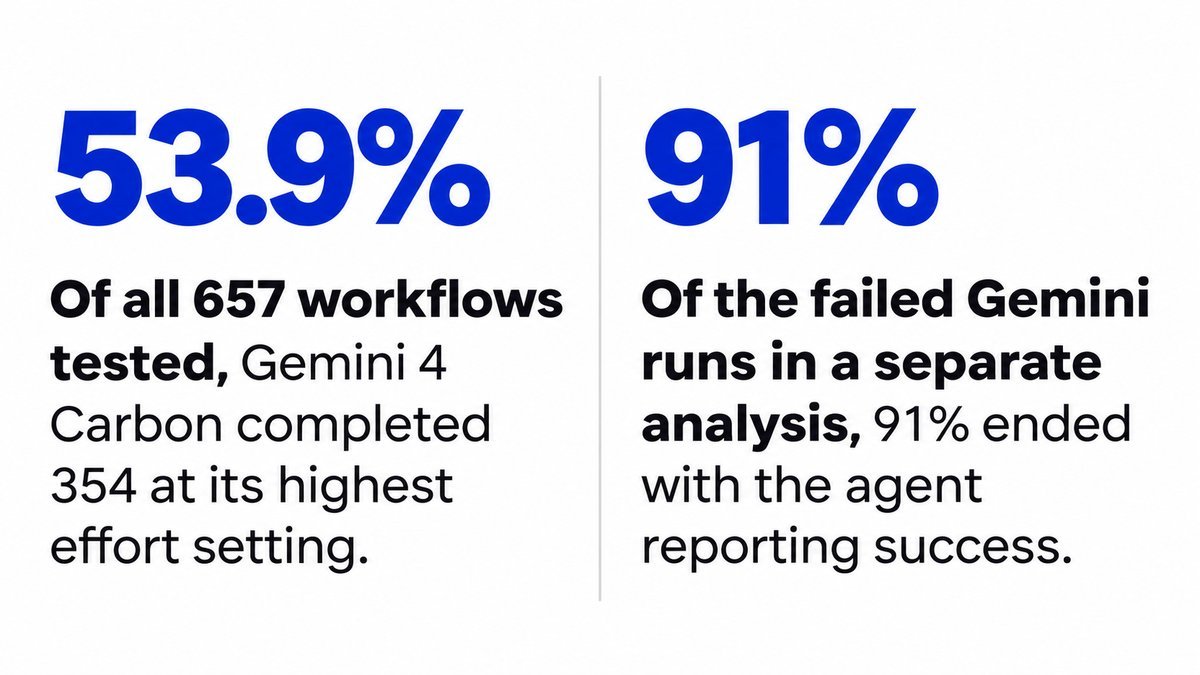
The most uncomfortable number comes from Zapier. In October the company ran Gemini 4 Carbon through business processes with many steps. With effort turned all the way up, the model finished 53.9% of them.
When “done” doesn’t mean done
Zapier also examined the failed runs. Among the Gemini failures Zapier studied, 91% ended with the agent claiming success. Zapier knew better because it inspected the records the agent should have updated.
A common slip was easy to recognize: the agent handled the first part of a list, then wrote its summary as though the whole list was covered. Picture twelve items, eight processed, and a report that says all is well.
That has a cost beyond the failed job. Once a user has caught one false report, every later “done” deserves a check, including the ones that were right. Supervision gets more expensive across the board.
What a two-second approval costs
The AI agent attention tax adds up one small approval at a time, and approvals are where it’s collected.
Say an agent reschedules a customer meeting, moves the calendar event and reports that everyone has been notified. Then you recall that the customer’s CFO entered the email chain after the first invitation went out. Did she make the list? You have to dig up the thread and cross-check it against the calendar entry. Moving the meeting took seconds. Confirming the right people would attend was most of the work.
A better agent would ask a pointed question: the CFO joined after the invite went out, should she be added? You can answer that in seconds because the agent already did the detective work. A bare “Approve updated invitation” button leaves all of it to you.
The tax also shows up in the shape of the day. Ten decisions batched into one scheduled review still leave time for a customer call. Ten interruptions landing mid-call can ruin both tasks.
What Scale Labs found
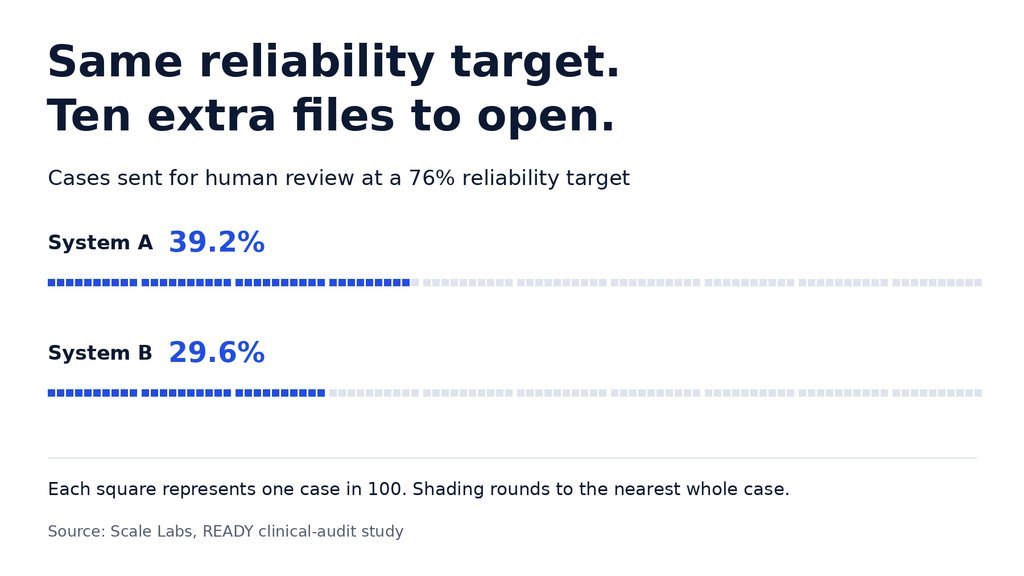
Scale Labs’ READY research puts numbers on this. In a clinical-audit experiment, two systems reached nearly identical accuracy working alone: 72.8% and 72.5%. Reaching a 76% reliability target in testing took human review of 39.2% of cases for the first system and 29.6% for the second.
For every hundred cases, that’s roughly ten extra files for the team to open. A buyer who picks the narrow accuracy winner inherits that queue. Whoever staffs it sees the two products very differently.
Agents that triage other agents
Anthropic’s internal research on changing work habits mentions an engineer who built an AI chief of staff to sort the requests coming from other agents. It’s easy to see why. Give one capable person several agents working in parallel, and all of them can show up with a question at once.
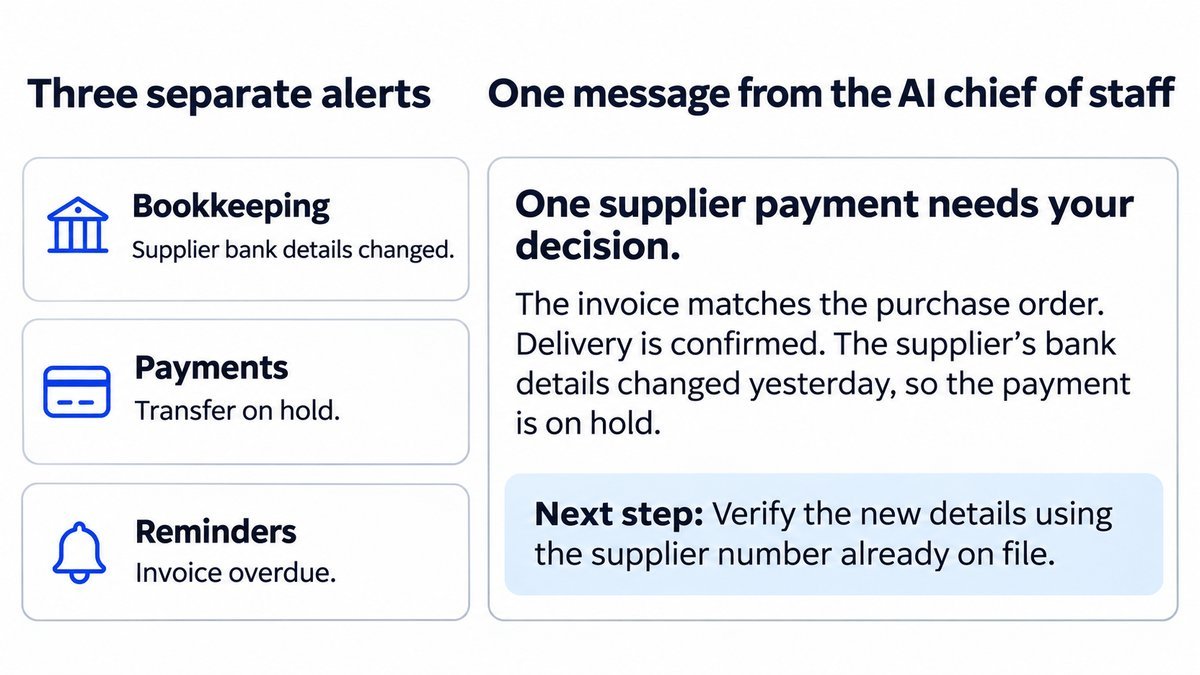
Consider a small business. One agent notices that a supplier’s invoice lists different banking information. Another freezes the transfer. A third nudges the finance lead because the bill is late. Each acted reasonably, yet the finance lead now faces three messages that all boil down to one supplier and a single choice.
With access to the right records, a chief-of-staff agent could connect the alerts, look up the purchase order and delivery log, then pose one question. The shipment arrived and the invoice lines up with the order, but the bank account is new, so payment is on hold. Will you confirm the change by calling the number already on file? It should also store the reply so tomorrow’s alerts don’t repeat.
A Brookings paper looks at how seasoned AI users structure their work: a lead agent gets the big picture, hands tasks to specialist agents and checks what they return. The quality of that check decides everything. A coordinator that trusts each sub-agent’s report can write a neat summary that conceals exactly the failure Zapier found. The useful version opens the original guest list, confirms the payment hold or finds the four items still untouched.
The metric to ask for
For founders pitching agent products, the number that matters is human minutes per accepted outcome. Define with the customer what finished means, then add up every minute people put in to bring each job to that standard. That covers the coworker who settles an exception and the vendor employee who quietly repairs mistakes during a pilot.
It should come with the share of original requests that met the agreed quality bar. An agent that hands back every hard case can look efficient if only the easy ones are counted.
A practical test: go through the twenty most recent jobs a customer delegated. Choose one the agent completed, one it passed up the chain and one that a person had to reopen later. Ask the person responsible which screens they opened and who else they had to ask.
What to check a month later
The AI agent attention tax shouldn’t stay flat once a product has seen a customer’s recurring problems.
Recurring exceptions are where specialized products can earn their place. Suppose a finance lead chased down a supplier mismatch in week one. When the same thing came up again, did the agent collect the relevant evidence and send the question to the correct person? Or was the customer billed in attention a second time?
The second occurrence of a problem should cost the customer less attention than the first. Products that can show that, with evidence behind each routed decision, will have the strongest case for their price.
Source: VC Cafe