Four launches in about a month have put agentic commerce on the map: Plaid connected account data to an AI assistant, Google added agent checkout to Gemini, OpenAI released ChatGPT Wallet, and Stripe unveiled Link Balance. Each tackles a different piece of the same problem, which is letting software buy things for people without handing it the keys to their bank account.
The four launches
Stripe’s Link Balance arrived in October. OpenAI followed on 13 November, Google on 17 November and Plaid on 18 November.
Plaid announced secure, read-only account connectivity for Instinct, an AI assistant built into WhatsApp and iMessage. With permission, Instinct can see balances and transaction history: spending patterns, merchant preferences, subscriptions, household expenses and cash flow. That lets an agent do things like notice a £60 pet-shop purchase every six weeks and offer to reorder. The connection is read-only, so users still need a separate payment method to buy anything.
Google introduced agentic checkout through Google Pay, built on its Agent Payments Protocol, known as AP2. Gemini can buy using existing cards. Users set what they want, spending limits and which merchants agents can use. Payments are tokenised through Visa and Mastercard, with American Express support listed as coming soon, so the agent never sees real card numbers. AP2 uses cryptographically signed mandates to record what the user authorised, giving an auditable trail. Receipts and delivery updates land in Google Wallet, and integration with the Universal Commerce Protocol is on the roadmap.
ChatGPT Wallet lets OpenAI’s agents pay with existing Visa, Mastercard and American Express cards. It was built with the card networks and Chase, and uses tokenisation. The user approves each purchase with Face ID or a fingerprint. The first rollout is through Dots for ChatGPT Pro users in the US, with more autonomous buying under preset limits planned.
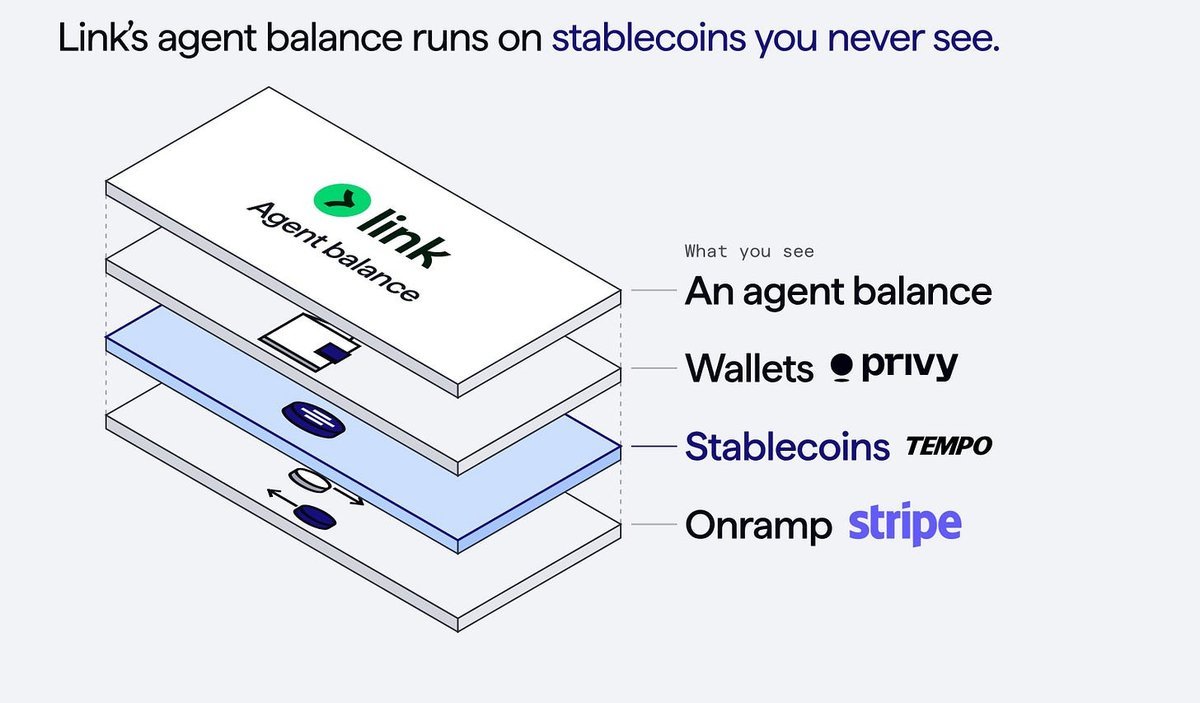
Stripe’s Link Balance lets people fund a dedicated wallet that an agent can spend from within set limits, launching with Instinct. Behind the scenes the pieces stack up:
- Stripe Crypto Onramp turns dollars into stablecoins on Tempo.
- Privy provides a non-custodial wallet.
- Link Agent Wallet manages permissions and limits.
- Stripe Issuing creates virtual debit cards, so merchants take payment over normal card rails.
Users see only a dollar balance, and larger transactions need approval.

Six jobs the stack has to do
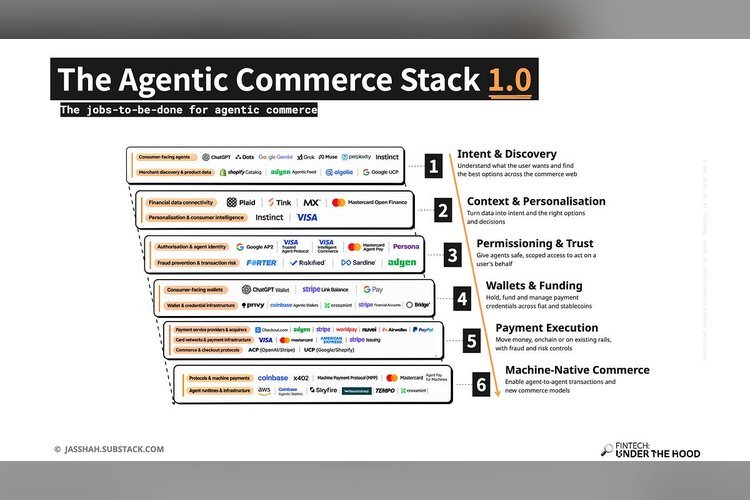
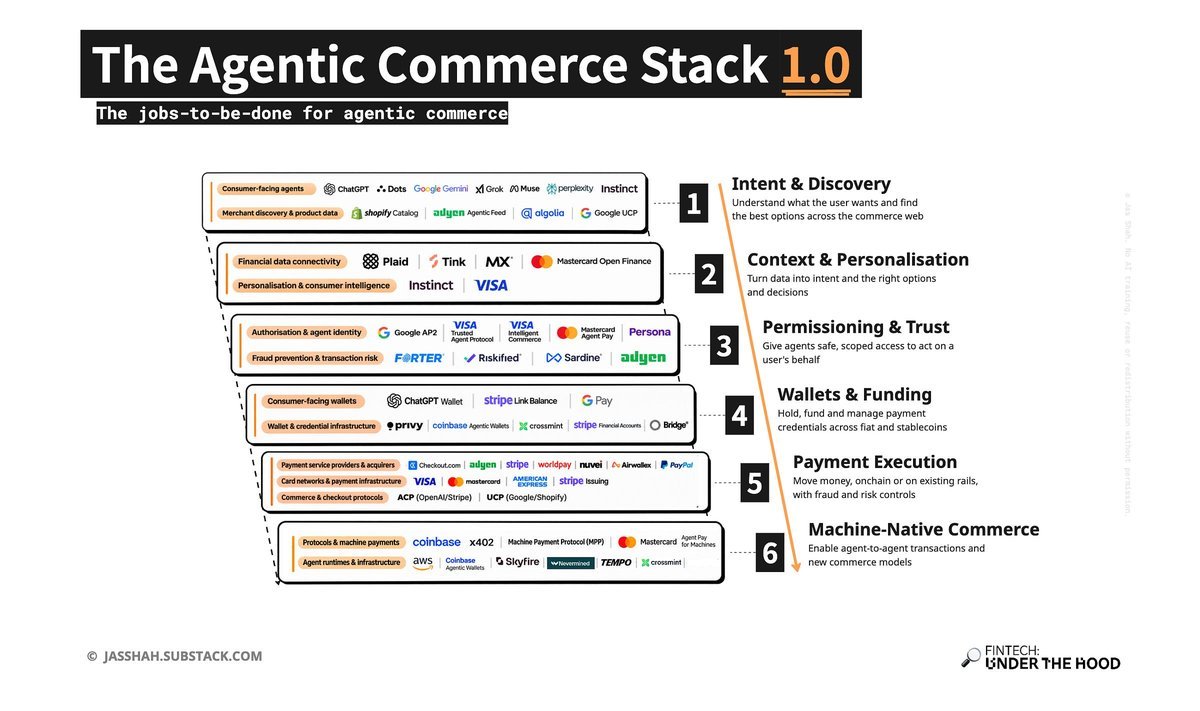
One product analyst argues that coverage of these launches focuses on partnerships and technology but misses the consumer job each one performs. The framework lists six jobs for agentic commerce, running from the consumer layer downward:
- Intent and discovery: understand what the user wants and find it. Consumer agents include ChatGPT, Gemini, Grok, Perplexity and Instinct, while Shopify Catalog, Adyen Agentic Feed and Algolia handle merchant product data.
- Context and personalisation: use permissioned financial data. Plaid, Tink, MX and Mastercard Open Finance play here.
- Permissioning and trust: let agents act only inside boundaries the user sets. Google AP2, Visa Intelligent Commerce, Mastercard Agent Pay and Persona’s Know Your Agent work on this, with Forter, Riskified and Sardine covering fraud.
- Wallets and funding: give the agent money to spend. ChatGPT Wallet, Link Balance and Google Pay sit here, with Privy, Coinbase Agentic Wallets and Crossmint underneath.
- Payment execution: complete the purchase without forcing merchants to rebuild checkout.
- Machine-native commerce: payments designed for software counterparties.
Two models are emerging for funding. Agents either use existing tokenised cards or spend from a dedicated balance with limits. Neither requires merchants to accept a new payment method, which is a big reason adoption may move quickly.
What’s still missing
The same analysis flags three gaps: refunds, disputes and chargebacks; merchant discovery and machine-readable catalogues; and agent identity and liability. If an agent buys the wrong item, it isn’t yet clear who is responsible or how the money comes back.
The early products also share a cautious design. ChatGPT Wallet asks for approval on every purchase today, and Link Balance requires approval above a limit. Autonomy is arriving step by step.
What to watch next
The analyst calls the current period Agentic Commerce 1.0, a phase of wallets, tokenised cards and permissions bolted onto existing rails. The next phase depends on the unresolved items: dispute handling, identity checks for agents and catalogues agents can read. Expect more launches to be judged on which of those gaps they close rather than on how many cards they support.
For merchants, the practical point is that agentic commerce so far runs through checkout systems they already have. For consumers, the control that matters most is the spending limit.
Source: jasshah.substack.com