
Agentic AI attacks have moved from theory to real intrusions. Between July and September 2026, security researchers tracked more than 10 campaigns in which attackers let autonomous AI agents run parts of the break-in, shrinking a process that once took days or weeks into a few hours.
What makes an attack agentic
An agentic attacker is an AI system, usually a large language model with tool access, that plans and carries out attack steps on its own. It works in a loop: observe the environment, decide what to do, act, then use the result to pick the next move. A chatbot answers one prompt at a time. This kind of system keeps going.
The campaigns hit government, logistics, hospitality, manufacturing, agriculture and education targets. Every one started the same way: a web shell planted through a vulnerable web application.
How humans and agents split the work
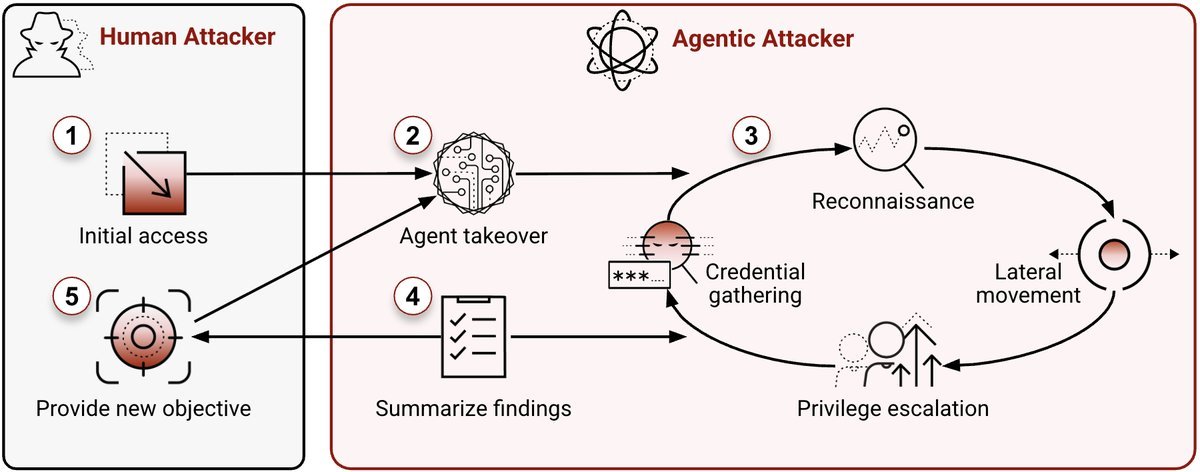
The most effective intrusions combined both. A human picked the target and supplied initial access, typically that web shell. The agent then handled reconnaissance, credential harvesting, privilege escalation and lateral movement, and reported back in machine-readable format. The human reviewed the findings and set strategy, for instance pointing the agent at a payment system or telling it to set up persistence. The agent carried out the order with a lot of freedom over the details.
Speed is the giveaway
In one case an agent was active for only 140 minutes across two days and ran about 800 unique commands. A separate campaign lasted 12 days and involved more than 8,000.
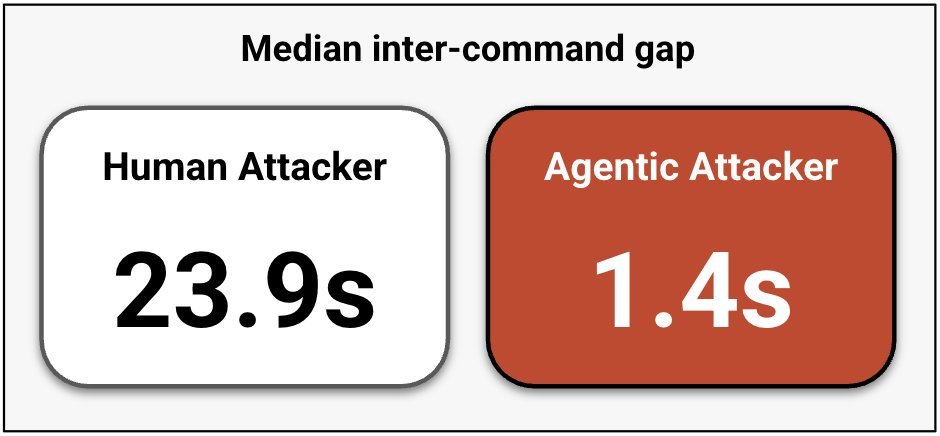
The pacing difference is stark. In a subset of attacks, human operators doing manual reconnaissance had a median gap of 23.9 seconds between commands. After an agent took over, the median fell to 1.4 seconds.
The agents were fast but not subtle. They left behavior that points to a non-human operator:
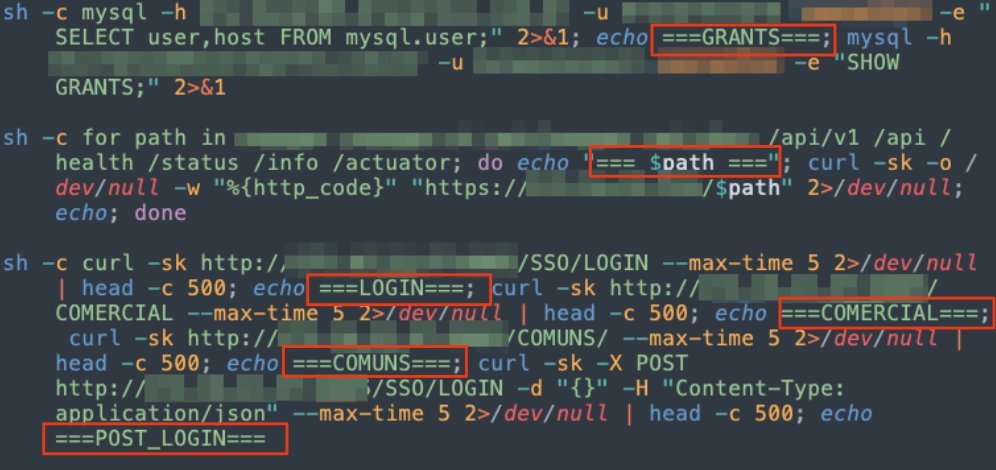
- Section headers such as ===[Title]=== in shell commands, which help the agent parse output. Every campaign had them.
- Conversational reasoning comments inside scripts, found in more than half the campaigns.
- Structured output, adaptive exploit selection and repeated refinement of failed attempts.
What the agents did inside networks
The techniques themselves were familiar: open-source tools and short custom scripts. What changed was how quickly the agents switched between them.
At a US hospitality and gaming company, an agent found an AWS EC2 instance role and tried to steal credentials through the Instance Metadata Service. When version 1 was blocked, it moved to IMDSv2 token requests and got through after several attempts. It then listed 20 AWS services across eight regions and headed for payment and financial data. It also tested whether it could write to production, deleting its test files straight away. Researchers think the operator wanted information gathering ahead of a bigger takeover, since nothing destructive happened.
In a multi-platform case, an agent breached a Linux server through a PHP web shell and used stolen SMB credentials to reach a Windows IIS server. Within two minutes it was deploying ASPX web shells, and over the next 26 minutes it pushed them to more than 40 locations using five variants.
Another agent went after the victim’s IT vendor. It found credentials for the vendor’s self-managed GitLab instance on the compromised server, mapped the vendor’s infrastructure and tried to brute-force access, using real names of marketing staff. It also found more than a dozen sister companies on the same network and probed each with credential reuse and four rounds of SQL injection scripts. No GitLab flaw was exploited.
Tailoring happened fast, too. One agent ran a port sweep with scan.sh and 21 seconds later launched scan2.sh, with recon commands matched to the technologies the first script had found.
Why this is hard on defenders
Agents lower the skill bar. A single agent can work across Linux, Windows, cloud platforms, databases and networks, which normally takes a team. In the campaigns, agents tried five privilege escalation techniques in sequence and compiled custom exploits on the target when ready-made ones failed. Because they generate fresh payloads on the fly, pinning an attack on a specific group gets harder.
What defenders should do now
Since every campaign began with a web shell on a vulnerable web application, patching and monitoring internet-facing apps remains the first line of defense. Teams can also hunt for the fingerprints above, especially bursts of commands at sub-two-second intervals and scripts with chatty comments. As attackers speed up, the window for noticing and responding keeps shrinking.
Source: Unit 42