
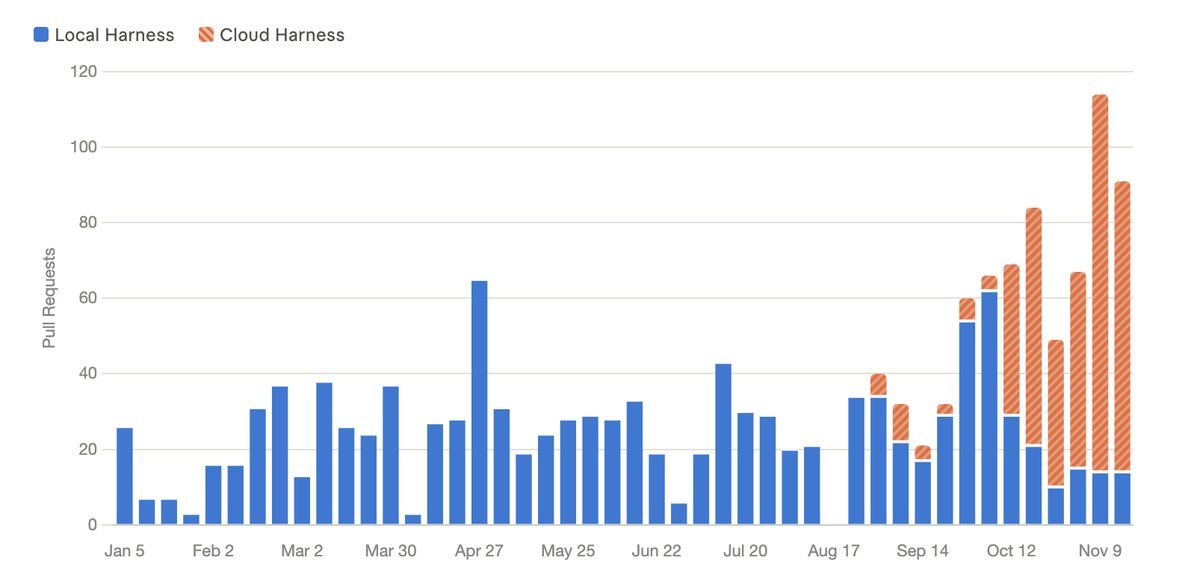
Imprint, a fintech company, says its engineering lead now ships 100 PRs a week, with 115 merged in the week of November 9 and 170 in the busiest seven-day stretch so far. Reaching 100 PRs a week was the goal, and the path there shows which bottlenecks appear as AI coding agents take on more work.
Of those 170 pull requests, 17 were nuanced, UX-heavy changes written on a tool running on a laptop. The other 153 came from fleet, Imprint’s internal cloud platform. About 150 were true production changes that deployed continuously, and the remaining 20 were skills and internal tools.
Why a fintech company is a harder test
Imprint issues credit cards, so reliability, security and revenue all depend on its software. Members need fast access to credit, and partners rely on the cards to grow revenue. The company is six years old and wasn’t built as an AI-native business, so it has retrofitted its process step by step.
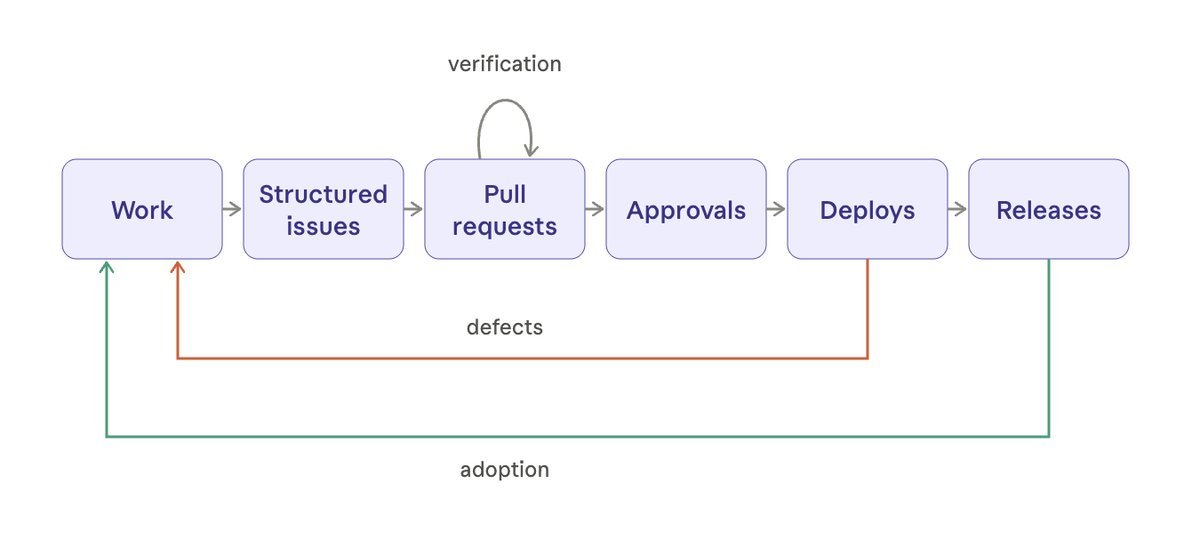
The lead’s mental model is plain: AI tooling speeds up the same development loop engineers have always tuned. Each jump in output, from 5-10 PRs a week to 20, then 40, then 80-100, came from fixing a different weak point. First the issues weren’t structured enough for agents. Then pull request quality was low, then approvals were slow, then the easy work ran out.
The bottlenecks, in order
- Deployment and release (December and January): the team moved to standard CI/CD and feature flags, without which later gains would have stalled.
- Bad context (February): RFCs and product documents fed to agents turned out to be partly wrong. Imprint moved context into repositories, for example Terraform for cloud configuration, and cleaned its Notion docs. One manager added loops that update stale documentation after code changes.
- Issue tracking (June): the company moved from Jira to Linear so issues could be created from the interface, Slack and agents.
- Cloud agents (July to October): local agents hit limits. There were more tasks than people could track, plus extra chores like merge conflicts, review comments and CI failures. Fleet runs in the cloud with a laptop closed, triggered by events rather than polling.
- An internal MCP (September): agents can read configuration values and propose changes, but a person with the right role approves each update.
Approvals, verification and running out of work
In October, rising PR volume made approvals the choke point. Imprint streamlined clearly safe changes and let one person approve some cloud-platform changes. About half of changes now use one of those paths.
The lead concluded that approval speed was a misread. The real problem was that agents often produced pull requests that were hard to approve because they didn’t clearly show what had been verified. Imprint adopted parts of an open source verification toolkit called pstack, including its formal verification approach. The lead now mostly reads the verification files and decides from them whether a full code review is needed.
Faster verification created a new problem: easy work ran out. Imprint responded with recurring loops that maintain verifications, review recent launches, check for new errors and prune stable feature flags. It also built a software-factory pattern for well-scoped areas, which the lead compares to a mid-level engineer who thinks about a problem unprompted. Security findings, new errors and customer support concerns now also create work, and agents have a tool to flag problems themselves.
The skill that pushed it past 100 PRs a week
The final step in November was small. Orchestrating issues and cloud agents had become too heavy at that volume, so the lead wrote a skill called /my-open-work and runs it once or twice a day. It can push the cloud agents to recover from a failure, schedule new issues, walk through open questions for a human, and flag changes that need personal review.
Does 100 PRs a week mean anything?
The lead says it isn’t, not really. Merged PRs per week raises questions without answering them, and many of these PRs are simpler than those handled by senior engineers. Still, merging about 50 times the median weekly PR count per engineer from a year ago says something about how development has changed.
The lead is also skeptical of claims that CI/CD and code review are dead. For software with compliance, security and partner-integration demands, that is not what the team sees, and the code still has to stay understandable to the people who depend on it.
What Imprint tackles next
Three bottlenecks remain. The first is speeding up hard work that needs deep thought about partners, members and fintech rules. The second is widening verification coverage, starting with a reusable tool for simulating feature flag changes. The third is running orchestration without human involvement, including a daily automatic version of /my-open-work.
Source: lethain.com